
H.D. (1) (1886–1961)
Author of H.D.: Collected Poems, 1912-1944
For other authors named H.D., see the disambiguation page.
H.D. (1) has been aliased into Hilda Doolittle.
About the Author
Image credit: Courtesy of the NYPL Digital Gallery (image use requires permission from the New York Public Library)
Series
Works by H.D.
Works have been aliased into Hilda Doolittle.
Kora & Ka 7 copies
Some Imagist Poets [1915] — Editor — 3 copies
A Book of modern verse 2 copies
The usual star 2 copies
H.D. [Poems] 1 copy
... Narthex 1 copy
Temple of the Sun 1 copy
Sea Iris 1 copy
What do I love? 1 copy
Associated Works
Works have been aliased into Hilda Doolittle.
The Best Poems of the English Language: From Chaucer Through Robert Frost (2004) — Contributor — 1,246 copies, 3 reviews
Literature: An Introduction to Fiction, Poetry, and Drama (1995) — Contributor, some editions — 1,012 copies, 7 reviews
World Poetry: An Anthology of Verse from Antiquity to Our Time (1998) — Contributor — 497 copies, 2 reviews
Chloe Plus Olivia: An Anthology of Lesbian Literature from the 17th Century to the Present (1994) — Contributor — 482 copies, 1 review
American Poetry: The Twentieth Century, Volume One: Henry Adams to Dorothy Parker (2000) — Contributor — 479 copies, 1 review
Women in Praise of the Sacred: 43 Centuries of Spiritual Poetry by Women (1994) — Contributor — 384 copies, 5 reviews
Against Forgetting: Twentieth-Century Poetry of Witness (1993) — Contributor — 376 copies, 2 reviews
From Totems to Hip-Hop: A Multicultural Anthology of Poetry Across the Americas 1900-2002 (2002) — Contributor — 182 copies
The Graphic Canon, Vol. 3: From Heart of Darkness to Hemingway to Infinite Jest (2013) — Contributor — 162 copies, 1 review
Poetry Speaks Expanded: Hear Poets Read Their Own Work from Tennyson to Plath (2007) — Contributor — 157 copies, 2 reviews
Poems Between Women: Four Centuries of Love, Romantic Friendship, and Desire (1997) — Contributor — 96 copies, 1 review
The Serpent and the Fire: Poetries of the Americas from Origins to Present (2024) — Contributor — 16 copies
Gender in Modernism: New Geographies, Complex Intersections (2007) — Contributor — 12 copies, 1 review
Imagist Anthology 1930 — Contributor — 4 copies
American poets : an anthology of contemporary verse — Contributor — 4 copies
Ode to Boy: Vol. 2: An Anthology of Same-Sex Attraction in Literature from the 19th Century Through the First World War (2014) — Contributor — 2 copies
Contact collection of contemporary writers — Contributor — 1 copy
Tagged
Common Knowledge
- Canonical name
- H.D.
- Legal name
- Doolittle, Hilda
Aldington, Hilda - Other names
- Alton, Delia
Doorn, Helga
Helforth, John
Dart, Helga
Grey, Edith - Birthdate
- 1886-09-10
- Date of death
- 1961-09-27
- Gender
- female
- Education
- Friends Central High School, Philadelphia, Pennsylvania, USA
Bryn Mawr College
University of Pennsylvania - Occupations
- poet
editor
translator
playwright
actor
novelist (show all 7)
memoirist - Organizations
- The Imagists
The Egoist (literary editor)
Close-Up (contributing editor) - Awards and honors
- American Academy of Arts and Letters Medal
Brandeis University Creative Arts Medal for lifetime of distinguished achievement - Relationships
- Aldington, Richard (husband)
Schaffner, Perdita (daughter)
Schaffner, Nicholas (grandson)
Bryher (partner)
Macpherson, Kenneth (lover)
Gray, Cecil (lover) - Short biography
- Hilda Doolittle (known by her initials H.D.) was born in Bethlehem, Pennsylvania. She attended Bryn Mawr College, but dropped out and went to England in 1911. In 1913, she married Richard Aldington, a novelist and biographer. Her first published poems appeared in the journal Poetry in 1913 and then in the English Review, the Transatlantic Review, and the Egoist. H.D. met Annie Winifred Ellerman, known as Bryher, in 1918, and they became lifelong companions.
- Cause of death
- stroke
- Nationality
- USA
UK - Birthplace
- Bethlehem, Pennsylvania, USA
- Places of residence
- Bethlehem, Pennsylvania, USA
Upper Darby, Pennsylvania, USA
London, England, UK
Paris, France
Vienna, Austria
Zurich, Switzerland - Place of death
- Zurich, Switzerland
- Burial location
- Nisky Hill Cemetery, Bethlehem, Northampton County, Pennsylvania, USA
Members
Reviews

For my April memorization poem, I'm giving myself a bit of a challenge: H.D.'s multi-page tapestry of words known as "Other sea-cities." Among all of the gorgeous verses penned by Hilda Doolittle, this might be my favorite. It's really too long to paste the whole thing here, but the first section, which is also a repeating motif to which the poem flows back again and again, changing its shape and context every time, is this:
Other sea-cities have faltered,
and striven with the tide,
other show more sea-cities have struggled
and died:
other sea-walls
were stricken
and the pride of galleys broken,
only you, remained, beautiful,
O sea-bride!
I love this poem on a level almost divorced from content. Yes, the subject is pleasing, and I'm drawn to its nostalgic-yet-troubled depiction of a long history of great and beautiful seaside cities, all but one fallen long ago. I love the layered evocation of life in these cities, as in the verses:
and laughter-
everywhere, there was laughter;
a boy with a fish-net,
a girl with a hamper
of lampreys,
the long days,
scented with tamarisk,
the long nights
sweet with the aloes,
the fruit piled in baskets,
the merchants with fresh scents
from Arabia,
from Cos,
the wind when it rose high
would open a shutter,
a girl in a blue veil
would push it,
and rain print
her garment upon her,
till she stood, blue
like lapis,
slaves drag from the harbor:
did these love sea-beauty less
than you,
mistress,
O sea-blest?
Why them and not you? H.D. asks over and over of her unnamed, still-extant city by the sea. What did you know that they didn't? Were their lives not brilliantly full enough? Their art not sufficiently perfect? Although the poem is a kind of ode to the city that remains, I come away, each time I re-read it, with more of a sense of loss for the cities that have gone. The vivid scenes she paints, the marble monuments she describes, the explorers, prophets and priests, are all citizens of the other cities, the lost cities, and although there is an implication that the remaining city does all of these things even better - has even more beautiful women, even greater artistic accomplishments - there is also a note of sadness and even reproach at the loss of her sisters. Their violet was as violet, the speaker cries. Why is it now bleached-out on the ocean? A question to which anyone who has suffered loss can probably relate.
Their blue was as sea-blue,
their purple as purple,
indigo was indigo,
violet, violet
and red ran its riot
like the open red pomegranate.
they knew all the gamut
of glass
that took your name;
you reaped fame from their fame;
crystal,
white-gold
or ash-gold,
amethyst,
or fire amethyst,
gem, salt-water, clear air;
her craftsmen wrought marvels,
sea-creatures,
sea-bubbles;
amber caught light
like the sea-weed
a-wash on the sea-stair,
but men
naming such ware,
speak of you
not of rich Tyre.
"They knew all the gamut / of glass / that took your name." Such a beautiful line.
But it's the rhythms of the poem that really get me - the way that central motifs recur again and again in unexpected ways, tying in each new idea without drawing explicit connections, engendering in the reader a sense of return - very suited to the theme of of the immortal city and all the others to which no one can go back. At times the ear picks up the melody of that opening verse, even when the words aren't repeated, or the words will be repeated with variations on the theme. These refrains also, of course, imitate a chant, an element of ritual in mourning and paying tribute. Saying it out loud can be a very meditative experience - you become awash in the motion of the poem, just as (appropriately enough) a person can gaze hypnotized at ocean waves, cresting and retreating.
And, just like the waves on the ocean can surprise you from the side or follow closer and further apart in sequence, the rhymes, alliteration and assonance in "Other sea-cities" are staggered in a gorgeous and unpredictable way, playing off each other to great effect:
Other sea-cities fell
though they built patiently and well,
other sea-cities wrought
intricate details
from rare rock,
stolen from inland,
set great lumps of lapis
above altars
and placed lamps
of alabaster or agate
before god's feet or goddess:
other sea-cities,
named Beauty
their mistress
All in all, it's a gorgeous opus. I have to admit that the prospect of memorizing the entire thing is a bit daunting, but I'm positive that being able to recite it to myself quietly while walking near my own western ocean will be ample recompense.
Tell city,
your secret:
for others built beautifully and well,
but fell
to lie
like a bleached hull;
other sea-cities have faltered
and striven with the tide,
other sea-cities have struggled
and died:
other sea-hulks
were stricken, riven
and the pride of galleys
broken,
not one beside you,
remained, beautiful,
O, Sea-Bride. show less
Other sea-cities have faltered,
and striven with the tide,
other show more sea-cities have struggled
and died:
other sea-walls
were stricken
and the pride of galleys broken,
only you, remained, beautiful,
O sea-bride!
I love this poem on a level almost divorced from content. Yes, the subject is pleasing, and I'm drawn to its nostalgic-yet-troubled depiction of a long history of great and beautiful seaside cities, all but one fallen long ago. I love the layered evocation of life in these cities, as in the verses:
and laughter-
everywhere, there was laughter;
a boy with a fish-net,
a girl with a hamper
of lampreys,
the long days,
scented with tamarisk,
the long nights
sweet with the aloes,
the fruit piled in baskets,
the merchants with fresh scents
from Arabia,
from Cos,
the wind when it rose high
would open a shutter,
a girl in a blue veil
would push it,
and rain print
her garment upon her,
till she stood, blue
like lapis,
slaves drag from the harbor:
did these love sea-beauty less
than you,
mistress,
O sea-blest?
Why them and not you? H.D. asks over and over of her unnamed, still-extant city by the sea. What did you know that they didn't? Were their lives not brilliantly full enough? Their art not sufficiently perfect? Although the poem is a kind of ode to the city that remains, I come away, each time I re-read it, with more of a sense of loss for the cities that have gone. The vivid scenes she paints, the marble monuments she describes, the explorers, prophets and priests, are all citizens of the other cities, the lost cities, and although there is an implication that the remaining city does all of these things even better - has even more beautiful women, even greater artistic accomplishments - there is also a note of sadness and even reproach at the loss of her sisters. Their violet was as violet, the speaker cries. Why is it now bleached-out on the ocean? A question to which anyone who has suffered loss can probably relate.
Their blue was as sea-blue,
their purple as purple,
indigo was indigo,
violet, violet
and red ran its riot
like the open red pomegranate.
they knew all the gamut
of glass
that took your name;
you reaped fame from their fame;
crystal,
white-gold
or ash-gold,
amethyst,
or fire amethyst,
gem, salt-water, clear air;
her craftsmen wrought marvels,
sea-creatures,
sea-bubbles;
amber caught light
like the sea-weed
a-wash on the sea-stair,
but men
naming such ware,
speak of you
not of rich Tyre.
"They knew all the gamut / of glass / that took your name." Such a beautiful line.
But it's the rhythms of the poem that really get me - the way that central motifs recur again and again in unexpected ways, tying in each new idea without drawing explicit connections, engendering in the reader a sense of return - very suited to the theme of of the immortal city and all the others to which no one can go back. At times the ear picks up the melody of that opening verse, even when the words aren't repeated, or the words will be repeated with variations on the theme. These refrains also, of course, imitate a chant, an element of ritual in mourning and paying tribute. Saying it out loud can be a very meditative experience - you become awash in the motion of the poem, just as (appropriately enough) a person can gaze hypnotized at ocean waves, cresting and retreating.
And, just like the waves on the ocean can surprise you from the side or follow closer and further apart in sequence, the rhymes, alliteration and assonance in "Other sea-cities" are staggered in a gorgeous and unpredictable way, playing off each other to great effect:
Other sea-cities fell
though they built patiently and well,
other sea-cities wrought
intricate details
from rare rock,
stolen from inland,
set great lumps of lapis
above altars
and placed lamps
of alabaster or agate
before god's feet or goddess:
other sea-cities,
named Beauty
their mistress
All in all, it's a gorgeous opus. I have to admit that the prospect of memorizing the entire thing is a bit daunting, but I'm positive that being able to recite it to myself quietly while walking near my own western ocean will be ample recompense.
Tell city,
your secret:
for others built beautifully and well,
but fell
to lie
like a bleached hull;
other sea-cities have faltered
and striven with the tide,
other sea-cities have struggled
and died:
other sea-hulks
were stricken, riven
and the pride of galleys
broken,
not one beside you,
remained, beautiful,
O, Sea-Bride. show less
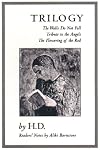
Of all of H.D.'s work, next to Notes on Thought and Vision (which proves a good key or legend to understanding Trilogy) this is my favorite and I suspect her most important epic poem (though I am fond of Helen in Egypt and Hermetic Definitiontoo).Trilogy consists of three books: These Walls Do Not Fall; Tribute to the Angels; and The Flowering of the Rod. Each of these divisions is made up of 43 parts or poems, the poems divided only by the number they bear, the 43 adding up to the mystical show more number 7. Mystical numbers and allusions abound here, just like the three books of Trilogy allude to the Trinity. The three books were written during World War II and the London blitz which seems to have triggered a psychic breakdown or trauma that enabled H.D.'s intense and intricate vision captured here, a vision that speaks to a new world H.D. envisioned as inevitable after the mass destruction and horror of the war.These Walls Do Not Fall is the earliest of the three books, written during the air raids and battles over London in 1942. H.D. lived in London at this time, the stress and destruction of the bombings present in the poetry. Poem 1 opens with “An incident here and there, / and rails gone (for guns) / from your (and my) old town square” (1:1-3). The incidents refer to the air battles over London, transportation impossible as the rails have been torn up to make guns, while the repetition of here and there, or there and here in the poems, “there, as here, ruin opens / the tomb, the temple; enter, / there as here, there are no doors:” (1:10-12) relates London to the ancient city of Karnak as H.D.’s epigraph reveals: "for Karnak 1923 from / London 1942." H.D. visited Karnak in 1923, and likens the ruins she saw to the ruins of the London she lives in. This conflation of space opens, in a way that’s akin to invoking a muse, a creative space of imaginative and mythic potential: the shrine lies open to the sky, the rain falls, here, there sand drifts; eternity endures: (1:13-15)Stranded in London, the old town squares gone, inaccessible, these modern day ruins become a shrine, like the ruined temple at Karnak, its roof, and thus boundaries, gone. In London, rain falls through the opened roof space, while in Egypt sand drifts through a similar space. H.D. follows this comparison with the phrase “eternity endures,” showing how ruins persist: as in Karnak so in London. Also, since the phrase is followed by a colon, the next stanza seems to be an example of enduring eternity: ruin everywhere, yet as the fallen roof leaves the sealed room open to the air, so through our desolation, thoughts stir, inspiration stalks us through gloom: (1:16-21)As the ruins lie open to the sky, so do H.D.’s thoughts, the ruins inspiring her to ascend through the opened space, to reach new imaginative heights.Poem 1 not only sets the historic scene and impetus for H.D.’s project, but also serves as an introduction to the book itself. H.D. marvels at how “the bone-frame was made for / no such shock knit within terror, / yet the skeleton stood up to it:” (1:43-45) referring to the incessant bombing of the Germans on a literal, physical level locating the trauma within her body and yet how it endures. She moves to the metaphor in the next stanza: “the flesh? it was melted away, / the heart burnt out, dead ember, / tendons, muscles shattered, outer husk dismembered,” (1:46-48) painting a graphic picture of the body consumed and destroyed, which metaphorically speaks to a necessary death, a burning away of the layers to get back at the skeleton, at the framework: “yet the frame held: / we passed the flame: we wonder / what saved us? what for?” (1:49-51). This first poem ends with these important questions, questions that allow the creation of the poems that are to follow, poems that will demand answers through their very process of being written. H.D. will find whatever “Presence” or “Spirit” saved her, and in finding the benefactor, learn why she was saved, for what purpose she was spared. These questions also keep the reader reading, to find out what spirit or being spared H.D. and her companions as they hid out in shelters. It also poses the “what for?” question, which would speak to the skeletal frame that remains. H.D.’s project is to create a new religion, one stripped of its recent history and baggage. She seeks to return to the beginning of all myths, and marry them by finding or forcing connections between their stories.For instance, H.D. has a tendency to conflate mythologies and god figures, such as the Egyptian Amen and the Christian Christ. In poem 18 she writes: “The Christos-image / is most difficult to disentangle // from its art-craft junk-shop / paint-and-plaster medieval jumble // of pain-worship and death-symbol,” (18:1-5) referring obviously to the Christian, or more appropriately Roman Catholic cult of pain and death that surrounds Christ. The “art-craft junk-shop” refers to the iconography and religious art that has arisen through the ages, especially frescoes, the “paint-and-plaster medieval jumble.” She disentangles this Christ image to conflate him with Amen, the Egyptian Sun God: “for now it appears obvious / that Amen is our Christos” (18:11-12). H.D. writes, in language reminiscent of the Bible, “let us light a new fire / and in the fragrance // of burnt salt and sea-incense / chant new paeans to the new Sun” (17:11-14) the “sun” a pun on both Sun and Son. The new Sun is “of regeneration;” the territory of the Egyptian God Amen: “we have always worshipped Him, / we have always said, / forever and ever, Amen” (17:16-18). H.D. takes the Christian ending to a prayer “amen” and raises it to the level of a God’s name from another culture, Amen. The endnotes by Barnstone remind us how “Amen is a variation in name of Amon or Ammon. Amon’s most important shrine was the Temple of Amon at Luxor in ancient Thebes” (Reader’s Notes 179). The temple-city of Luxor is at Karnak, housing the Temple of Amon or Amen. Amen is also associated with Ra, the Egyptian Sun God, who is Apollo in the Greek pantheon, patron of poets and art. The move on H.D.’s part is to create a God of the Arts, the “mage” as she calls him, who later reveals himself as Kaspar in The Flowering of the Rod, and as Christ and Venus in Tribute to the Angels.The key word to understand this conflation project is “palimpsest”, a word she uses throughout These Walls Do Not Fall which signifies an ancient manuscript of parchment or papyrus which was written over more than once, the earlier writing still legible beneath the new writing. H.D. writes in section 31, “jottings on a margin, / indecipherable palimpsest scribbled over” (31:3-4) which perfectly describes how her new words incorporate the words of ancient texts. Yet she also uses this word in an imagined accusation against her project: “how can you scratch out // indelible ink of the palimpsest / of past misadventure?” (2:26-28). The accusation seems to come from within her as she doubts her project, though textually it comes in the form of the “they” that haunts these poems as the audience of her project. Since the ink is indelible or unable to be erased, the question is, how in good faith can she scratch out as a form of erasure? And what words on the palimpsest is she scratching out? The words written over the original by those who have misinterpreted the original meaning, the interpretations of “past misadventure”? Or the original words themselves? In would seem the former, the misinterpretations, though her project is in the same interpretative vein as she writes new words over the originals, her additions seeking to also add new meaning.I always have more to say about H.D. and this book (in particular where Notes on Thought and Vision intersects with this project), but on a personal note I've always found the book in many ways a Christmas poem, especially the last section The Flowering of the Rod, as it was written during December 18-31 in 1944. This section uses the language of the Nativity and of the Three Magi, or wise men, especially Kaspar, in its vision of poetry’s power for the future (the poet as secret initiate, the chosen prophet to destroy the old gods and make way for the new god of art, of poetry, the Mage, Amen). It is the most “Christian” of the three books, with Tribute to the Angels coming in second as a Spring poem, and thus heavily involved with rebirth as it was composed in the last days of May (17-31) in 1944. Tribute to the Angels is shorter in length, though still made up of the requisite 43 poems, and is probably the most difficult of the three books to decipher in its use of the book of Revelation to speak of seven angelic figures as they conflate with gods and goddesses from other cultures.But the reason I call it a Christmas poem stems from a strong affinity that I can only explain as the shared rooted-ness of also having been born and raised in Bethlehem, PA. I must confess I have read Trilogy every year on Christmas Eve for the past five years now when I am at home visiting my parents in the Christmas City. show less
Depth of the sub-conscious spews forth
too many incongruent monsters
The day is quadrant of agonizing beauty. Damage was inflicted last night. Self care was errant. But the day has bounded with joy. So strange then to immerse in the gilded pain of H.D. While I was out walking I considered easily disparate natures of this triptych and how "incongruent monsters " found a harmony in my aching head.
I think I will wait on her Helen. The cicadas are a sufficient charm at present. I can reach for show more her fear but it remains imprinted, folded. show less
too many incongruent monsters
The day is quadrant of agonizing beauty. Damage was inflicted last night. Self care was errant. But the day has bounded with joy. So strange then to immerse in the gilded pain of H.D. While I was out walking I considered easily disparate natures of this triptych and how "incongruent monsters " found a harmony in my aching head.
I think I will wait on her Helen. The cicadas are a sufficient charm at present. I can reach for show more her fear but it remains imprinted, folded. show less
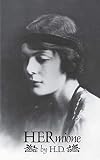
Re-reading this book was magical, and one can see H. D.'s growth as a female writer among mostly male counterparts—her characterization of George Lowndes (Ezra Pound) is particularly scathing in a lovingly oppressive way only H. D. can mange to convey; one can also see her emerging into a voice entirely her own, one more grounded in nature and indebted to Greek sources.
The real treasure in reading HERmione is that those who try to nicely pigeonhole H. D. into the category of "Imagist show more poet" will find this overturned, not only because her prose is so beautiful and bewitching, but because she is one of the most overlooked writers in literary modernism when it comes to prose.
Sadly, her prose is often overlooked in favor of her fine poetry, but HERmione is one of the best modernist novels of the mid-1920s and rightfully deserves to be on lists of major novels from this period alongside other giants like Woolf and Joyce. show less
The real treasure in reading HERmione is that those who try to nicely pigeonhole H. D. into the category of "Imagist show more poet" will find this overturned, not only because her prose is so beautiful and bewitching, but because she is one of the most overlooked writers in literary modernism when it comes to prose.
Sadly, her prose is often overlooked in favor of her fine poetry, but HERmione is one of the best modernist novels of the mid-1920s and rightfully deserves to be on lists of major novels from this period alongside other giants like Woolf and Joyce. show less
Lists
Awards


You May Also Like
Associated Authors
Statistics
- Works
- 46
- Also by
- 44
- Members
- 2,041
- Popularity
- #12,597
- Rating
- 4.0
- Reviews
- 16
- ISBNs
- 91
- Languages
- 4
- Favorited
- 2
