
Hilary Scharper
Author of Perdita
About the Author
Image credit: utoronto.ca
Works by Hilary Scharper
Associated Works
Tagged
Common Knowledge
- Canonical name
- Scharper, Hilary
- Other names
- Cunningham, Hilary (née)
- Birthdate
- 1961-11-21
- Gender
- female
- Education
- Yale College
- Occupations
- professor
novelist - Organizations
- University of Toronto, Canada
- Relationships
- Scharper, Stephen (husband)
- Nationality
- Canada
- Places of residence
- Toronto, Ontario, Canada
- Associated Place (for map)
- Ontario, Canada
Members
Reviews
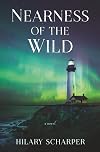
I have read both Nearness of the Wild and the initial companion novel to Nearness- Perdita.
I loved both of these novels. I love the characters- Perdita, Marged, Alan, the old ornithologist, the doctor, the ‘Indian’ agent, the list goes on. I love the place – the water, the trees, the rocks all became characters in the story. And I love the pacing. I wanted to keep reading and I did. I stayed up late and I got up early. I gobbled it up all of it too quickly.
Both of these novels are show more multi layered -part history,part place making, part social commentary, part dream. Scharper is a master creator of place,character and feeling.
Here’s my advice; go to the bookstore. Buy both these books, go home, make yourself a cozy spot and dive in. You are in for some deep and satisfying reading pleasure. show less
I loved both of these novels. I love the characters- Perdita, Marged, Alan, the old ornithologist, the doctor, the ‘Indian’ agent, the list goes on. I love the place – the water, the trees, the rocks all became characters in the story. And I love the pacing. I wanted to keep reading and I did. I stayed up late and I got up early. I gobbled it up all of it too quickly.
Both of these novels are show more multi layered -part history,part place making, part social commentary, part dream. Scharper is a master creator of place,character and feeling.
Here’s my advice; go to the bookstore. Buy both these books, go home, make yourself a cozy spot and dive in. You are in for some deep and satisfying reading pleasure. show less

Perdita is the type of story that leaves readers scratching their heads in confusion upon finishing it. There is no real closure, nor is there an appropriate number of explanations to go along with the wealth of questions. Given how immensely enjoyable Marged’s story is, as told through her journal entries from long ago, the lack of answers and of a satisfactory ending to Marged’s story is tremendously disappointing.
There is no indication that the story will fizzle so severely either, show more further compounding a reader’s disappointment. Marged’s story of her life on the Georgian Bay, her independence and growing love for a fellow inhabitant are all fascinating. The descriptions alone are breathtaking, with vivid imagery that paints explicit pictures for readers of everything from the landscape to the mundane details of life on the bay to her winter in Toronto. The storytelling is effortless and engaging.
Whereas Marged is a brilliantly described, three-dimensional character, Garth never becomes quite as vibrant or defined. When Marged’s history draws to a close and the story turns to more present-day scenes involving Garth, the story loses its way. Gone are the impressive details and clarity of character. In their place is a muddy plot so convoluted and ill-defined that readers can only forge ahead or get caught in a mire of confusion. This is also the point at which Perdita becomes a more prominent element/character of the story, whereby the entire story loses all cohesion.
Perdita is the type of story that does not need anything supernatural to enhance it or set it apart from other novels. The story itself is extremely strong, well-written and a thoroughly engaging piece of historical fiction. The addition of the supernatural in the form of the mysterious Perdita essentially ruins the story not only because she never receives an adequate explanation for her appearance but also because the moment she becomes a character the entire feel of the novel changes. The story loses the charm that makes it so enjoyable to become something less believable and much more forced. To have such a wonderful story abruptly change as much as it does as suddenly as it does is a disappointment that leaves readers feeling more than a little upset at the loss of what was for what took its place. show less
There is no indication that the story will fizzle so severely either, show more further compounding a reader’s disappointment. Marged’s story of her life on the Georgian Bay, her independence and growing love for a fellow inhabitant are all fascinating. The descriptions alone are breathtaking, with vivid imagery that paints explicit pictures for readers of everything from the landscape to the mundane details of life on the bay to her winter in Toronto. The storytelling is effortless and engaging.
Whereas Marged is a brilliantly described, three-dimensional character, Garth never becomes quite as vibrant or defined. When Marged’s history draws to a close and the story turns to more present-day scenes involving Garth, the story loses its way. Gone are the impressive details and clarity of character. In their place is a muddy plot so convoluted and ill-defined that readers can only forge ahead or get caught in a mire of confusion. This is also the point at which Perdita becomes a more prominent element/character of the story, whereby the entire story loses all cohesion.
Perdita is the type of story that does not need anything supernatural to enhance it or set it apart from other novels. The story itself is extremely strong, well-written and a thoroughly engaging piece of historical fiction. The addition of the supernatural in the form of the mysterious Perdita essentially ruins the story not only because she never receives an adequate explanation for her appearance but also because the moment she becomes a character the entire feel of the novel changes. The story loses the charm that makes it so enjoyable to become something less believable and much more forced. To have such a wonderful story abruptly change as much as it does as suddenly as it does is a disappointment that leaves readers feeling more than a little upset at the loss of what was for what took its place. show less

Oh, the trees! If you, like me, grew up with Anne and Emily naming and loving trees in L.M. Montgomery’s novels, you will love Hilary Scharper’s novel Perdita.
There are many other reasons to respond to this story: a love of history, parallel storylines across the years, the diary excerpts, elements of mystery and the supernatural, and complex female characters.
But the Bruce Peninsula is arguably the main character, the others existing most vividly and determinedly in relationship to show more it.
“Our beautiful Peninsula is filled with stories, is it not?”
In Marged’s diaries, for instance, she describes her father in relationship to the Georgian Bay (on the eastern side of the peninsula):
“I like to look at his face the same way I like to look at the Bay. The Bay is best in the evening, just as the sun is sinking and a sort of deep grey begins to spread across it, and somehow it is both reasonable and beautiful all at the same time. Tad seems wise and impenetrable to me, and yet somehow I am not disturbed by my ignorance of all that he must know about the world.”
(To continue the Montgomery allusion, Marged’s love for Tad reminds me of the way Anne feels about Matthew, and the way that Emily feels about her beloved father: unwavering fondness and trust, even while recognizing a certain vulnerability.)
It is no small part due to Tad’s support that Marged grows to be the sort of young woman who can challenge a patriarch, who can insist on her view of the world faced with this privileged and abusive neighbour.
“‘You think I am a silly young girl, don’t you?’ I told him. ‘Perhaps my life is small and unimportant in your eyes. But I have had more experience of the world than you might think. I have seen little compromises that poison people a drop at a time, each day, as they rise and go about their work and share the day together. And I have seen something more foul – something that destroys innocence and goodness by violating a sacred trust.’”
This foulness? Readers do not fully understand the dimensions of Marged’s statements yet. The novel contains both overt and subtle hints of lingering uncertainties. Some of these are discovered as the story develops, but even the uncertainty is mirrored in the landscape of the story.
This is an excerpt from a longer consideration of this novel, here on BuriedInPrint. show less
There are many other reasons to respond to this story: a love of history, parallel storylines across the years, the diary excerpts, elements of mystery and the supernatural, and complex female characters.
But the Bruce Peninsula is arguably the main character, the others existing most vividly and determinedly in relationship to show more it.
“Our beautiful Peninsula is filled with stories, is it not?”
In Marged’s diaries, for instance, she describes her father in relationship to the Georgian Bay (on the eastern side of the peninsula):
“I like to look at his face the same way I like to look at the Bay. The Bay is best in the evening, just as the sun is sinking and a sort of deep grey begins to spread across it, and somehow it is both reasonable and beautiful all at the same time. Tad seems wise and impenetrable to me, and yet somehow I am not disturbed by my ignorance of all that he must know about the world.”
(To continue the Montgomery allusion, Marged’s love for Tad reminds me of the way Anne feels about Matthew, and the way that Emily feels about her beloved father: unwavering fondness and trust, even while recognizing a certain vulnerability.)
It is no small part due to Tad’s support that Marged grows to be the sort of young woman who can challenge a patriarch, who can insist on her view of the world faced with this privileged and abusive neighbour.
“‘You think I am a silly young girl, don’t you?’ I told him. ‘Perhaps my life is small and unimportant in your eyes. But I have had more experience of the world than you might think. I have seen little compromises that poison people a drop at a time, each day, as they rise and go about their work and share the day together. And I have seen something more foul – something that destroys innocence and goodness by violating a sacred trust.’”
This foulness? Readers do not fully understand the dimensions of Marged’s statements yet. The novel contains both overt and subtle hints of lingering uncertainties. Some of these are discovered as the story develops, but even the uncertainty is mirrored in the landscape of the story.
This is an excerpt from a longer consideration of this novel, here on BuriedInPrint. show less
For me, reading, Perdita (both times) was like going on a journey to a different world.
I read this novel when it was first published about a decade ago, and then this winter when the author released Nearness of the Wild, the companion novel, I reread Perdita.
In both Perdita and Nearness, Scharper ushers her readers into a real place -Georgian Bay- past and present- but this Georgian Bay is infused with a supernatural - haunted lighthouses, ghosts and an impossibly aged protagonist- all mixed show more in with mystery and yes, some romance. What makes this novel so unusual is that the reader becomes engaged not just with the people in Scharper’s story, but also with the place- the land,the rocks, the trees, the water- all of these natural elements become characters. Perdita is nature inspired literary fiction and offers the reader free passage, not just to a story and the people in it but also to a magical place and all that is powerful about that place.
So if you’re looking for a recommendation here it is;get a copy of Perdita, get a copy of Nearness of the Wild and dive in . I know you will find yourself on a journey to somewhere you have never been before. show less
I read this novel when it was first published about a decade ago, and then this winter when the author released Nearness of the Wild, the companion novel, I reread Perdita.
In both Perdita and Nearness, Scharper ushers her readers into a real place -Georgian Bay- past and present- but this Georgian Bay is infused with a supernatural - haunted lighthouses, ghosts and an impossibly aged protagonist- all mixed show more in with mystery and yes, some romance. What makes this novel so unusual is that the reader becomes engaged not just with the people in Scharper’s story, but also with the place- the land,the rocks, the trees, the water- all of these natural elements become characters. Perdita is nature inspired literary fiction and offers the reader free passage, not just to a story and the people in it but also to a magical place and all that is powerful about that place.
So if you’re looking for a recommendation here it is;get a copy of Perdita, get a copy of Nearness of the Wild and dive in . I know you will find yourself on a journey to somewhere you have never been before. show less
You May Also Like
Associated Authors
Statistics
- Works
- 6
- Also by
- 1
- Members
- 82
- Popularity
- #220,760
- Rating
- 3.8
- Reviews
- 10
- ISBNs
- 15
- Languages
- 2
