
Fflur Dafydd
Author of Twenty Thousand Saints
About the Author
Image credit: via Goodreads
Works by Fflur Dafydd
Associated Works
Tagged
Common Knowledge
- Birthdate
- 1978
- Gender
- female
- Education
- Aberystwyth University
University of East Anglia
University of Bangor - Relationships
- Elfyn, Menna (mother)
- Nationality
- Wales
United Kingdom - Places of residence
- Llandysul, Wales
Carmarthen, Wales, UK
Members
Reviews
The Library Suicides: the most captivating locked-room psychological thriller of 2023 from the award-winning author by Fflur Dafydd
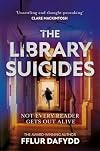
The Library Suicides by Fflur Dafydd is a thrilling contemporary dystopian novel set in a world where paper is banned, and societal policies are unsettlingly strange.
The story revolves around twin sisters Ana and Nan, who work in a library and plot revenge against a man they hold responsible for their mother’s death. Their complex relationship, with one sister holding more knowledge than the other, drives the tension in the plot.
The setting offers a chilling reflection on the future of show more literature in a digital age, blending dystopian elements with themes of power, identity, and grief. The novel also examines the fraught dynamic between authors and critics, posing questions about the influence of reviews—a theme that resonated with me as both a writer and reviewer.
Unnerving yet thought-provoking, this book isn't for everyone, but it’s perfect for those seeking a literary thriller that challenges conventions.
Read the detailed review here - Books Chharming show less
The story revolves around twin sisters Ana and Nan, who work in a library and plot revenge against a man they hold responsible for their mother’s death. Their complex relationship, with one sister holding more knowledge than the other, drives the tension in the plot.
The setting offers a chilling reflection on the future of show more literature in a digital age, blending dystopian elements with themes of power, identity, and grief. The novel also examines the fraught dynamic between authors and critics, posing questions about the influence of reviews—a theme that resonated with me as both a writer and reviewer.
Unnerving yet thought-provoking, this book isn't for everyone, but it’s perfect for those seeking a literary thriller that challenges conventions.
Read the detailed review here - Books Chharming show less
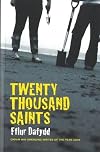
Beautifully written and funny, it's set in summer on Bardsey Island, and involves nuns on their annual hermit conference, sex (not the nuns), a possible murder, sunshine, saints and archaeology - what more could you want from a book? Flipping marvellous!
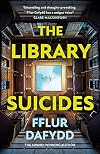
2.5 stars, rounded up to 3.
I was able to read this eARC with thanks to NetGalley and Hodder & Stoughton (Publishers), in exchange for a review.
I was drawn to this one instantly for a number of reasons - the title, the cover, the description, all of which were creative and left a good first impression. Further, the author being Welsh (which I was able to glean from their name) did make me want to read this one; a little bit of nationality bias there, I'll admit!
To preface, this review is show more entirely my own opinion, and just my experience with the book. I feel that perhaps, despite my initial attraction to the novel, it was just not the story for me, and that's okay!
Firstly, this book is really well written. The descriptions of people, places and books were wonderful, and really helped me, as the reader, to visualise what was happening. I found the writing style well suited to me, and easy get into in that respect. Unfortunately, the story started a little slow for me, and I found myself struggling to get through it; there were pages and pages that seemed somewhat superfluous, not really serving to progress the plot. Whilst I don't usually mind stories that are introspective and heavily focused on the character's inner thoughts, this one just relied too heavily on that for me.
Once the story got underway and the plot started to move along, it was more enjoyable and less of a struggle for me. But it still felt slow getting there, and getting to the meat of it, dragging on in places where I felt there wasn't such a need for it. None of the characters were particularly likeable, and I didn't really connect with any of them, which made it more difficult; and the outcome, the ending, just didn't really satisfy me because of this. I wasn't particularly happy or sad or bothered about what happened to any of them, truth be told.
There were some plot points that I thought were really interesting, including the setting - not specifically described, but seeming to be a world like ours, though in the future, where paper is apparently a near extinct resource, and books are a thing of the past. The plots surrounding this were deepened at points in the novel but, unfortunately, they weren't developed enough at all, or even one of the main plotlines of the story. I feel for me personally, I would have preferred to have focused on the political, world building side of things than the drama which WAS the focus of the story (which I didn't find nearly as compelling, or interesting).
All in all, this was a book I thought I'd like and really wanted to like, but came up lacking. Maybe just not the story for me; I am sure others would certainly enjoy it, and the talent of the author is certainly evident. I would give a different book by the author a chance, even if this one fell flat for me. show less
I was able to read this eARC with thanks to NetGalley and Hodder & Stoughton (Publishers), in exchange for a review.
I was drawn to this one instantly for a number of reasons - the title, the cover, the description, all of which were creative and left a good first impression. Further, the author being Welsh (which I was able to glean from their name) did make me want to read this one; a little bit of nationality bias there, I'll admit!
To preface, this review is show more entirely my own opinion, and just my experience with the book. I feel that perhaps, despite my initial attraction to the novel, it was just not the story for me, and that's okay!
Firstly, this book is really well written. The descriptions of people, places and books were wonderful, and really helped me, as the reader, to visualise what was happening. I found the writing style well suited to me, and easy get into in that respect. Unfortunately, the story started a little slow for me, and I found myself struggling to get through it; there were pages and pages that seemed somewhat superfluous, not really serving to progress the plot. Whilst I don't usually mind stories that are introspective and heavily focused on the character's inner thoughts, this one just relied too heavily on that for me.
Once the story got underway and the plot started to move along, it was more enjoyable and less of a struggle for me. But it still felt slow getting there, and getting to the meat of it, dragging on in places where I felt there wasn't such a need for it. None of the characters were particularly likeable, and I didn't really connect with any of them, which made it more difficult; and the outcome, the ending, just didn't really satisfy me because of this. I wasn't particularly happy or sad or bothered about what happened to any of them, truth be told.
There were some plot points that I thought were really interesting, including the setting - not specifically described, but seeming to be a world like ours, though in the future, where paper is apparently a near extinct resource, and books are a thing of the past. The plots surrounding this were deepened at points in the novel but, unfortunately, they weren't developed enough at all, or even one of the main plotlines of the story. I feel for me personally, I would have preferred to have focused on the political, world building side of things than the drama which WAS the focus of the story (which I didn't find nearly as compelling, or interesting).
All in all, this was a book I thought I'd like and really wanted to like, but came up lacking. Maybe just not the story for me; I am sure others would certainly enjoy it, and the talent of the author is certainly evident. I would give a different book by the author a chance, even if this one fell flat for me. show less
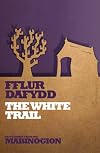
The White Trail is one of Seren Books' New Stories from the Mabinogion, a retelling of the medieval Welsh tale of Culhwch ac Olwen. This early Arthurian story described the quest of Culhwch (pronounced Kilhookh) for Olwen, a girl he had fallen violently in love with the moment he had heard about her. But to gain her hand he has to fulfill several impossible tasks set for him by Olwen's father, tasks he is only able to complete with the help of Arthur and his knights.
It is the longest of the show more native tales contained in the collection known as the Mabinogion and is a rich and complex narrative, with elements of folklore, fairytale, placename onomastics, Rabelaisian lists, black humour, grotesquery, puns and ritual all thrown in. A modern retelling will have to work very hard to include even a handful of these elements whilst also making it relevant and comprehensible to the reader. Fflur Dafydd makes a fair stab at this, to the extent that she reinterprets the action in a way that throws new light on the Dark Age tale but sensibly excises details that anchor Culhwch only to pre-modern times; on the other hand there are aspects of her narrative that for me technically don't work, whatever genre you choose to call it.
The closest genre that The White Trail approaches is magic realism. It makes sense to adopt this mode because its model can be similarly considered in its 11th-century context: at a time when Wales was nominally Christian Culhwch ac Olwen includes much primitive matter of a pagan nature involving ritual slaughter, magical beasts, giants and so on. To transform the fairytale feel into total realism would be to lose all sense of dream and wonder and magic, quite apart from rendering the story totally beyond credence.
The original was tripartite in structure: there was an introduction narrating the circumstances of Culhwch's birth, upbringing and his seeking help from his cousin Arthur to woo Olwen; this is followed by Olwen's father Ysbaddaden Pencawr ("Chief Giant") setting tasks for Culhwch to achieve before the marriage can take place; finally, the tasks are accomplished with the help of Arthur and his men, the Giant overcome and killed and Olwen won at last. Dafydd retains a three-part structure for her version but refocuses the story by making Culhwch's father Cilydd (pronounced something like Killith) the main protagonist and the only character whose point of view we are party to: thus Cilydd dominates the first section, then Culhwch enters Cilydd's life, and finally Cilydd precipitates the climactic events that occur in Ysbaddaden's mansion.
At this point I should point out the significance of some of the various names we encounter, as they are not only inherent in the medieval tale but are transferred unchanged to The White Trail. Culhwch literally means 'narrow sow' but the reason he's given this name is because he's born, unexpectedly, in a pig-run. Cilydd's father takes his name simply from a traditional Welsh name for a fellow or companion. Cilydd's first wife Goleuddydd means 'light of day' -- so when she dies the light literally goes out of his life. Meanwhile, the white flowers that bloom in Olwen's footsteps are supposed to explain the meaning of her name, 'white trail'; but I suspect that there might be older pan-Celtic roots behind it and that she originally took the form of a white swan (as in all those fairytales). Olwen's father Ysbaddaden (pronounced Usbah-thad-en) derives from Welsh ysbyddaden, which is the Welsh for 'hawthorn'; the tree is known for its prickles of course, but the haw or fruit of the hawthorn is known to have sedative properties, a fact which Fflur Dafydd seems to have grasped and used to some effect in the final section.
That's the background explanations done with, so now for some critique. Dafydd has successfully transplanted these principal characters to a modern-day Wales -- though a Wales with unidentified topography -- and has infused a degree of psychology into Cilydd's character. He is tormented first by his wife's disappearance, then by discovering she has died from some crude caesarian operation in a pigsty. His cousin Arthur, an unsuccessful private eye, promises to keep searching for the missing son. Cilydd, meanwhile, throws himself into supporting a missing-persons organisation but still finds himself in a downward spiral and so attempts suicide, with unforeseen repercussions. He now has guilt to add to his sense of deep loss.
The White Trail thus begins as a mystery story, but when we come to the sections with Culhwch and then Ysbaddaden it rapidly shifts into magic realism mode. Everything starts to blur into a dream-like state, with time becoming elastic, inexplicable phenomena manifesting themselves and a mysterious mansion in a forest taking on the semblance of a Celtic Otherworld, only with modern architecture. I didn't mind the gradual shift towards unreality but for me much of the prose didn't gel: the conversations were too static, I didn't engage with many of the characters, and character motivations though explained didn't seem credible. The outline of the 21st-century overlay sometimes disappeared into the fairytale narrative underlying it, meaning that I found this a less than convincing piece of fiction.
I felt that the author's hope of a retelling "charging on ahead in bold realist strides with surreality [sic] trailing at its heels" was a brave attempt, but that it was actually reality that was trailing at the heels of that surrealism. I welcomed the spotlight on the figure of Cilydd but the view I had of the novella, sadly, was of staring down the wrong end of a telescope. But if it directs the reader -- as it does me -- back to its principal inspiration, Culhwch ac Olwen, then that I feel would be its main virtue.
http://wp.me/s2oNj1-trail show less
It is the longest of the show more native tales contained in the collection known as the Mabinogion and is a rich and complex narrative, with elements of folklore, fairytale, placename onomastics, Rabelaisian lists, black humour, grotesquery, puns and ritual all thrown in. A modern retelling will have to work very hard to include even a handful of these elements whilst also making it relevant and comprehensible to the reader. Fflur Dafydd makes a fair stab at this, to the extent that she reinterprets the action in a way that throws new light on the Dark Age tale but sensibly excises details that anchor Culhwch only to pre-modern times; on the other hand there are aspects of her narrative that for me technically don't work, whatever genre you choose to call it.
The closest genre that The White Trail approaches is magic realism. It makes sense to adopt this mode because its model can be similarly considered in its 11th-century context: at a time when Wales was nominally Christian Culhwch ac Olwen includes much primitive matter of a pagan nature involving ritual slaughter, magical beasts, giants and so on. To transform the fairytale feel into total realism would be to lose all sense of dream and wonder and magic, quite apart from rendering the story totally beyond credence.
The original was tripartite in structure: there was an introduction narrating the circumstances of Culhwch's birth, upbringing and his seeking help from his cousin Arthur to woo Olwen; this is followed by Olwen's father Ysbaddaden Pencawr ("Chief Giant") setting tasks for Culhwch to achieve before the marriage can take place; finally, the tasks are accomplished with the help of Arthur and his men, the Giant overcome and killed and Olwen won at last. Dafydd retains a three-part structure for her version but refocuses the story by making Culhwch's father Cilydd (pronounced something like Killith) the main protagonist and the only character whose point of view we are party to: thus Cilydd dominates the first section, then Culhwch enters Cilydd's life, and finally Cilydd precipitates the climactic events that occur in Ysbaddaden's mansion.
At this point I should point out the significance of some of the various names we encounter, as they are not only inherent in the medieval tale but are transferred unchanged to The White Trail. Culhwch literally means 'narrow sow' but the reason he's given this name is because he's born, unexpectedly, in a pig-run. Cilydd's father takes his name simply from a traditional Welsh name for a fellow or companion. Cilydd's first wife Goleuddydd means 'light of day' -- so when she dies the light literally goes out of his life. Meanwhile, the white flowers that bloom in Olwen's footsteps are supposed to explain the meaning of her name, 'white trail'; but I suspect that there might be older pan-Celtic roots behind it and that she originally took the form of a white swan (as in all those fairytales). Olwen's father Ysbaddaden (pronounced Usbah-thad-en) derives from Welsh ysbyddaden, which is the Welsh for 'hawthorn'; the tree is known for its prickles of course, but the haw or fruit of the hawthorn is known to have sedative properties, a fact which Fflur Dafydd seems to have grasped and used to some effect in the final section.
That's the background explanations done with, so now for some critique. Dafydd has successfully transplanted these principal characters to a modern-day Wales -- though a Wales with unidentified topography -- and has infused a degree of psychology into Cilydd's character. He is tormented first by his wife's disappearance, then by discovering she has died from some crude caesarian operation in a pigsty. His cousin Arthur, an unsuccessful private eye, promises to keep searching for the missing son. Cilydd, meanwhile, throws himself into supporting a missing-persons organisation but still finds himself in a downward spiral and so attempts suicide, with unforeseen repercussions. He now has guilt to add to his sense of deep loss.
The White Trail thus begins as a mystery story, but when we come to the sections with Culhwch and then Ysbaddaden it rapidly shifts into magic realism mode. Everything starts to blur into a dream-like state, with time becoming elastic, inexplicable phenomena manifesting themselves and a mysterious mansion in a forest taking on the semblance of a Celtic Otherworld, only with modern architecture. I didn't mind the gradual shift towards unreality but for me much of the prose didn't gel: the conversations were too static, I didn't engage with many of the characters, and character motivations though explained didn't seem credible. The outline of the 21st-century overlay sometimes disappeared into the fairytale narrative underlying it, meaning that I found this a less than convincing piece of fiction.
I felt that the author's hope of a retelling "charging on ahead in bold realist strides with surreality [sic] trailing at its heels" was a brave attempt, but that it was actually reality that was trailing at the heels of that surrealism. I welcomed the spotlight on the figure of Cilydd but the view I had of the novella, sadly, was of staring down the wrong end of a telescope. But if it directs the reader -- as it does me -- back to its principal inspiration, Culhwch ac Olwen, then that I feel would be its main virtue.
http://wp.me/s2oNj1-trail show less
Lists
Awards


You May Also Like
Associated Authors
Statistics
- Works
- 12
- Also by
- 2
- Members
- 126
- Popularity
- #159,215
- Rating
- 3.7
- Reviews
- 6
- ISBNs
- 18
- Languages
- 1
- Favorited
- 1