
Juan Sebastián Cárdenas
Author of The Devil of the Provinces
About the Author
Works by Juan Sebastián Cárdenas
Tú y yo. Una novelita rusa 2 copies
Tú y Yo, una novelita rusa 1 copy
Associated Works
Images of Afghanistan: Exploring Afghan Culture through Art and Literature (2010) — Contributor — 6 copies
Tagged
Common Knowledge
- Birthdate
- 1978
- Gender
- male
- Education
- Javeriana University of Bogotá (Philosophy)
Complutense University of Madrid - Occupations
- translator
- Nationality
- Colombia
- Birthplace
- Popayán, Colombia
- Places of residence
- Bogotá, Colombia
Madrid, Spain - Associated Place (for map)
- Colombia
Members
Reviews
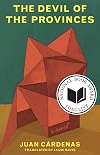
Rating: 3.5* of five
The Publisher Says: After a series of failures, a biologist returns to his hometown to live with his grieving mother. But in this gripping crime novel that upends the genre’s conventions, strange events unravel what he thought he knew of his past, his present, and himself.
When a biologist returns home to Colombia after fifteen years abroad, he quickly becomes entangled in the trappings of his past and his increasingly bizarre present: the unsolved murder of his brother, show more a drug dealer seeking transcendence, a boarding school where students disappear and girls give birth to strange creatures. An encounter with a well-connected acquaintance leads to a job offer in big agriculture, and he’s gradually drawn into a web of conspiracy. Ultimately, he may be destined to remain in the city he’d hoped never to see again. In The Devil of the Provinces, nothing is as it seems.
I RECEIVED A DRC FROM THE PUBLISHER VIA EDELWEISS+. THANK YOU.
My Review: It feels a bit like cheating to call this a crime novel on first glance. It took the publisher an afterword essay to make a (flimsy) case for it. But on sober reflection lasting months, I came to agree that this IS a crime novel of a specific sort:
The crimes committed, a murdered brother and a drug-dealing bestie (nothing solves the murder, no punishment accrues to the dealer) aside, are the truly vile crimes of misusing language and power to manipulate and control others for fun and profit. The criminals are both persons and institutions, as always in the annals of crime.
That's all told in the voice you read above; you'll like it or not, I very much do, but it takes time and a strong willingness to engage with the vocabulary to glean the story's full affect.
Coffee House Press asks $17.95 for one. The library's free. Unless you fell in love with the sample go check it out...but read it. Tendentious meditation on what a true true crime is. show less
The Publisher Says: After a series of failures, a biologist returns to his hometown to live with his grieving mother. But in this gripping crime novel that upends the genre’s conventions, strange events unravel what he thought he knew of his past, his present, and himself.
When a biologist returns home to Colombia after fifteen years abroad, he quickly becomes entangled in the trappings of his past and his increasingly bizarre present: the unsolved murder of his brother, show more a drug dealer seeking transcendence, a boarding school where students disappear and girls give birth to strange creatures. An encounter with a well-connected acquaintance leads to a job offer in big agriculture, and he’s gradually drawn into a web of conspiracy. Ultimately, he may be destined to remain in the city he’d hoped never to see again. In The Devil of the Provinces, nothing is as it seems.
I RECEIVED A DRC FROM THE PUBLISHER VIA EDELWEISS+. THANK YOU.
My Review: It feels a bit like cheating to call this a crime novel on first glance. It took the publisher an afterword essay to make a (flimsy) case for it. But on sober reflection lasting months, I came to agree that this IS a crime novel of a specific sort:
The biologist observed that, as with most extravagant paintings, the fabrication of custodiae had flourished during the Counter-Reformation, when the Catholic Church set in motion its major propaganda operation: the colonization of the senses through artwork. Persuasion wasn't enough anymore, subjugation was the aim. The passage from education to spectacle, evangelization to fanaticism. These images were made to trap the eye and flood it with vibration, illusions of movement, space-time dislocation.
The crimes committed, a murdered brother and a drug-dealing bestie (nothing solves the murder, no punishment accrues to the dealer) aside, are the truly vile crimes of misusing language and power to manipulate and control others for fun and profit. The criminals are both persons and institutions, as always in the annals of crime.
That's all told in the voice you read above; you'll like it or not, I very much do, but it takes time and a strong willingness to engage with the vocabulary to glean the story's full affect.
Coffee House Press asks $17.95 for one. The library's free. Unless you fell in love with the sample go check it out...but read it. Tendentious meditation on what a true true crime is. show less
I feel as if I should have liked Juan Cárdenas's The Devil of the Provinces more than I did. The book has been getting good reviews, but I found it to be a middling sort of read—though the translation is, I think, gorgeous. (I'll say a little something about that at the end of my review.)
The promo material for the book reads "After a series of failures, a biologist returns to his hometown to live with his grieving mother. But in this gripping crime novel that upends the genre’s show more conventions, strange events unravel what he thought he knew of his past, his present, and himself.
"When a biologist returns home to Colombia after fifteen years abroad, he quickly becomes entangled in the trappings of his past and his increasingly bizarre the unsolved murder of his brother, a drug dealer seeking transcendence, a boarding school where students disappear and girls give birth to strange creatures. An encounter with a well-connected acquaintance leads to a job offer in big agriculture, and he’s gradually drawn into a web of conspiracy. Ultimately, he may be destined to remain in the city he’d hoped never to see again. In The Devil of the Provinces, nothing is as it seems."
To be honest, I did not experience The Devil of the Provinces as a "gripping crime novel." There's an essay by the translator at the book's end that attempts to make a case for The Devil in the Provinces as a crime novel. She cites a pair of lists writers in the genre have proposed as essentials of a crime/mystery novel and explains, how, by violating most of them, The Devil of the Provinces "upends the genre’s conventions." It's an interesting argument, but I'm not sold on it.
I can explain my dubiousness by looking at the elements highlighted in the second promo paragraph: the unsolved murder of the narrator's younger brother; the transcendental drug dealer; disappearing students; the strange births. The murder is unsolved, it remains unsolved, the narrator learns nothing new about the murder. The drug dealer showers in the dark with the hottest water he can stand and claims this habit produces visions, but the nature of the visions or their relationship to other events in the novel is unclear. No students disappear. There is one unusual birth, but it's not all that outside the realm of the normal.
The Devil of the Provinces isn't a crime novel, so if you pick it up based on the promo material, you'll be disappointed.
The Devil of the Provinces is, however, an interesting exploration of a) language and identity b) individual complicity with the climate crisis and the ills of capitalism, and c) the depiction of race in popular culture. It invites reflection on these topics. One could read any number of passages as potentially productive journaling prompts. I'm not going to go into the details of the ways the Cárdenas does this exploration. If you're curious about a, b, and c, read the novel; they're its real heart.
The novel's central character has done the "right" things: he's a biologist; he'd moved from Columbia to Europe where there are better employment opportunities. But jobs are drying up and he finds himself returning to the small Colombian city he grew up in and living in his mother's apartment. He's puzzled by the "deep how" of how all this happened and is trying to come up with a sense of who he is that leaves him with some sense of agency despite his life's disappointments.
Early in the novel, the central character reflects on his current circumstances: "he [the biologist] was fully aware that the causes [of his disappointments] had been external: they'd made cuts across the sciences. The rest had been merely allowing himself to tumble over the edge, giving in to inertia from the blow. But the biologist was convinced that in the subsequent fall, the slow and predictable sliding off the cliff face, there lay hidden a secret about himself, about his most intimate structure, something that, in the end, had vested him with an identity and maybe even a style. I am that form of falling, he thought, inhaling whatever was left. That gesture—letting go—is essentially me." He, and we, may wish for something greater from life, but we've all had those moments that force us to recognize that we are, in ways, simply ordinary.
The quotation above offers an example of Lizzie Davis's deft handling of the translation. The words flow naturally and capture the complexity of the novel's ideas without making them either inaccessible or too simple. As I read this novel, I kept experiencing imaginary glimpses of the original Spanish and the challenge it would pose for a translator. She allows us to see the biologist through his own eyes in sentences that read naturally even when they're unclear and complicated.
I received a free electronic review copy of this title from the publisher via Edelweiss; the opinions are my own. show less
The promo material for the book reads "After a series of failures, a biologist returns to his hometown to live with his grieving mother. But in this gripping crime novel that upends the genre’s show more conventions, strange events unravel what he thought he knew of his past, his present, and himself.
"When a biologist returns home to Colombia after fifteen years abroad, he quickly becomes entangled in the trappings of his past and his increasingly bizarre the unsolved murder of his brother, a drug dealer seeking transcendence, a boarding school where students disappear and girls give birth to strange creatures. An encounter with a well-connected acquaintance leads to a job offer in big agriculture, and he’s gradually drawn into a web of conspiracy. Ultimately, he may be destined to remain in the city he’d hoped never to see again. In The Devil of the Provinces, nothing is as it seems."
To be honest, I did not experience The Devil of the Provinces as a "gripping crime novel." There's an essay by the translator at the book's end that attempts to make a case for The Devil in the Provinces as a crime novel. She cites a pair of lists writers in the genre have proposed as essentials of a crime/mystery novel and explains, how, by violating most of them, The Devil of the Provinces "upends the genre’s conventions." It's an interesting argument, but I'm not sold on it.
I can explain my dubiousness by looking at the elements highlighted in the second promo paragraph: the unsolved murder of the narrator's younger brother; the transcendental drug dealer; disappearing students; the strange births. The murder is unsolved, it remains unsolved, the narrator learns nothing new about the murder. The drug dealer showers in the dark with the hottest water he can stand and claims this habit produces visions, but the nature of the visions or their relationship to other events in the novel is unclear. No students disappear. There is one unusual birth, but it's not all that outside the realm of the normal.
The Devil of the Provinces isn't a crime novel, so if you pick it up based on the promo material, you'll be disappointed.
The Devil of the Provinces is, however, an interesting exploration of a) language and identity b) individual complicity with the climate crisis and the ills of capitalism, and c) the depiction of race in popular culture. It invites reflection on these topics. One could read any number of passages as potentially productive journaling prompts. I'm not going to go into the details of the ways the Cárdenas does this exploration. If you're curious about a, b, and c, read the novel; they're its real heart.
The novel's central character has done the "right" things: he's a biologist; he'd moved from Columbia to Europe where there are better employment opportunities. But jobs are drying up and he finds himself returning to the small Colombian city he grew up in and living in his mother's apartment. He's puzzled by the "deep how" of how all this happened and is trying to come up with a sense of who he is that leaves him with some sense of agency despite his life's disappointments.
Early in the novel, the central character reflects on his current circumstances: "he [the biologist] was fully aware that the causes [of his disappointments] had been external: they'd made cuts across the sciences. The rest had been merely allowing himself to tumble over the edge, giving in to inertia from the blow. But the biologist was convinced that in the subsequent fall, the slow and predictable sliding off the cliff face, there lay hidden a secret about himself, about his most intimate structure, something that, in the end, had vested him with an identity and maybe even a style. I am that form of falling, he thought, inhaling whatever was left. That gesture—letting go—is essentially me." He, and we, may wish for something greater from life, but we've all had those moments that force us to recognize that we are, in ways, simply ordinary.
The quotation above offers an example of Lizzie Davis's deft handling of the translation. The words flow naturally and capture the complexity of the novel's ideas without making them either inaccessible or too simple. As I read this novel, I kept experiencing imaginary glimpses of the original Spanish and the challenge it would pose for a translator. She allows us to see the biologist through his own eyes in sentences that read naturally even when they're unclear and complicated.
I received a free electronic review copy of this title from the publisher via Edelweiss; the opinions are my own. show less

This is a short, truly odd book with a mixture of different elements. I liked it's tone...dark, with moments of humor. Some genuine creepy sections as well. This balance kept me engaged without it having to be necessarily being plot-driven. I believe this is his second novel to get an English translation.
Non mi ha convinto del tutto. L'inizio coinvolge tantissimo, ma poi prende una piega in qualche modo vorticosa e arriva ad un finale, che proprio per questo cambio repentino, ho giudicato quasi sconclusionato. Forse meriterebbe un aparziale rilettura.
Awards


You May Also Like
Associated Authors
Statistics
- Works
- 19
- Also by
- 6
- Members
- 161
- Popularity
- #131,050
- Rating
- 3.8
- Reviews
- 5
- ISBNs
- 32
- Languages
- 4