
Malcolm Wright (2)
Author of Imperial Japanese Navy 1932-1945 Warships and Colours: With Japanese Army Vessels and Three Special Bonus Pages
For other authors named Malcolm Wright, see the disambiguation page.
Malcolm Wright (2) has been aliased into Malcolm George Wright.
Works by Malcolm Wright
Works have been aliased into Malcolm George Wright.
Tagged
Common Knowledge
There is no Common Knowledge data for this author yet. You can help.
Members
Reviews
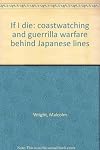
The author, Malcolm Wright, was one of a very select group of ex New Guinea planters and civil servants who worked behind Japanese lines during the Second World War, transmitting details of troop, aircraft and shipping movements. It was one of these Coast Watchers who saw John F Kennedy's PT109 explode and sink and who then sent a search party who located the crew.
Wright's field of operation was 400 miles to the west of the PT109 incident, on the Japanese occupied island of New Britain. show more Although New Britain was the base for up to 100,000 Japanese soldiers it was largely by-passed by the island-hopping strategy of the Allies. Wright's war, in consequence was relatively quiet, and other Coast Watchers were better placed to observe most of the air and sea activity in this zone. Nevertheless he and his companions were under constant threat of capture and execution, and towards the end of the war they led a small but effective guerilla war against Japanese troops who were now isolated, starving and desperate.
It's possible from this book, which was written in 1964, to get a sense of Australian attitudes towards their 'colonial responsibilities' in Papua New Guinea. If you discount a certain amount of 'blindness' on the part of these colonial administrators and landlords, the picture is reasonably benign and respectful on both sides. There was no doubt that the Japanese 'rule' throughout the islands was not regarded as 'liberating' by the occupants who were under pressure to provide food, and very likely other services to the Japanese.
This relationship between the colonialists and the indigenous people gives some background to the decision by the Australian command very late in the War to start 'mopping up' the Japanese forces left in occupation of these islands as a result of rapid forward movement of US forces on their way to conquer Japan. These mopping up operations were very controversial, even at the time. Many felt that the early liberation of areas under Japanese control was not worth the cost in dead and wounded, particularly as the units used had already suffered severe casualties in earlier fighting. Nevertheless the Australian attacks went ahead and liberated large areas of New Britain before the final Japanese surrender.
Recommended if this part of the world interests you, or this period in history. However, the pre-eminent book dealing with these operations will always be Eric Feldt's 'The Coastwatchers'. Feldt created the organisation and his book spans the whole span of operations from the initial planning to the end of the War. show less
Wright's field of operation was 400 miles to the west of the PT109 incident, on the Japanese occupied island of New Britain. show more Although New Britain was the base for up to 100,000 Japanese soldiers it was largely by-passed by the island-hopping strategy of the Allies. Wright's war, in consequence was relatively quiet, and other Coast Watchers were better placed to observe most of the air and sea activity in this zone. Nevertheless he and his companions were under constant threat of capture and execution, and towards the end of the war they led a small but effective guerilla war against Japanese troops who were now isolated, starving and desperate.
It's possible from this book, which was written in 1964, to get a sense of Australian attitudes towards their 'colonial responsibilities' in Papua New Guinea. If you discount a certain amount of 'blindness' on the part of these colonial administrators and landlords, the picture is reasonably benign and respectful on both sides. There was no doubt that the Japanese 'rule' throughout the islands was not regarded as 'liberating' by the occupants who were under pressure to provide food, and very likely other services to the Japanese.
This relationship between the colonialists and the indigenous people gives some background to the decision by the Australian command very late in the War to start 'mopping up' the Japanese forces left in occupation of these islands as a result of rapid forward movement of US forces on their way to conquer Japan. These mopping up operations were very controversial, even at the time. Many felt that the early liberation of areas under Japanese control was not worth the cost in dead and wounded, particularly as the units used had already suffered severe casualties in earlier fighting. Nevertheless the Australian attacks went ahead and liberated large areas of New Britain before the final Japanese surrender.
Recommended if this part of the world interests you, or this period in history. However, the pre-eminent book dealing with these operations will always be Eric Feldt's 'The Coastwatchers'. Feldt created the organisation and his book spans the whole span of operations from the initial planning to the end of the War. show less
Statistics
- Works
- 2
- Members
- 16
- Popularity
- #679,946
- Rating
- 3.8
- Reviews
- 1
- ISBNs
- 2