
Tom Mead (1)
Author of Death and the Conjuror
For other authors named Tom Mead, see the disambiguation page.
Series
Works by Tom Mead
The House at Devil's Neck: A Locked-Room Mystery (Joseph Spector Series) (2025) 36 copies, 2 reviews
Hester's Gift 2 copies
Associated Works
The MX Book of New Sherlock Holmes Stories Part XLII: Further Untold Cases - 1894-1922 (2023) — Foreword — 2 copies
Tagged
Common Knowledge
Members
Reviews
Cabaret Macabre: the brilliant new locked room mystery by Tom Mead (A Spector Locked-Room Mystery Book 3) by Tom Mead
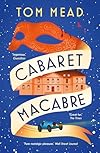
The third in the Joseph Spector ‘Locked Room’ murder mysteries. Set in 1938, a prominent judge starts to receive poison pen letters linking back to the death of his secretary ten years previously. A man is serving a sentence in a sanatorium for attacking the judge and his sister is convinced the judge is going to kill her brother. As the bodies mount up, can Inspector Flint of Scotland Yard along with the help of eminent conjurer and sleuth solve the case?
I enjoy a golden age mystery and show more this one is a great example of such. It didn’t disappoint. It’s quite complex and it had my head in a whirl trying to work it all out. In fact, I stopped trying to work it out and just went with the flow! It’s very cleverly written with some interesting plot devices and an atmospheric setting. The art of illusion is definitely at play. Abracadabra, wiggly woo! There are some strong and well depicted characters, although not all them make it to the end as can be expected. If you haven’t read the first two books in the series, don’t worry, I haven’t either and can confirm that this third book can be read as a standalone. But I will be going back to read the previous two in due course.
Such a fun and entertaining hocus pocus of a read show less
I enjoy a golden age mystery and show more this one is a great example of such. It didn’t disappoint. It’s quite complex and it had my head in a whirl trying to work it all out. In fact, I stopped trying to work it out and just went with the flow! It’s very cleverly written with some interesting plot devices and an atmospheric setting. The art of illusion is definitely at play. Abracadabra, wiggly woo! There are some strong and well depicted characters, although not all them make it to the end as can be expected. If you haven’t read the first two books in the series, don’t worry, I haven’t either and can confirm that this third book can be read as a standalone. But I will be going back to read the previous two in due course.
Such a fun and entertaining hocus pocus of a read show less
The Murder Wheel: a delightfully difficult locked-room mystery set in 1930s London. Perfect for fans of classic crime fiction! (A Spector Locked-Room Mystery Book 2) by Tom Mead
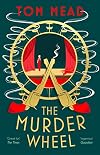
Four stars for the final read of the year! I'm not really a fan of 'Golden Age' detective novels, or modern versions thereof, but this kept me reading. The story is sort of a double murder mystery, where the initial investigator, a solicitor named Ibbs, finds himself accused of a second violent death while caught up in an incidental drama. Very strange set up and I wasn't sure who the actual lead detective was - even though his name is there on the cover! (I think I would have preferred Ibbs show more over Spector, to be fair - less Holmesian ego.) I'm also not a fan of locked room mysteries, because the author usually has to tie themselves in knots to explain how the impossible took place, as happens here (somebody's skill at hook a duck comes in handy, I kid you not ) The explanation was deathly dull and dragged on, after the who and the why was established (diagrams were involved).
That said, I was engrossed throughout, and liked the small cast of characters at the Pomegranate Theatre. show less
That said, I was engrossed throughout, and liked the small cast of characters at the Pomegranate Theatre. show less
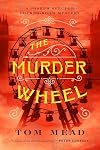
Thus far, Tom Mead has only written two volumes in his Joseph Spector mystery series. Let us all hope that he will produce many, many more. If I weren't aware that this novel is coming out in July 2023, I would be absolutely convinced The Murder Wheel came from the "golden age" of detective fiction. The puzzles are wonderfully puzzling. Joseph Spector, the central character, is a former stage magician who now works informally with Scotland Yard's Inspector George Flint as a consultant on show more particularly outré cases, the kind of cases that seem as if they could involve magic—though they don't because Spector is as devoted to rationcination as was Holmes.
The Murder Wheel begins with a confounding murder. A man has been shot at an amusement park while riding the Ferris wheel. His wife, who was with him, insists that a) he hadn't brought a gun with him, b) that she did not kill him, and c) that he did not commit suicide. Edmund Ibbs, a lawyer and amateur magician is working for the defense on this case. As the narrative grows more complex, readers discover that there must be a connection of some kind between this murder and criminal activity within The Pomegranate, a variety theatre.
Ibbs is in The Pomegranate's audience watching a performance by Professor Paolini and finds himself called on stage to serve as the shooter in a bullet trick. All goes well with that trick, but shortly after events turn deadly. Inspector Flint arrives at the scene of the crime. He'd met Ibbs prevously due to Ibbs' work on the Ferris wheel case, and viewed him as, if not an ally, then a honest man going about the work involved in his job. But encountering Ibbs again, Flint grows increasingly suspicious of Ibbs. Spector joins Flint, making Ibbs an awkward, and possibly criminal, third wheel in the Pomegranate investigation.
Besides the inexplicable shooting at the amusement park, other conundrums abound. There's a locked room, a mysterious man who appears inexplicably backstage—as a corpse, multiple interlocking witness statements, and so much more. If you're a lover of "old school" mysteries, The Murder Wheel will absolutely delight you. Even if you have no idea what the "golden age" of mysteries is, if you're a reader who enjoys puzzles of any kind, you'll want to pick up a copy of this book.
I received a free electronic review copy of this title from the publisher; the opinions are my own. show less
The Murder Wheel begins with a confounding murder. A man has been shot at an amusement park while riding the Ferris wheel. His wife, who was with him, insists that a) he hadn't brought a gun with him, b) that she did not kill him, and c) that he did not commit suicide. Edmund Ibbs, a lawyer and amateur magician is working for the defense on this case. As the narrative grows more complex, readers discover that there must be a connection of some kind between this murder and criminal activity within The Pomegranate, a variety theatre.
Ibbs is in The Pomegranate's audience watching a performance by Professor Paolini and finds himself called on stage to serve as the shooter in a bullet trick. All goes well with that trick, but shortly after events turn deadly. Inspector Flint arrives at the scene of the crime. He'd met Ibbs prevously due to Ibbs' work on the Ferris wheel case, and viewed him as, if not an ally, then a honest man going about the work involved in his job. But encountering Ibbs again, Flint grows increasingly suspicious of Ibbs. Spector joins Flint, making Ibbs an awkward, and possibly criminal, third wheel in the Pomegranate investigation.
Besides the inexplicable shooting at the amusement park, other conundrums abound. There's a locked room, a mysterious man who appears inexplicably backstage—as a corpse, multiple interlocking witness statements, and so much more. If you're a lover of "old school" mysteries, The Murder Wheel will absolutely delight you. Even if you have no idea what the "golden age" of mysteries is, if you're a reader who enjoys puzzles of any kind, you'll want to pick up a copy of this book.
I received a free electronic review copy of this title from the publisher; the opinions are my own. show less
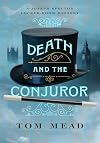
I had high hopes for this one, but was seriously let down.
A famous Viennese psychologist is found murdered in his home office; all the doors and windows are locked from the inside. Who could the culprit be and how could he possibly have perpetrated this locked room feat of legerdemain? There is no dearth of possible suspects. There is the doctor’s ambitious daughter and her unlikely buffoon of a fiancé…not to mention the doctor’s three high-profile patients who all suffer from serious show more mental disorders. Or could it be the mysterious stranger who visited the doctor around the time of the murder? And what about the colossal professional failure from the doctor’s distant past, The Snakeman; could someone related to The Snakeman have finally exacted the ultimate revenge for the doctor’s one tragic mistake? A police inspector and an old stage magician join forces to uncover the culprit.
Compared to a lot of contemporary novels, the writing quality was fairly decent. However, the author needs a refresher course in the proper usage of ‘who’ and ‘whom’.
The mystery story itself suffered from a number of major problems.
There were way too many subplots flying around. Rather than adding to the storyline, they detracted from the primary action. Whether it was the fugue-state writer’s shadowy pursuer or the impresario’s stolen painting, all of those secondary plotlines piled on top of one another & just became unnecessary & irrelevant distractions.
The author’s explanations for everything were just convoluted and ridiculous. The methods described for achieving the impossible locked room murders were just that: Impossible. India rubber, unnoticed alcoves, scarves, doorbell tampering, alarm clocks, flying guns…it was all completely implausible and made no sense whatsoever. No one on planet earth will find any of the solutions presented reasonable or even remotely realistic.
The killer’s motive came completely out of nowhere & was utterly out of character.
I (in addition to the other members of my book club) identified the killer early on; unfortunately, Tom Mead couldn’t seem to figure it out himself, and identified a different perpetrator for the conclusion of his story. All of the scenarios we concocted for the how and the why were infinitely more interesting and realistic than the author’s version. That’s just sad.
And, although one would expect The Conjuror to play a major role throughout the book, he really doesn’t. He mostly just sits in a booth at a dingy pub doing tricks and chatting with the inspector. Occasionally, he interrogates a witness, but he spends most of the book in the background, not doing much of anything. I really didn’t see the point, except that the author wanted an excuse to include ‘Conjuror’ in the title.
I probably would have given this book closer to two or two and a half stars if it hadn’t been for that asinine page toward the end in which the author obnoxiously announces that the reader now has all of the information needed to solve the crime (No, he doesn’t.) and—even though it’s completely awkward and unnecessary—isn’t it fun to include this nonsense at this point in the story (No, it isn’t.) On top of everything else, that bit really, really irked me. The foolishness of it all flat-out killed what was already turning out to be an exasperating reading experience. show less
A famous Viennese psychologist is found murdered in his home office; all the doors and windows are locked from the inside. Who could the culprit be and how could he possibly have perpetrated this locked room feat of legerdemain? There is no dearth of possible suspects. There is the doctor’s ambitious daughter and her unlikely buffoon of a fiancé…not to mention the doctor’s three high-profile patients who all suffer from serious show more mental disorders. Or could it be the mysterious stranger who visited the doctor around the time of the murder? And what about the colossal professional failure from the doctor’s distant past, The Snakeman; could someone related to The Snakeman have finally exacted the ultimate revenge for the doctor’s one tragic mistake? A police inspector and an old stage magician join forces to uncover the culprit.
Compared to a lot of contemporary novels, the writing quality was fairly decent. However, the author needs a refresher course in the proper usage of ‘who’ and ‘whom’.
The mystery story itself suffered from a number of major problems.
There were way too many subplots flying around. Rather than adding to the storyline, they detracted from the primary action. Whether it was the fugue-state writer’s shadowy pursuer or the impresario’s stolen painting, all of those secondary plotlines piled on top of one another & just became unnecessary & irrelevant distractions.
The author’s explanations for everything were just convoluted and ridiculous. The methods described for achieving the impossible locked room murders were just that: Impossible. India rubber, unnoticed alcoves, scarves, doorbell tampering, alarm clocks, flying guns…it was all completely implausible and made no sense whatsoever. No one on planet earth will find any of the solutions presented reasonable or even remotely realistic.
The killer’s motive came completely out of nowhere & was utterly out of character.
I (in addition to the other members of my book club) identified the killer early on; unfortunately, Tom Mead couldn’t seem to figure it out himself, and identified a different perpetrator for the conclusion of his story. All of the scenarios we concocted for the how and the why were infinitely more interesting and realistic than the author’s version. That’s just sad.
And, although one would expect The Conjuror to play a major role throughout the book, he really doesn’t. He mostly just sits in a booth at a dingy pub doing tricks and chatting with the inspector. Occasionally, he interrogates a witness, but he spends most of the book in the background, not doing much of anything. I really didn’t see the point, except that the author wanted an excuse to include ‘Conjuror’ in the title.
I probably would have given this book closer to two or two and a half stars if it hadn’t been for that asinine page toward the end in which the author obnoxiously announces that the reader now has all of the information needed to solve the crime (No, he doesn’t.) and—even though it’s completely awkward and unnecessary—isn’t it fun to include this nonsense at this point in the story (No, it isn’t.) On top of everything else, that bit really, really irked me. The foolishness of it all flat-out killed what was already turning out to be an exasperating reading experience. show less
Awards


You May Also Like
Associated Authors
Statistics
- Works
- 6
- Also by
- 8
- Members
- 381
- Popularity
- #63,386
- Rating
- 3.4
- Reviews
- 22
- ISBNs
- 51