
Joe Kerwin
Author of Homesteading Space: The Skylab Story
About the Author
Image credit: from Wikimedia Commons
Works by Joe Kerwin
Associated Works
US Spacesuits (Springer Praxis Books / Space Exploration) (2006) — Foreword, some editions — 22 copies
Tagged
Common Knowledge
- Legal name
- Kerwin, Joseph Peter
- Other names
- Kerwin, Joseph P.
- Birthdate
- 1932-02-19
- Gender
- male
- Education
- Northwestern University
College of the Holy Cross - Occupations
- astronaut
physician
flight surgeon - Organizations
- National Aeronautics and Space Administration
United States Navy
Lockheed Corporation
Systems Research Laboratories
KRUG Life Sciences
Wyle Laboratories (show all 9)
National Space Biomedical Research Institute
Aerospace Medical Association
Aircraft Owners and Pilots Association - Awards and honors
- Navy Distinguished Service Medal
NASA Distinguished Service Medal - Nationality
- USA
- Birthplace
- Oak Park, Illinois, USA
- Associated Place (for map)
- Illinois, USA
Members
Reviews
"All of us have a new courage now that man can work in space to control his environment, improve his circumstances and exert his will, even as he does down here on Earth."
-Richard Nixon
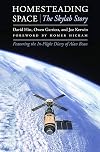
When Congress cut funding for Apollo 18, 19 and 20, many people at NASA didn't know what the future of the agency would be. A committee was formed to explore what options they had and, since they could not ask for more money, what they could do with the equipment on-hand. From the remains of a Saturn rocket show more they fashioned Skylab - the first space station. And the three command modules originally slated for those last trips to the moon would ferry the crews there and back again.
Skylab's primary mission was to study the effects of long-term spaceflight on the human body and to see if those effects could be mitigated. If we were to ever go to another planet (like Mars), we needed to know if it was possible to live in space. But the program had a rocky start - the heat shield came off during Skylab's ascent into orbit and damaged the solar array. Not only was it too hot for habitation but it didn't have enough power for the experiments either. Before the mission could begin NASA had to figure out how the first crew could repair a construct that was never meant to have maintenance performed on it. The hardware was not meant to be unfastened or modified and there were not adequate hand- and foot-holds.
Eventually NASA did fix Skylab and three crews lived and worked there for nearly a year, performing bio-medical experiments and studying both the Earth and the Sun. Not only did they learn much about the human body in zero-g but also about crew dynamics, EVAs and spacecraft design. All subsequent spaceflight programs owe a debt to the lessons learned on Skylab.
The plan for Skylab was originally to have one of the first Shuttle missions boost it to a higher orbit so that more time could be spent working there when funding was granted. Even the Russians expressed an interest in a joint Skylab crew with the Americans (which eventually became Apollo-Soyuz). But the Shuttle program was delayed and Skylab fell to Earth, just like MIR would many years later.
Homesteading Space was a good education for me, as I did not know anything about Skylab before reading it. I enjoyed the astronauts' diaries and the transcripts of conversations with the Houston. Many of their experiments were interesting, not just the ones performed on themselves but with spiders and minnows as well. But, honestly, it's not a book I think the casual science reader would enjoy. Even with my great interest in space books, I felt fatigued two-thirds of the way through the 500+ pages. I think only those interested in spaceflight would enjoy it as hobby-reading. show less
-Richard Nixon
When Congress cut funding for Apollo 18, 19 and 20, many people at NASA didn't know what the future of the agency would be. A committee was formed to explore what options they had and, since they could not ask for more money, what they could do with the equipment on-hand. From the remains of a Saturn rocket show more they fashioned Skylab - the first space station. And the three command modules originally slated for those last trips to the moon would ferry the crews there and back again.
Skylab's primary mission was to study the effects of long-term spaceflight on the human body and to see if those effects could be mitigated. If we were to ever go to another planet (like Mars), we needed to know if it was possible to live in space. But the program had a rocky start - the heat shield came off during Skylab's ascent into orbit and damaged the solar array. Not only was it too hot for habitation but it didn't have enough power for the experiments either. Before the mission could begin NASA had to figure out how the first crew could repair a construct that was never meant to have maintenance performed on it. The hardware was not meant to be unfastened or modified and there were not adequate hand- and foot-holds.
Eventually NASA did fix Skylab and three crews lived and worked there for nearly a year, performing bio-medical experiments and studying both the Earth and the Sun. Not only did they learn much about the human body in zero-g but also about crew dynamics, EVAs and spacecraft design. All subsequent spaceflight programs owe a debt to the lessons learned on Skylab.
The plan for Skylab was originally to have one of the first Shuttle missions boost it to a higher orbit so that more time could be spent working there when funding was granted. Even the Russians expressed an interest in a joint Skylab crew with the Americans (which eventually became Apollo-Soyuz). But the Shuttle program was delayed and Skylab fell to Earth, just like MIR would many years later.
Homesteading Space was a good education for me, as I did not know anything about Skylab before reading it. I enjoyed the astronauts' diaries and the transcripts of conversations with the Houston. Many of their experiments were interesting, not just the ones performed on themselves but with spiders and minnows as well. But, honestly, it's not a book I think the casual science reader would enjoy. Even with my great interest in space books, I felt fatigued two-thirds of the way through the 500+ pages. I think only those interested in spaceflight would enjoy it as hobby-reading. show less
Homesteading Space: The Skylab Story (Outward Odyssey: A People's History of S) (Outward Odyssey: A People's History of Spaceflight) by David Hitt
I cannot figure out why Hitt chose to include some of the details he did. Instead of adding personality or color, they just bog down the story. I don't care what news stories Houston read to the crew on Day 5 or that the Indianapolis 500 was cut short due to weather.
517 pages, illustrated. Get this from your library unless you are student of NASA history. It's a Good history of an important but over looked portion of NASA history. Skylab was the 1st US space station. We learned much of what makes long term space missions possible. This is a detailed look at the program. Its written by the men who flew on it and those who made it. This was the 1st space repair mission. Skylab set ground work for the Hubble repair mission, and the building of the show more International Space Station. show less
You May Also Like
Associated Authors
Statistics
- Works
- 1
- Also by
- 1
- Members
- 60
- Popularity
- #277,519
- Rating
- 4.1
- Reviews
- 3
- ISBNs
- 3