
Greg Kihn (1949–2024)
Author of Horror Show
About the Author
Image credit: Greg Kihn in concert, 5/9/08
Series
Works by Greg Kihn
Associated Works
Sounds Of The Eighties - 1983 — Contributor — 1 copy
Tagged
Common Knowledge
- Legal name
- Kihn, Gregory Stanley
- Birthdate
- 1949-07-10
- Date of death
- 2024-08-13
- Gender
- male
- Occupations
- musician
songwriter
guitarist
radio host
horror novelist - Cause of death
- Alzheimer's disease
- Nationality
- USA
- Birthplace
- Baltimore, Maryland, USA
- Associated Place (for map)
- Maryland, USA
Members
Reviews
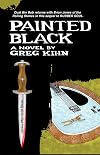
I've read--and mostly enjoyed--all of Kihn's previous novels. But this one, unfortunately, was an absolute chore. It's essentially a study in what lackluster editing can do to sink a novel.
There's just so much wrong with the novel. From simple things like spelling mistakes (mostly notably, "it" for "in" on two different occasions) to broad narrative issues such as Brian Jones getting new girlfriends with absolutely no noted passage of time, or things like, "Tell me about this auction," when show more no auction had been mentioned up to that point. It's things like some using most of the blank tapes, then later that's switched to half. Or Cotchford Farms having a five-hundred acre wood, then later downgraded to a hundred-acre wood.
It's things like the fact that no character goes pale. They always go a "whiter shade of pale" just so the Procol Harum song can be referenced.
But it's deeper issues as well. Kihn, at least in this novel, can't seem to exercise any subtlety. The reader is beaten over the head with facts. Some are repeated, like each time the Monterey Festival is brought up, the reader is always given a long list of the performers, always ending with something like, "and, of course, The Who and Jimi Hendrix." Not once, not twice. Every time.
Or there's sections like:
Pop quiz: where did the "15" come from in the Patches 15 Below name? Yeah, I'm guessing you caught it. As well as the fact that it was a coffeehouse, seeing as how that was also brought up a couple of times in a couple of sentences.
If this was the only instance, that would be fine. But it's not. It happens constantly.
There's a writing rule that states, "show, don't tell" and it's a good one to follow most of the time. Kihn seems to ignore it far too much here, telling what should be shown, showing (boring little details the reader doesn't need) what should be told.
For example:
Stephen King once said something along the lines that movies tended to be mostly surface, and novels were all depth. An author can dig into their characters' psyches. Kihn never does this. This book is all surface. Dust Bin Bob is one of the primary characters and he's such a whiny wimp he's totally unlikable. As is Brian Jones. I think Kihn was going for tragic, but Jones came across as an asshole woman-beater. No one seemed to have any motivations beyond John Lennon asking them to help.
If this was a first novel, I'd be willing to cut it some slack, but this is Kihn's sixth, and he's also edited an anthology. And he's so much better than this. I've read everything he wrote.
So, back to my original thought. I truly believe that, had he had an editor who knew what he was doing, instead of (from all appearances), editing this book while watching TV or something, this could have been a book worth reading. Dump the unnecessary subplots. Tighten the writing. Show, don't tell. Fix the errors.
I won't mention anything about the horrid cover, other than, it's horrid.
But this? It has made me seriously consider whether I'd ever read another book by Kihn. It's too bad. I really enjoyed his earlier novels. show less
There's just so much wrong with the novel. From simple things like spelling mistakes (mostly notably, "it" for "in" on two different occasions) to broad narrative issues such as Brian Jones getting new girlfriends with absolutely no noted passage of time, or things like, "Tell me about this auction," when show more no auction had been mentioned up to that point. It's things like some using most of the blank tapes, then later that's switched to half. Or Cotchford Farms having a five-hundred acre wood, then later downgraded to a hundred-acre wood.
It's things like the fact that no character goes pale. They always go a "whiter shade of pale" just so the Procol Harum song can be referenced.
But it's deeper issues as well. Kihn, at least in this novel, can't seem to exercise any subtlety. The reader is beaten over the head with facts. Some are repeated, like each time the Monterey Festival is brought up, the reader is always given a long list of the performers, always ending with something like, "and, of course, The Who and Jimi Hendrix." Not once, not twice. Every time.
Or there's sections like:
Omar St. Groovy and His Snake Stomping Review had a gig coming up over the weekend, and Bobby was excited about it. Tom Naylor had secured the gig at a coffeehouse in Timonium, Maryland, just past Towson, called Patches 15 below. Patches was a local TV personality and he and his wife, Liz, ran a wonderful basement coffeehouse, fifteen steps below the parking lot of a modest strip mall. The name Patches 15 Below referred to the amount of steps you had to descend to get in. It was fifteen steps below the parking lot.
Pop quiz: where did the "15" come from in the Patches 15 Below name? Yeah, I'm guessing you caught it. As well as the fact that it was a coffeehouse, seeing as how that was also brought up a couple of times in a couple of sentences.
If this was the only instance, that would be fine. But it's not. It happens constantly.
There's a writing rule that states, "show, don't tell" and it's a good one to follow most of the time. Kihn seems to ignore it far too much here, telling what should be shown, showing (boring little details the reader doesn't need) what should be told.
For example:
The minute Brian saw Anita, he could see deceit and betrayal in her eyes. He immediately accused her of what he was convinced had happened and which indeed was the sordid truth. Keith and Anita had been playing house the whole time he was gone. (Note: This is all tell)
Screaming at Anita, Brian described the scenario. (Note: Now Kihn is telling us what he's about to show us)
"As soon as I was gone, Keith made his move, didn't he? And he had his way with you, didn't he? You cheap little German slut! You had sex with him! Admit it! You sucked his dick! You spent every moment together, didn't you? Didn't you?"
Of course, Anita denied everything. Her ability to lie was quite sophisticated, and she could stick like glue to the flimsiest of plausibilities. (Tell, tell, tell)
The fight came to blows as most of their big arguments did. In the end, Brian relented and they drove on to Marrakech.(Really? He gets physically abusive with her and it's not even worth a couple of sentences to illustrate?)
Stephen King once said something along the lines that movies tended to be mostly surface, and novels were all depth. An author can dig into their characters' psyches. Kihn never does this. This book is all surface. Dust Bin Bob is one of the primary characters and he's such a whiny wimp he's totally unlikable. As is Brian Jones. I think Kihn was going for tragic, but Jones came across as an asshole woman-beater. No one seemed to have any motivations beyond John Lennon asking them to help.
If this was a first novel, I'd be willing to cut it some slack, but this is Kihn's sixth, and he's also edited an anthology. And he's so much better than this. I've read everything he wrote.
So, back to my original thought. I truly believe that, had he had an editor who knew what he was doing, instead of (from all appearances), editing this book while watching TV or something, this could have been a book worth reading. Dump the unnecessary subplots. Tighten the writing. Show, don't tell. Fix the errors.
I won't mention anything about the horrid cover, other than, it's horrid.
But this? It has made me seriously consider whether I'd ever read another book by Kihn. It's too bad. I really enjoyed his earlier novels. show less
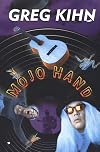
I actually really enjoyed this book, for a bunch of reasons.
Kihn made the romance more subtle this time. He also eased up on the woo-woo preachy stuff that Beau was going through ten years earlier in the last book. He also tied this series, that started with [b:Horror Show|1352829|Horror Show|Greg Kihn|https://d.gr-assets.com/books/1182936624s/1352829.jpg|804472] and continued with [b:Big Rock Beat: A Wacky Zany Romp|818606|Big Rock Beat A Wacky Zany Romp|Greg show more Kihn|https://d.gr-assets.com/books/1312053383s/818606.jpg|804470] with his second novel, [b:Shade of Pale|818607|Shade of Pale|Greg Kihn|https://d.gr-assets.com/books/1387740344s/818607.jpg|804471] by bringing George Jones in for what amounts to a prequel to that novel. Then he brings in Robert friggin' Johnson and does him justice. As well as Keith Richards, sorry I mean Heath Pritchard, also one of his better characters. Then, he even manages to get a mention in of his own Greg Kihn Band.
Seriously, the only thing he was missing was Omar and the Apostles, the best thing from Big Rock Beat.
This novel, his fourth, hit exactly the right tone of fun and seriousness. It had a decently complex plot and some great characters.
Well done. show less
Kihn made the romance more subtle this time. He also eased up on the woo-woo preachy stuff that Beau was going through ten years earlier in the last book. He also tied this series, that started with [b:Horror Show|1352829|Horror Show|Greg Kihn|https://d.gr-assets.com/books/1182936624s/1352829.jpg|804472] and continued with [b:Big Rock Beat: A Wacky Zany Romp|818606|Big Rock Beat A Wacky Zany Romp|Greg show more Kihn|https://d.gr-assets.com/books/1312053383s/818606.jpg|804470] with his second novel, [b:Shade of Pale|818607|Shade of Pale|Greg Kihn|https://d.gr-assets.com/books/1387740344s/818607.jpg|804471] by bringing George Jones in for what amounts to a prequel to that novel. Then he brings in Robert friggin' Johnson and does him justice. As well as Keith Richards, sorry I mean Heath Pritchard, also one of his better characters. Then, he even manages to get a mention in of his own Greg Kihn Band.
Seriously, the only thing he was missing was Omar and the Apostles, the best thing from Big Rock Beat.
This novel, his fourth, hit exactly the right tone of fun and seriousness. It had a decently complex plot and some great characters.
Well done. show less

I enjoy stories based on mythology, and Greg Kihn's Shade of Pale was no exception. The mythical creature at the center of this novel is the Irish Banshee, who traditionally wails in grief over a person's impending death, thereby allowing both friends and family to say goodbye and otherwise prepare for the loss of their loved one. Kihn's Banshee, however, is much more aggressive; her wail actually kills the men at which it is directed, in fairly gruesome ways. Not surprisingly, this ability show more makes her a formidable weapon, which some would like to control and wield against their enemies.
The Banshee is the common factor linking three main plot lines: the disappearance of a psychiatrist's sister; the strangling murders of several prostitutes; and the unexplained violent deaths of two men in New York City, whose only connection appears to be that they are both Irish. Kihn does a fine job at maintaining the suspense in all three plots while simultaneously weaving them together to create a satisfying finale. My only real complaint was his introduction of the "Banshee as weapon" idea, which provided some well-deserved gore at the end of the book but otherwise felt tacked on to the overall explanation for the Banshee's appearance in the New World. (Traditionally, the Banshee grieves for Irish emigrants at their ancestral family seat.)
There are a couple of minor factual gaffes, including a psychiatrist without a cell phone in 1997 and a battery-powered hand drill which is fully charged after the power to its charging cradle has been turned off for months, if not years. These glitches occur in the last 50 pages, though, so they do not significantly disrupt the reader's immersion in the narrative.
Verdict: Recommended for paranormal fantasy fans and crime thriller fans who don't mind a supernatural element.
I received a free copy of Shade of Pale through NetGalley in exchange for an honest review. show less
The Banshee is the common factor linking three main plot lines: the disappearance of a psychiatrist's sister; the strangling murders of several prostitutes; and the unexplained violent deaths of two men in New York City, whose only connection appears to be that they are both Irish. Kihn does a fine job at maintaining the suspense in all three plots while simultaneously weaving them together to create a satisfying finale. My only real complaint was his introduction of the "Banshee as weapon" idea, which provided some well-deserved gore at the end of the book but otherwise felt tacked on to the overall explanation for the Banshee's appearance in the New World. (Traditionally, the Banshee grieves for Irish emigrants at their ancestral family seat.)
There are a couple of minor factual gaffes, including a psychiatrist without a cell phone in 1997 and a battery-powered hand drill which is fully charged after the power to its charging cradle has been turned off for months, if not years. These glitches occur in the last 50 pages, though, so they do not significantly disrupt the reader's immersion in the narrative.
Verdict: Recommended for paranormal fantasy fans and crime thriller fans who don't mind a supernatural element.
I received a free copy of Shade of Pale through NetGalley in exchange for an honest review. show less
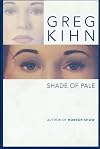
I usually try and read an author's books in the order they're published, but I managed to snag all of Kihn's books at once and, seeing that three of them are linked, decided to start with his second published (and stand alone) novel.
Likely a mistake.
Now I'm viewing the time I'll spend reading his other novels with some trepidation.
The reason for this is based solely on what I got out of this novel, Shade Of Pale. It's not a horrible book, and the story itself, in the hands of a more adept show more writer, would likely be really creepy and really engaging. I get the sense Kihn was reaching for more than he was capable of.
For such a short novel, this story is littered with far too many characters, none of which are given much more than cursory personalities--and all of that is told, not shown. Kihn, at least in this novel, is the master of telling and the master of the adverb. Unfortunately, he is nowhere near the master of dialogue, characterization, or pacing.
In fact, the protagonist, Jukes, is such a boring, self-doubting dork who gets pushed around by everyone he comes in contact with, it stretches the imagination far beyond the suspension of disbelief when he finally meets the strong, confident, beautiful and educated (if given to boring monologues about Banshees and shock) Fiona, there was literally no point where I believed their relationship. They came together only because the author wanted them to, not because he'd built the story and characters to support it.
The book also had a fair amount of filler. The entire IRA subplot could have been excised without impacting the story, and Jukes' examination of the cellar of the cabin was obviously to try and throw in a creepy scene, but it went nowhere.
And the Banshee? Underutilized. Her key scenes happened, for the most part, off-stage. Her actions often made little sense. Basically, an absolutely brilliant "monster" that Kihn seemed to not truly know what to do with.
I'm really hoping Horrorshow and its followups are much better. show less
Likely a mistake.
Now I'm viewing the time I'll spend reading his other novels with some trepidation.
The reason for this is based solely on what I got out of this novel, Shade Of Pale. It's not a horrible book, and the story itself, in the hands of a more adept show more writer, would likely be really creepy and really engaging. I get the sense Kihn was reaching for more than he was capable of.
For such a short novel, this story is littered with far too many characters, none of which are given much more than cursory personalities--and all of that is told, not shown. Kihn, at least in this novel, is the master of telling and the master of the adverb. Unfortunately, he is nowhere near the master of dialogue, characterization, or pacing.
In fact, the protagonist, Jukes, is such a boring, self-doubting dork who gets pushed around by everyone he comes in contact with, it stretches the imagination far beyond the suspension of disbelief when he finally meets the strong, confident, beautiful and educated (if given to boring monologues about Banshees and shock) Fiona, there was literally no point where I believed their relationship. They came together only because the author wanted them to, not because he'd built the story and characters to support it.
The book also had a fair amount of filler. The entire IRA subplot could have been excised without impacting the story, and Jukes' examination of the cellar of the cabin was obviously to try and throw in a creepy scene, but it went nowhere.
And the Banshee? Underutilized. Her key scenes happened, for the most part, off-stage. Her actions often made little sense. Basically, an absolutely brilliant "monster" that Kihn seemed to not truly know what to do with.
I'm really hoping Horrorshow and its followups are much better. show less
Awards

You May Also Like


Associated Authors
Statistics
- Works
- 15
- Also by
- 8
- Members
- 352
- Popularity
- #67,993
- Rating
- 3.5
- Reviews
- 16
- ISBNs
- 22