
Dave Daubert
Author of Living Lutheran: Renewing Your Congregation (Lutheran Voices)
About the Author
Dave Daubert is Director for Renewal of Congregations for the Evangelical Outreach and Congregational Mission unit of the Evangelical Lutheran Church in America
Works by Dave Daubert
Tagged
Common Knowledge
There is no Common Knowledge data for this author yet. You can help.
Members
Reviews
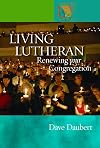
Living Lutheran: Renewing Your Congregation by Dave Daubert. Library section 6A: Church Growth. This volume from Augsburg’s Lutheran Voices series takes readers through a process of renewing a Lutheran congregation by creating a vision, which is comprised of creating a mission statement (also called a purpose statement), a set of guiding principles (core values expressed in missional form), formulated and then LIVED OUT over time. Put in mathematical form:
Vision = mission statement + core show more principles + time
It is not enough for a few members to create a mission statement and core principles and have everyone else in the congregation just sign off on them. The parts of the vision have to be created through a process of prayer, scripture study and dialog – there are no short cuts. Therefore a larger group of parishioners needs to meet, perhaps in the form of a retreat, to pray, then break into small groups to study scripture, and then present and discuss their findings as the reassembled larger group. Then the statement and principles are written based on the findings.
It helps to leave all written work on newsprint sheets, sticky notes, etc., in the fellowship hall for the entire congregation to examine, read, and contemplate. From these steps come the parts of a vision. This process is carefully outlined and it seems to be the one my former church followed when they created a new mission statement and a set of five-year goals (slightly different than a set of core principles, which we may also have formulated at the time). We printed up the final information in booklet form so the entire membership received a copy to keep at home.
Pastor Daubert, the author, mentioned that core principles sometimes can create unexpected, even upsetting results. For example, a congregation that wants more kids may have in mind a 1950s style congregation in which parents bring their children to church and sit with them in the pews, worshiping as a family. What happens, though, if parents drop their kids off and the unaccompanied kids create a ruckus during worship? Fine tuning is needed quickly, and this gives the congregation a chance to fulfill the children’s needs in new, and appropriate ways. Another example was that while congregants may buy into the mission statement and core principles, as time goes by they may dismiss them as being irrelevant to daily life. While a set of core principles can affirm and lift up what a congregation discerns God wants them to do, such principles can also indict a congregation to more fully live them out. For example, if a congregation’s mission statement says it welcomes “all people” does that mean families of a different race or sexual orientation? When such doubts arise, core principles provide direction and guidance.
The author says that churches without visions languish and die. It is not enough to keep the doors open and the pastor paid. What does God want the congregation to be and do? Creating a vision can be very exciting. It is hard work, but it is rewarding. The excitement and energy created by the process can be contagious and create wonderful renewal and direction for any congregation. I urge you to read this book and all the Lutheran Voices books in our library. Each chapter in each book is accompanied by questions for the reader that make these books perfect for bible studies and wonderful congregational tools. show less
Vision = mission statement + core show more principles + time
It is not enough for a few members to create a mission statement and core principles and have everyone else in the congregation just sign off on them. The parts of the vision have to be created through a process of prayer, scripture study and dialog – there are no short cuts. Therefore a larger group of parishioners needs to meet, perhaps in the form of a retreat, to pray, then break into small groups to study scripture, and then present and discuss their findings as the reassembled larger group. Then the statement and principles are written based on the findings.
It helps to leave all written work on newsprint sheets, sticky notes, etc., in the fellowship hall for the entire congregation to examine, read, and contemplate. From these steps come the parts of a vision. This process is carefully outlined and it seems to be the one my former church followed when they created a new mission statement and a set of five-year goals (slightly different than a set of core principles, which we may also have formulated at the time). We printed up the final information in booklet form so the entire membership received a copy to keep at home.
Pastor Daubert, the author, mentioned that core principles sometimes can create unexpected, even upsetting results. For example, a congregation that wants more kids may have in mind a 1950s style congregation in which parents bring their children to church and sit with them in the pews, worshiping as a family. What happens, though, if parents drop their kids off and the unaccompanied kids create a ruckus during worship? Fine tuning is needed quickly, and this gives the congregation a chance to fulfill the children’s needs in new, and appropriate ways. Another example was that while congregants may buy into the mission statement and core principles, as time goes by they may dismiss them as being irrelevant to daily life. While a set of core principles can affirm and lift up what a congregation discerns God wants them to do, such principles can also indict a congregation to more fully live them out. For example, if a congregation’s mission statement says it welcomes “all people” does that mean families of a different race or sexual orientation? When such doubts arise, core principles provide direction and guidance.
The author says that churches without visions languish and die. It is not enough to keep the doors open and the pastor paid. What does God want the congregation to be and do? Creating a vision can be very exciting. It is hard work, but it is rewarding. The excitement and energy created by the process can be contagious and create wonderful renewal and direction for any congregation. I urge you to read this book and all the Lutheran Voices books in our library. Each chapter in each book is accompanied by questions for the reader that make these books perfect for bible studies and wonderful congregational tools. show less
You May Also Like
Associated Authors
Statistics
- Works
- 8
- Members
- 110
- Popularity
- #176,728
- Rating
- 4.7
- Reviews
- 1
- ISBNs
- 6