
Douglas Light (2)
Author of East Fifth Bliss
For other authors named Douglas Light, see the disambiguation page.
Works by Douglas Light
Three Days. A Month. More. 1 copy
Associated Works
Tagged
Common Knowledge
There is no Common Knowledge data for this author yet. You can help.
Members
Reviews
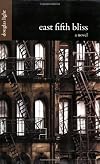
Since finishing East Fifth Bliss I’ve been asking myself what the point was. I don’t mean to harshly disparage (ever since moving to NYC I’ve enjoyed reading novels set within the 5 boroughs) but ultimately the confusion over that particular question has led me to wonder why we read in the first place.
I only happened upon EFB by way of the film adaptation that’s apparently premiering in theaters on On Demand in July. Dexter’s Michael C. Hall plays the lead and I was curious to know show more more about the book. Surprisingly, EFB is something of a rareity since its first publishing five years back and I had to order mine from a warehouse in Washington (copies on half.com and Amazon are priced at something near $100 though I paid about $28 through another third-party mediator...for a softcover mind you). Had I waited for a new printing, which I’m sure will coincide with the film release, I’m sure I would have had a much easier time acquiring a copy with the film poster acting as the book cover which I’ve been told is the bane of retail bookstore checkout employees.
I think the problem is that is has all the trappings of a movie but none of a book that makes it hard to put down. It doesn’t have an ultra-literary bent like Whitehead’s recent zombie-lit Zone One; it lacks the momentum or zaniness of other Manhattan authors like Nersesian or Lethem (despite having characters one might use the words batty or aloof to describe). It merely plods along its inevitable course until circumstance take the supporting characters away from the main character.
Because you know where all of this goes. Early on when we learn of Morris Bliss’ penchant for going to bed fully clothed (shoes and all) and the reason behind it, you can just feel the resolution turning its wheels ever so slowly.
A larger part to why this book feels too ordinary for its own good is that as a protagonist Morris Bliss isn’t terribly interesting. He’s 35, lives at home with his widowed father on the Lower East Side, has worked at a indie bookstore for the last 9 years, and has about one freeloading friend whose sole purpose is relegated to regaling Morris of his adventures with women. A world map on the wall in his room indicates via push-pin all the places he plans on visiting, if only he could escape Manhattan. His life is only thrown into velocity by way of an 18 year old he recently began sleeping with.
I didn’t get the impression that EFB had much to say beyond the usual “child experiences tragedy and must learn to let go as a man”. I suppose because the tale is set on the Lower East Side of Manhattan a special significance concerning city life is attached. But really, how is Light’s novel any more engaging than say, a book about a cattle rancher in Butte, Montana who still lives with his father and has one friend.
It isn’t because the book can only go so many ways. Either Morris realizes that his life is passing him by and he decides to do something about it...or he doesn’t. So there’s a 50 percent chance that everything occurring in the book will have no effect on the main character and he’ll remain stuck and disillusioned until death. Does Morris even want to change?
This means that the impetus of the novel is forced onto its supporting characters to drag Morris out of his impaired transformation. In this case there’s Stefani, an air-headed 18 year old high schooler who winds up sharing a closer connection to Morris than realized, in more ways than one; N.J., a perpetual freeloader who embellishes his own life’s story and seems to date a new woman every other day; Andrea, a depressed 28 year old in a failing marriage; Mr. Charlies, the often perplexing deli owner with effeminate tendencies whose store never has change; and Mr. Sofar, a resident in Morris’ building who holds a strange, yet never explained, infatuation with Morris’ mother.
What do these supporting characters offer Morris, aside from their eccentricities? What does their inclusion hold on the plot of this story? That people in Manhattan are weird? That other people carry on with their lives so Morris should too? I’m hard pressed to think it’s anything other than quirky for quirk’s sake, which I suppose is the reason the film counterpart will debut in theaters soon. EFB is stuff indie films are made of. show less
I only happened upon EFB by way of the film adaptation that’s apparently premiering in theaters on On Demand in July. Dexter’s Michael C. Hall plays the lead and I was curious to know show more more about the book. Surprisingly, EFB is something of a rareity since its first publishing five years back and I had to order mine from a warehouse in Washington (copies on half.com and Amazon are priced at something near $100 though I paid about $28 through another third-party mediator...for a softcover mind you). Had I waited for a new printing, which I’m sure will coincide with the film release, I’m sure I would have had a much easier time acquiring a copy with the film poster acting as the book cover which I’ve been told is the bane of retail bookstore checkout employees.
I think the problem is that is has all the trappings of a movie but none of a book that makes it hard to put down. It doesn’t have an ultra-literary bent like Whitehead’s recent zombie-lit Zone One; it lacks the momentum or zaniness of other Manhattan authors like Nersesian or Lethem (despite having characters one might use the words batty or aloof to describe). It merely plods along its inevitable course until circumstance take the supporting characters away from the main character.
Because you know where all of this goes. Early on when we learn of Morris Bliss’ penchant for going to bed fully clothed (shoes and all) and the reason behind it, you can just feel the resolution turning its wheels ever so slowly.
A larger part to why this book feels too ordinary for its own good is that as a protagonist Morris Bliss isn’t terribly interesting. He’s 35, lives at home with his widowed father on the Lower East Side, has worked at a indie bookstore for the last 9 years, and has about one freeloading friend whose sole purpose is relegated to regaling Morris of his adventures with women. A world map on the wall in his room indicates via push-pin all the places he plans on visiting, if only he could escape Manhattan. His life is only thrown into velocity by way of an 18 year old he recently began sleeping with.
I didn’t get the impression that EFB had much to say beyond the usual “child experiences tragedy and must learn to let go as a man”. I suppose because the tale is set on the Lower East Side of Manhattan a special significance concerning city life is attached. But really, how is Light’s novel any more engaging than say, a book about a cattle rancher in Butte, Montana who still lives with his father and has one friend.
It isn’t because the book can only go so many ways. Either Morris realizes that his life is passing him by and he decides to do something about it...or he doesn’t. So there’s a 50 percent chance that everything occurring in the book will have no effect on the main character and he’ll remain stuck and disillusioned until death. Does Morris even want to change?
This means that the impetus of the novel is forced onto its supporting characters to drag Morris out of his impaired transformation. In this case there’s Stefani, an air-headed 18 year old high schooler who winds up sharing a closer connection to Morris than realized, in more ways than one; N.J., a perpetual freeloader who embellishes his own life’s story and seems to date a new woman every other day; Andrea, a depressed 28 year old in a failing marriage; Mr. Charlies, the often perplexing deli owner with effeminate tendencies whose store never has change; and Mr. Sofar, a resident in Morris’ building who holds a strange, yet never explained, infatuation with Morris’ mother.
What do these supporting characters offer Morris, aside from their eccentricities? What does their inclusion hold on the plot of this story? That people in Manhattan are weird? That other people carry on with their lives so Morris should too? I’m hard pressed to think it’s anything other than quirky for quirk’s sake, which I suppose is the reason the film counterpart will debut in theaters soon. EFB is stuff indie films are made of. show less
Awards


You May Also Like
Associated Authors
Statistics
- Works
- 4
- Also by
- 2
- Members
- 16
- Popularity
- #679,946
- Rating
- 3.7
- Reviews
- 1
- ISBNs
- 15