
Deborah Wiles
Author of Each Little Bird That Sings
About the Author
Image credit: Book Kidz News
Series
Works by Deborah Wiles
Each Little Bird the Sings 1 copy
Love Ruby Lavender 1 copy
Freedom Wiles 1 copy
Freedom Summit 1 copy
Associated Works
Tagged
Common Knowledge
- Canonical name
- Wiles, Deborah
- Birthdate
- 1953-05-05
- Gender
- female
- Awards and honors
- Phyllis Naylor Working Writer Award (2004)
- Nationality
- USA
- Associated Place (for map)
- USA
Members
Reviews

Best friends Joe and John Henry enjoy many of the usual pleasures of boyhood together one hot summer - swimming in Fiddler's Creek (in their birthday suits!), savoring the ice pops from Mr. Mason's General Store - but the realities of segregated life in 1964 Mississippi intrude, keeping them from doing everything they would like, and from being too open about their friendship. When they learn that a new law requires their town to permit everyone - black and white - to use public facilities show more like the swimming pool, they are excited at the prospect of swimming in those crystal-clear waters together, for the very first time. But when they arrive at the pool on the fateful morning in question, they discover that the town, determined to resist integration, has filled it with hot tar, rather than allow blacks to swim. The law may have changed, but the people still had a long way to go...
Based upon author Deborah Wiles' memories of growing up in the South during the tumultuous Civil Rights era, Freedom Summer is a poignant exploration of friendship across racial lines, narrated by a young white boy (Joe) who, although content to have a black boy (John Henry) as a boon companion, has never really questioned the "way things are." It is only when change seems possible, and then impossible, that Joe truly considers how their friendship (and their town) might look to John Henry. I appreciated the perspective offered here on an important moment in our history, and the insight given, through the story, into the lives of ordinary young kids during extraordinary times. I was particularly impressed by the fact that the author chose to realistically depict "what happened next," highlighting the fact that things didn't immediately change, after the passage of the Civil Rights Act of 1964 - there was (and still is) a long way to go.
With an engaging tale of friendship amidst the senseless wrongs of racism and segregation, and immensely appealing artwork by Jerome Lagarrigue, Freedom Summer is an outstanding work of historical fiction for the younger, picture-book set! Highly recommended to anyone looking for children's stories set during the Civil Rights era, or featuring interracial friendship. It could, perhaps, be paired with Jacqueline Woodson's The Other Side, which presents the story of a friendship between a young black girl and her white neighbor in this same period. show less
Based upon author Deborah Wiles' memories of growing up in the South during the tumultuous Civil Rights era, Freedom Summer is a poignant exploration of friendship across racial lines, narrated by a young white boy (Joe) who, although content to have a black boy (John Henry) as a boon companion, has never really questioned the "way things are." It is only when change seems possible, and then impossible, that Joe truly considers how their friendship (and their town) might look to John Henry. I appreciated the perspective offered here on an important moment in our history, and the insight given, through the story, into the lives of ordinary young kids during extraordinary times. I was particularly impressed by the fact that the author chose to realistically depict "what happened next," highlighting the fact that things didn't immediately change, after the passage of the Civil Rights Act of 1964 - there was (and still is) a long way to go.
With an engaging tale of friendship amidst the senseless wrongs of racism and segregation, and immensely appealing artwork by Jerome Lagarrigue, Freedom Summer is an outstanding work of historical fiction for the younger, picture-book set! Highly recommended to anyone looking for children's stories set during the Civil Rights era, or featuring interracial friendship. It could, perhaps, be paired with Jacqueline Woodson's The Other Side, which presents the story of a friendship between a young black girl and her white neighbor in this same period. show less
CW: Shooting of protestors with some descriptions of victims
Well I have to say that the author chose an incredible format to deliver this informative account of a tragic historical event.
I didn't know anything about the Kent State protests so I found the introduction and notes at the end to be really helpful.
The format was genius. Not so much in that it was a verse novel as, if I am being honest, the writing itself wasn't particularly noteworthy. It was the fact that the author essentially show more wrote a conversation (or should I say heated debate) between people who represented different points of view on the Kent State murders. I found the voices to be quite distinct in their tone but it did help immensely that different fonts were used for the different points of view. I liked that the fonts themselves were carefully considered and reflected the characters perfectly. For example, a small sized 'soft' font was used for the scared members of the community and a bold capitilised font was used for the angry community members. Very clever. I was quite moved by the personal details included about the four slain students. It is amazing because as a Reader I knew in my heart what side I felt was right but at the same time I definitely think the author respectfully captured all sides of this terrible event. Definitely worth reading if you like historical verse novels. show less
Well I have to say that the author chose an incredible format to deliver this informative account of a tragic historical event.
I didn't know anything about the Kent State protests so I found the introduction and notes at the end to be really helpful.
The format was genius. Not so much in that it was a verse novel as, if I am being honest, the writing itself wasn't particularly noteworthy. It was the fact that the author essentially show more wrote a conversation (or should I say heated debate) between people who represented different points of view on the Kent State murders. I found the voices to be quite distinct in their tone but it did help immensely that different fonts were used for the different points of view. I liked that the fonts themselves were carefully considered and reflected the characters perfectly. For example, a small sized 'soft' font was used for the scared members of the community and a bold capitilised font was used for the angry community members. Very clever. I was quite moved by the personal details included about the four slain students. It is amazing because as a Reader I knew in my heart what side I felt was right but at the same time I definitely think the author respectfully captured all sides of this terrible event. Definitely worth reading if you like historical verse novels. show less

Revolution by Deborah Wiles paints a vivid picture of the early Civil Rights Movement, and, in particular the Freedom Summer of 1964. Set in the small town of Greenwood, Mississippi the author delivers an impressive coming-of-age story centered around two children, one white, one black, who are discovering the confusing and frightening facts of racism and segregation. Young civil rights activists arrive in town and set to work on voter registration and setting up “Freedom Schools” to show more help educate the local black population on their rights. This does not sit well with most white Mississippians and tensions mount as quickly as the summer heat.
I thought the author captured the essence of the summer of 1964. From the movies that were playing at the local theatres, to sports and political references, 1964 was brought back clearly to me. The author includes pages of photographs and articles that document the events of that summer which I thought really added to the story. But even more than the facts and figures this is a story that touches both the heart and soul.
Personally I thought Revolution was absolutely brilliant and I had trouble putting it down. History brought to life through excellent storytelling. This is the second in a planned trilogy, the first book dealt with the Cuban Missile Crisis, this book the Freedom Summer of 1964. Both were excellent reads and I can tell that Revolution will linger in my mind in the same way that her first book does. I look forward to the final volume in her Sixties trilogy. show less
I thought the author captured the essence of the summer of 1964. From the movies that were playing at the local theatres, to sports and political references, 1964 was brought back clearly to me. The author includes pages of photographs and articles that document the events of that summer which I thought really added to the story. But even more than the facts and figures this is a story that touches both the heart and soul.
Personally I thought Revolution was absolutely brilliant and I had trouble putting it down. History brought to life through excellent storytelling. This is the second in a planned trilogy, the first book dealt with the Cuban Missile Crisis, this book the Freedom Summer of 1964. Both were excellent reads and I can tell that Revolution will linger in my mind in the same way that her first book does. I look forward to the final volume in her Sixties trilogy. show less
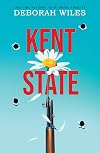
Kent State by Deborah Wiles places you right there in Ohio at Kent State from May 1, 1970 to May 4, 1970, when four students died when the National Guard shot them.
When you begin the novel, you'll hear the voices of the people who were there. Each voice has a place on the page, a font, a print size. It's as if they are sitting around re-hashing what happened. Everyone sees the events a bit differently, so they each argue or contradict with their own bias. One voice represents a protestor who show more harbors anger and passion toward their treatment by the townspeople, the university representative, and the government. Another voice is that of a student whose recall is not filled with anger but more calm--yet scarred by what happened. Voices for the townspeople go from quiet sorrow and their truth about what they felt to angry, condemning voices that students caused everything and no one else has any responsibility for what happened. Other voices include black students and the National Guard. Everyone has scars from that day.
The first day is Friday, May 1st where we meet our narrators and the students who died. Bear in mind nine were injured as well. Isn't everyone? From physical injuries to mental injuries of remembering what happened and living with it. We discover the names of those killed and little things about them that make them human. Each day, events escalate. Students want to protest the Vietnam War for different reasons. One is that draft boards all made selections a little differently. Another reason was that Nixon invaded Cambodia. These events are all controversial and there are different opinions about the Vietnam War. In the end, a group of students were protesting. Sometimes people react with more passion than others. Maybe the protest was seen more as a riot, where assistance is needed with these violent rioters. Whose truth do you take as your own? By Monday, the escalation results in death and injury.
Ms. Wiles connects the events at Kent State --with the black movement from the time period-- with the needless deaths by blacks throughout American history-- with school shootings-- to make a point, a comparison. Therefore, this book is waiting for you to read it--for you to find your truth about America by listening to the voices of Americans. It's a beautiful verse novel based on primary sources from Ms. Wiles's research, giving all the points of view.
The 1960s were tumultuous years. Although this event occurred in 1970, it's origins grow from the 60s. I highly recommend reading Ms. Wiles's 60s trilogy: Countdown, Revolution, and Anthem. I would also suggest Most Dangerous by Sheinkin to really get a "feel" for the 60s and to understand one viewpoint of the Vietnam War. Most Dangerous represents a distinct point of view; it's non-fiction and uses history, but it's still a biased view point. It's so interesting and I learned so much reading it. Go ahead; go on a trip to the 60s. Learn about America. Learn about the government. What is your role as a citizen? What is life worth? show less
When you begin the novel, you'll hear the voices of the people who were there. Each voice has a place on the page, a font, a print size. It's as if they are sitting around re-hashing what happened. Everyone sees the events a bit differently, so they each argue or contradict with their own bias. One voice represents a protestor who show more harbors anger and passion toward their treatment by the townspeople, the university representative, and the government. Another voice is that of a student whose recall is not filled with anger but more calm--yet scarred by what happened. Voices for the townspeople go from quiet sorrow and their truth about what they felt to angry, condemning voices that students caused everything and no one else has any responsibility for what happened. Other voices include black students and the National Guard. Everyone has scars from that day.
The first day is Friday, May 1st where we meet our narrators and the students who died. Bear in mind nine were injured as well. Isn't everyone? From physical injuries to mental injuries of remembering what happened and living with it. We discover the names of those killed and little things about them that make them human. Each day, events escalate. Students want to protest the Vietnam War for different reasons. One is that draft boards all made selections a little differently. Another reason was that Nixon invaded Cambodia. These events are all controversial and there are different opinions about the Vietnam War. In the end, a group of students were protesting. Sometimes people react with more passion than others. Maybe the protest was seen more as a riot, where assistance is needed with these violent rioters. Whose truth do you take as your own? By Monday, the escalation results in death and injury.
Ms. Wiles connects the events at Kent State --with the black movement from the time period-- with the needless deaths by blacks throughout American history-- with school shootings-- to make a point, a comparison. Therefore, this book is waiting for you to read it--for you to find your truth about America by listening to the voices of Americans. It's a beautiful verse novel based on primary sources from Ms. Wiles's research, giving all the points of view.
The 1960s were tumultuous years. Although this event occurred in 1970, it's origins grow from the 60s. I highly recommend reading Ms. Wiles's 60s trilogy: Countdown, Revolution, and Anthem. I would also suggest Most Dangerous by Sheinkin to really get a "feel" for the 60s and to understand one viewpoint of the Vietnam War. Most Dangerous represents a distinct point of view; it's non-fiction and uses history, but it's still a biased view point. It's so interesting and I learned so much reading it. Go ahead; go on a trip to the 60s. Learn about America. Learn about the government. What is your role as a citizen? What is life worth? show less
Lists
Awards


You May Also Like


Associated Authors
Statistics
- Works
- 20
- Also by
- 1
- Members
- 7,040
- Popularity
- #3,480
- Rating
- 4.1
- Reviews
- 303
- ISBNs
- 126
- Languages
- 2
- Favorited
- 4