
Kate Morgan (4)
Author of Murder: The Biography
For other authors named Kate Morgan, see the disambiguation page.
Works by Kate Morgan
Tagged
Common Knowledge
- Gender
- female
Members
Reviews
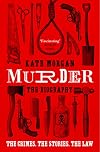
I'm not sure why I was drawn to this title, or what I was expecting, but Kate Morgan's timeline of murder, from the Old English mordor to the appeals process and corporate homicide rulings of the present day, does exactly what it says on the tin. The narrative tone is a bit jarring, though, veering from TED talks on legal process to the gory details of salacious crimes from the past. Morgan's take on the discovery of the mutilated body - and severed head - of 'sweet' Fanny Adams was darkly show more humorous at best: 'Mrs Harriet Adams, who had returned home after a fruitless afternoon’s searching, only to be presented with the horrific sight of Gates clutching the decapitated head of her eldest daughter, Fanny.'
I think the key lesson I took from the various trials referenced and the resulting changes in law is that men will usually escape justice for a crime that a woman would be condemned for. For instance, the murder of Sylvia Nott by Cyril Church in 1964. Church battered and strangled his victim, either because she laughed at him or rejected him (tale as old as time), and then threw her body in the river. She was still alive, however, and despite her injuries, the cause of death was drowning. So because he thought she was dead when he disposed of her 'body' in the water, Church was convicted with the lesser charge of manslaughter, rather than the murder he actually committed. Ruth Ellis, who shot her lover after years of abuse, was hanged for murder. Go figure.
I also learned that no, actually, this statement does not apply to me, nor most people, I should imagine: 'But it is difficult to be so certain that, placed in the same literal and metaphorical boat as Dudley and
Stephens, you too wouldn’t have killed and eaten Richard Parker.'
Most of the murders included as examples are the usual suspects - Timothy Evans, hanged for one of John Christie's crimes, Derek Bentley, Ruth Ellis, Peter Sutcliffe. Even Rasputin gets a nod! But there are also disasters like Aberfan, Piper Alpha, Hillsborough and the Zeebrugge ferry sinking, where somebody should have been held accountable for the multiple deaths caused, but either evaded or escaped justice entirely.
The law is slow to evolve when categorising and punishing murder and the lesser charge of manslaughter, holding to the archaic definitions of Sir Edward Coke. In Morgan's view, 'It is in an endless race to match the fears and obsessions of each successive generation, from marauding Norsemen, hot-blooded Georgians, sloppy doctors, battered wives or careless companies.' Men are 'provoked', women are either victims of the crime or the punishment; doctors and miners were once let off for pointlessly taking lives, and apparently nobody wants to call ploughing into someone with the most dangerous weapon of all - a vehicle - what it is: murder.
Darkly fascinating and also vicariously frustrating on behalf of the victims. Still wouldn't eat anyone, however long I was stuck in a boat at sea! show less
I think the key lesson I took from the various trials referenced and the resulting changes in law is that men will usually escape justice for a crime that a woman would be condemned for. For instance, the murder of Sylvia Nott by Cyril Church in 1964. Church battered and strangled his victim, either because she laughed at him or rejected him (tale as old as time), and then threw her body in the river. She was still alive, however, and despite her injuries, the cause of death was drowning. So because he thought she was dead when he disposed of her 'body' in the water, Church was convicted with the lesser charge of manslaughter, rather than the murder he actually committed. Ruth Ellis, who shot her lover after years of abuse, was hanged for murder. Go figure.
I also learned that no, actually, this statement does not apply to me, nor most people, I should imagine: 'But it is difficult to be so certain that, placed in the same literal and metaphorical boat as Dudley and
Stephens, you too wouldn’t have killed and eaten Richard Parker.'
Most of the murders included as examples are the usual suspects - Timothy Evans, hanged for one of John Christie's crimes, Derek Bentley, Ruth Ellis, Peter Sutcliffe. Even Rasputin gets a nod! But there are also disasters like Aberfan, Piper Alpha, Hillsborough and the Zeebrugge ferry sinking, where somebody should have been held accountable for the multiple deaths caused, but either evaded or escaped justice entirely.
The law is slow to evolve when categorising and punishing murder and the lesser charge of manslaughter, holding to the archaic definitions of Sir Edward Coke. In Morgan's view, 'It is in an endless race to match the fears and obsessions of each successive generation, from marauding Norsemen, hot-blooded Georgians, sloppy doctors, battered wives or careless companies.' Men are 'provoked', women are either victims of the crime or the punishment; doctors and miners were once let off for pointlessly taking lives, and apparently nobody wants to call ploughing into someone with the most dangerous weapon of all - a vehicle - what it is: murder.
Darkly fascinating and also vicariously frustrating on behalf of the victims. Still wouldn't eat anyone, however long I was stuck in a boat at sea! show less
I found this an interesting account of how the legal status of “murder” (as a chargeable offence) in the UK has evolved over the centuries. The book isn’t a tour of “true crime” cases. Instead, it uses those cases as examples of how definitions and laws were challenged, ranging from the defence of insanity to the introduction of corporate manslaughter.
There was a focus on how certain trials may have had different outcomes if they had been held a few years later (or I suppose show more earlier in other cases). On the one hand, it’s uncomfortable to think that specific cases were disadvantaged by now outdated laws. On the other hand, at least we could say that the legal system does, to some extent, attempt to keep up with the times. show less
There was a focus on how certain trials may have had different outcomes if they had been held a few years later (or I suppose show more earlier in other cases). On the one hand, it’s uncomfortable to think that specific cases were disadvantaged by now outdated laws. On the other hand, at least we could say that the legal system does, to some extent, attempt to keep up with the times. show less
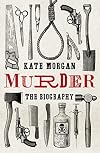
From its Anglo-Saxon origins the word 'murder' has a clear definition but legally it is not quite so straightforward. In this book an attempt is made to show how our present-day laws have come about using a series of landmark cases to illustrate. From cannibalism on the high seas to domestic violence via madness and neglect, this is a endlessly interesting story of the changing nature of our views on crime.
This could have been a really dry tome but it is far from it. Despite the legalese of show more some parts the stories behind the cases are intriguing. Some are well known - Ruth Ellis etc - some less so but all are carefully chosen to engage. show less
This could have been a really dry tome but it is far from it. Despite the legalese of show more some parts the stories behind the cases are intriguing. Some are well known - Ruth Ellis etc - some less so but all are carefully chosen to engage. show less
Statistics
- Works
- 2
- Members
- 135
- Popularity
- #150,830
- Rating
- 4.2
- Reviews
- 3
- ISBNs
- 51
- Languages
- 3