
Ramesh Menon (1) (1951–)
Author of The Ramayana: A Modern Retelling of the Great Indian Epic
For other authors named Ramesh Menon, see the disambiguation page.
About the Author
Image credit: Ramesh Menon
Works by Ramesh Menon
Tagged
Common Knowledge
- Birthdate
- 1951-09-20
- Gender
- male
- Education
- St Xavier's High School, New Delhi, India
St. Stephen's College, New Delhi, India - Occupations
- writer
- Short biography
- Ramesh Menon was born 1951 in New Delhi. Studied in St Xavier's High School and St. Stephen's College. Lived and worked in Delhi, HongKong, Bangalore, Jakarta and now lives in Kodaikanal . He is the grandson of Pattom Thanu Pillai, former Chief Minister of Kerala and K R K Menon, India's first Finance Secretary. He is the author of The Hunt for K and Blue God: A Life of Krishna. He has beautifully rendered modern translations of the Ramayana, the Mahabharata, and the Bhagavata Purana into English prose.
- Nationality
- India
- Birthplace
- New Delhi, India
- Places of residence
- New Delhi, India
Kodaikanal, India - Associated Place (for map)
- India
Members
Reviews
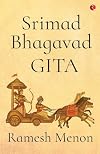
Within the many inspiring words, there is confusion.
Krishna tells the doubting Arjuna that it's fine to kill your family and friends
because they have always existed and will eventually exist again...so wars are fine?
He also preaches non attachment as the perfect way to exist,
yet he has a deep attachment to Arjuna.
How to reconcile these things???
Who, Arjuna in front, is not attached to peace, protection, and love...?
Krishna tells the doubting Arjuna that it's fine to kill your family and friends
because they have always existed and will eventually exist again...so wars are fine?
He also preaches non attachment as the perfect way to exist,
yet he has a deep attachment to Arjuna.
How to reconcile these things???
Who, Arjuna in front, is not attached to peace, protection, and love...?
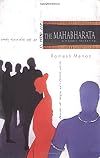
Mernon’s lively paraphrase relies on two previous English translations of the third century Sanskrit epic poem by Vyāsa. It is a lively retelling of the events leading up to and following a war of succession between rival cousins which occurred in a time so ancient that gods and humans freely moved between heaven and earth. In this the tale resembles the Greek Iliad, although Mernon notes that the 100,000 couplets of the original are “seven times as long as the Iliad and the Odyssey show more combined.” his version runs to two volumes of 1606 pages
when added together.
It is a long read, but an exciting one of wonders, God, gods, miraculous occurrences, court intrigues, visits to heavenly realms, jungles filled with gigantic demons, and heroic actions. The book is as action filled as a superhero movie with dramatic scenes of long smoldering emotions bursting into flame. At the end of volume one the five Pandava brothers (the good guys) and their wife have ended their thirteen-year exile and humiliated their demonic cousin Duryodhana and his army. All ancient India stands on the brink of a war that will end the era and usher in a new age.
Volume 2 is the war itself told in gruesome detail followed more briefly by its aftermath and consequences. In addition to many fantastic duels between combatants in their chariots and, incidentally, the casual slaughter of thousands of their supporting foot soldiers.
Just before it begins, there is a profound revelation of divine wisdom. Krishna, a cousin of the Pandavas and their opponents, has vowed not to fight in the war. But he does volunteer to drive the chariot of Arjuna, the most skilled archer and fighter of the brothers. Just before the battle starts, Arjuna, after pausing for prayer, begins to tremble. Shaking, he drops his bow (a supernatural weapon) and bewails the prospect of this internecine battle with his kin. Krishna then reveals himself as an avatar (a divine incarnation) and expounds at length on why Arjuna as a kshatriya (a member of the hereditary military caste) must do his duty, the larger significance of this war, and the vast scope of cosmic reality, of which this is a small part. Cosmology, time, fate, the interconnectedness of all, and Hindu ethics are detailed. This section is known as the Bhagavad Gita (in English, “The Song of God”). It is often published separately and considered sacred scripture by Hindus.
Immediately following this sublime episode, the bloodshed begins. Eighteen days and a night of heroic duels, vengeance, and horrific slaughter between sworn enemies and bitter rivals in a civil war that nearly extinguishes the kshatriya caste entirely. Only enough survive to carry out a few equally gruesome vendettas before peace is truly established. But by then the age has ended. The rest of the epic continues until the death of the principal characters and the reader sees them in their place of eternal rest.
Mernon uses Sanskrit terms throughout that are translated into English in glossaries appended to each volume. This gives his version an authentic voice, which he enhances by his extensive English vocabulary to add color, especially when describing the appearance of a supernatural being. For example, in volume one he describes the appearance of the sun god Surya as “the coruscant Deva.” Later when Bheema, another Pandava brother, suddenly finds himself in the clutch of an immense demon snake, “moist, mottled, yellow and green,” the author writes, “The cold dampness and purulence of those coils were more than he could bear.” My dictionary and the Internet got a good workout, but it was always rewarding. I learned that coruscant is not just the capital of the Evil Empire in Star Wars; it’s an adjective that means glittering or sparkling and that purulence means foaming pus. show less
when added together.
It is a long read, but an exciting one of wonders, God, gods, miraculous occurrences, court intrigues, visits to heavenly realms, jungles filled with gigantic demons, and heroic actions. The book is as action filled as a superhero movie with dramatic scenes of long smoldering emotions bursting into flame. At the end of volume one the five Pandava brothers (the good guys) and their wife have ended their thirteen-year exile and humiliated their demonic cousin Duryodhana and his army. All ancient India stands on the brink of a war that will end the era and usher in a new age.
Volume 2 is the war itself told in gruesome detail followed more briefly by its aftermath and consequences. In addition to many fantastic duels between combatants in their chariots and, incidentally, the casual slaughter of thousands of their supporting foot soldiers.
Just before it begins, there is a profound revelation of divine wisdom. Krishna, a cousin of the Pandavas and their opponents, has vowed not to fight in the war. But he does volunteer to drive the chariot of Arjuna, the most skilled archer and fighter of the brothers. Just before the battle starts, Arjuna, after pausing for prayer, begins to tremble. Shaking, he drops his bow (a supernatural weapon) and bewails the prospect of this internecine battle with his kin. Krishna then reveals himself as an avatar (a divine incarnation) and expounds at length on why Arjuna as a kshatriya (a member of the hereditary military caste) must do his duty, the larger significance of this war, and the vast scope of cosmic reality, of which this is a small part. Cosmology, time, fate, the interconnectedness of all, and Hindu ethics are detailed. This section is known as the Bhagavad Gita (in English, “The Song of God”). It is often published separately and considered sacred scripture by Hindus.
Immediately following this sublime episode, the bloodshed begins. Eighteen days and a night of heroic duels, vengeance, and horrific slaughter between sworn enemies and bitter rivals in a civil war that nearly extinguishes the kshatriya caste entirely. Only enough survive to carry out a few equally gruesome vendettas before peace is truly established. But by then the age has ended. The rest of the epic continues until the death of the principal characters and the reader sees them in their place of eternal rest.
Mernon uses Sanskrit terms throughout that are translated into English in glossaries appended to each volume. This gives his version an authentic voice, which he enhances by his extensive English vocabulary to add color, especially when describing the appearance of a supernatural being. For example, in volume one he describes the appearance of the sun god Surya as “the coruscant Deva.” Later when Bheema, another Pandava brother, suddenly finds himself in the clutch of an immense demon snake, “moist, mottled, yellow and green,” the author writes, “The cold dampness and purulence of those coils were more than he could bear.” My dictionary and the Internet got a good workout, but it was always rewarding. I learned that coruscant is not just the capital of the Evil Empire in Star Wars; it’s an adjective that means glittering or sparkling and that purulence means foaming pus. show less
I LOVED this book. It is amazing. I have read translations of the Mahabharata before, but none that are as long as this one (the first volume with the appendices, weighs in at about 900 pages). And I haven't even gotten to the main event yet. This entire first volume is build-up to the great war on Kurukshetra. But what a build-up it is!
I do not consider myself a religious person, but I think that Hinduism is so thoroughly ingrained in India that it is impossible for me to separate the two. show more The superstitions, the myths, the temples, the grandeur- it surrounds you. Indians still wear the same clothes today that they wore 5,000 years ago, when the epic was written. We still worship the same gods, perform the same ceremonies, and have the same biases. The caste system, in all its crippling glory, still exists. We eat the same food, celebrate the same holidays, go to temples that are built in the same architectural style. It's really kind of amazing.
The Mahabharata is supposed to be a religious book. And, certainly, once you get to the Bhagavad-Gita, it becomes much more religious theory-based. But this first volume is more of a story (and a really good one, at that), and it centers around behaving well and staying on the right path even when you really, really don't want to. The story is more like the Odyssey or the Iliad than the Bible, as it tells the story of so many people, and the gods (all of whom have distinct and very human personalities) are just as involved in the story as the mortals are.
I think Menon's translation is great- it doesn't leave out any of the less flattering parts, or the more "R-rated" parts (which, considering the way Hindus have steered towards conservatism over the past few hundred years, says a lot about how the religion was originally practiced). It just tells the story in an interesting and readable way. Yes, all the men are heroic and manly and perfect. Yes, all the women are gorgeous and slender and chaste. But the book is action-packed and a great way to learn about Indian history in an entertaining way. I will definitely be snatching up Volume 2 of this re-telling, and I can't wait to do so. Highly recommended, for anyone with an interest in India, its history and its traditions. show less
I do not consider myself a religious person, but I think that Hinduism is so thoroughly ingrained in India that it is impossible for me to separate the two. show more The superstitions, the myths, the temples, the grandeur- it surrounds you. Indians still wear the same clothes today that they wore 5,000 years ago, when the epic was written. We still worship the same gods, perform the same ceremonies, and have the same biases. The caste system, in all its crippling glory, still exists. We eat the same food, celebrate the same holidays, go to temples that are built in the same architectural style. It's really kind of amazing.
The Mahabharata is supposed to be a religious book. And, certainly, once you get to the Bhagavad-Gita, it becomes much more religious theory-based. But this first volume is more of a story (and a really good one, at that), and it centers around behaving well and staying on the right path even when you really, really don't want to. The story is more like the Odyssey or the Iliad than the Bible, as it tells the story of so many people, and the gods (all of whom have distinct and very human personalities) are just as involved in the story as the mortals are.
I think Menon's translation is great- it doesn't leave out any of the less flattering parts, or the more "R-rated" parts (which, considering the way Hindus have steered towards conservatism over the past few hundred years, says a lot about how the religion was originally practiced). It just tells the story in an interesting and readable way. Yes, all the men are heroic and manly and perfect. Yes, all the women are gorgeous and slender and chaste. But the book is action-packed and a great way to learn about Indian history in an entertaining way. I will definitely be snatching up Volume 2 of this re-telling, and I can't wait to do so. Highly recommended, for anyone with an interest in India, its history and its traditions. show less
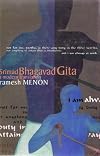
The Bhagavad Gita contains the voice of God and it speaks to each of us, to every mind and heart—individually. This intimate communion transcends the merely intellectual—sarvasah—in every way. A part of the grand epic the Mahabharata, the Bhagavad Gita is a conversation between the great Pandava hero Arjuna and Krishna—the lord Vishnu incarnate. As Arjuna stands on the battlefield of Kurukshetra, readying to fight an army comprising his relatives, even his own guru, he is overcome show more with despair. He turns to his friend Krishna for advice and the ensuing conversation between the two is the highest expression of philosophical Hinduism. During the discourse, Krishna reveals his identity as the Supreme Being Himself, blessing Arjuna with an awe-inspiring glimpse of His divine absolute form. While translating this, the Song of God, Ramesh Menon has remained as consistently faithful to the original as possible, without overly compromising its poetry. show less
Lists
You May Also Like
Associated Authors
Statistics
- Works
- 24
- Members
- 737
- Popularity
- #34,455
- Rating
- 4.2
- Reviews
- 16
- ISBNs
- 39
