
David Stout (1)
Author of The Kidnap Years: The Astonishing True History of the Forgotten Kidnapping Epidemic That Shook Depression-Era America
For other authors named David Stout, see the disambiguation page.
Works by David Stout
Associated Works
Unseen: Unpublished Black History from the New York Times Photo Archives (2017) — Contributor — 146 copies, 1 review
Tagged
Common Knowledge
There is no Common Knowledge data for this author yet. You can help.
Members
Reviews

This is a work of fiction based upon an historical event. The author makes that crystal clear. And yet, it was written in a style that could have easily been adapted to a true crime story. I enjoyed learning a little more about the upstate of South Carolina, which really hasn't changed much since the book was set. Reading the language used to describe people, and the notion that owners of the means of production (Marx, anyone?) kept the workers living in poverty while treating them like show more children is beyond the pale. Remember, this is set in the latter half of the 20th century - 20 - 30 years AFTER the Civil Rights Bill was passed. Reading about what was done made me wonder if the memo about equal rights somehow never made it to the hinterlands of South Carolina.
It's a good read, but it is difficult at times because of the murders of the children (and yes, the girls were the only ones murdered) and the language. I'm not going to say more than that because I don't want to spoil it for anyone. However, if you want to read a story that moves at a quick pace, this Edgar-award winner might just be for you. show less
It's a good read, but it is difficult at times because of the murders of the children (and yes, the girls were the only ones murdered) and the language. I'm not going to say more than that because I don't want to spoil it for anyone. However, if you want to read a story that moves at a quick pace, this Edgar-award winner might just be for you. show less

In 1944, George Stinney, 14, was falsely accused of the murder of two young white girls in a mill town in South Carolina. He was sent to the electric chair, the youngest person ever executed in the US. David Stout has written a riveting fictionalized account of this travesty. In his book, a relative of the African American boy (here called Linus Bragg) returns to the town of Alcolu in 1988 to clear Linus' name, at the behest of his mother . James Willop, a journalist from Newark, finds that show more things are very different yet very unchanged as he investigates the crime. The author does an excellent job of resurrecting the past by getting inside the heads of the victims, accused, and law enforcement in 1944 as well as those still living in the poor Southern town in 1988. How things change as they remain basically the same! This is a remarkable reimagination of both eras and attitudes. No reader can fail to be moved by the culmination of Willop's work and by the courage of those who seek the painful truth. show less
The Kidnap Years: The Astonishing True History of the Forgotten Kidnapping Epidemic That Shook Depression-Era America by David Stout
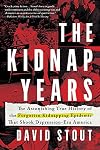
The Kidnap Years: The Astonishing True History of the Forgotten Kidnapping Epidemic That Shook Depression-Era America by David Stout is a long-overdue account of the rash of kidnappings that took place during the depression. While the fact of the widespread nature of kidnapping has long been known there haven't been very many accounts that looked at the period as a whole.
In some ways, this book can be read in one of two ways depending on how you view the book and what your interest is. One show more way is based on the title, it is a history. As such, it is one story though admittedly comprising many stories (such is the nature of history). Read this way the separate accounts become less important than the similarities and differences between them, which point to possible explanations for this particular crime becoming so widespread. this story includes the rise of the FBI as well as the standardization of law around the act of kidnapping. This is a fascinating history and if this is your primary interest, you will be satisfied.
The other way to read it is almost like reading a collection of short stories that are linked but separate. Each chapter is about a case and there is some reference to cases before and after, as well as the book length thread of the Lindbergh kidnapping. Read in this way the book is also quite satisfying though, because the intent is as a history, it will appear as though you have to jump around since each chapter was read as if a complete entity. That said, it is still effective as a collection of case histories.
My calling them case histories is unfair, since when one thinks of a case history one usually thinks of dry and often boring prose. The writing here tries to take the reader into each household affected, into the minds of the victims (if possible), the criminals, and the family members. So this is not just case histories but short nonfiction stories.
I recommend this to fans of true crime, historians of crime and criminology, and readers who enjoy learning and reading about periods not so distant in time but seemingly far distant because of the technological advancements.
Reviewed from a copy made available by the publisher via NetGalley. show less
In some ways, this book can be read in one of two ways depending on how you view the book and what your interest is. One show more way is based on the title, it is a history. As such, it is one story though admittedly comprising many stories (such is the nature of history). Read this way the separate accounts become less important than the similarities and differences between them, which point to possible explanations for this particular crime becoming so widespread. this story includes the rise of the FBI as well as the standardization of law around the act of kidnapping. This is a fascinating history and if this is your primary interest, you will be satisfied.
The other way to read it is almost like reading a collection of short stories that are linked but separate. Each chapter is about a case and there is some reference to cases before and after, as well as the book length thread of the Lindbergh kidnapping. Read in this way the book is also quite satisfying though, because the intent is as a history, it will appear as though you have to jump around since each chapter was read as if a complete entity. That said, it is still effective as a collection of case histories.
My calling them case histories is unfair, since when one thinks of a case history one usually thinks of dry and often boring prose. The writing here tries to take the reader into each household affected, into the minds of the victims (if possible), the criminals, and the family members. So this is not just case histories but short nonfiction stories.
I recommend this to fans of true crime, historians of crime and criminology, and readers who enjoy learning and reading about periods not so distant in time but seemingly far distant because of the technological advancements.
Reviewed from a copy made available by the publisher via NetGalley. show less
The Kidnap Years: The Astonishing True History of the Forgotten Kidnapping Epidemic That Shook Depression-Era America by David Stout
The Kidnap Years: The Astonishing True History of the Forgotten Kidnapping Epidemic That Shook Depression-Era America by David Stout is a 2020 Sourcebooks publication.
Back in the 1930’s kidnapping became almost an epidemic. It wasn't just children and babies that fell victim, but adults too.
This book examines these kidnappings, some familiar, some not- and yes, I suppose it is fair to say, this kidnapping rampage has been largely forgotten about. But, at the center of the book is the show more infamous Lindbergh kidnapping. It was that case that tipped the scales and forced a hardline crackdown. For me though, it was the lesser known cases that made the book interesting, especially since the Lindbergh kidnapping, as well as one or two others mentioned in this book, has been examined ad nauseum, and as far as I could tell there was nothing new about those cases printed here.
There are other famous or infamous people in this book, though, besides the Lindbergh's. The FBI and Hoover’s involvement were also featured prominently at times. The author stayed on topic, and did not veer into personal commentary, for the most part, which was fine by me.
The organization is a little uneven spreading out some cases throughout the book, instead of putting all the information into one or more chapters, running consecutively. This was a little distracting for me, but a minor quibble.
Otherwise, the book reflects the desperation of the thirties, as well as the way money, greed and politics, all bled together to create the perfect climate for the kidnapping crime sprees of the decade.
Anyone who enjoys history or true crime will want to consider giving this book a try.
4 stars show less
Back in the 1930’s kidnapping became almost an epidemic. It wasn't just children and babies that fell victim, but adults too.
This book examines these kidnappings, some familiar, some not- and yes, I suppose it is fair to say, this kidnapping rampage has been largely forgotten about. But, at the center of the book is the show more infamous Lindbergh kidnapping. It was that case that tipped the scales and forced a hardline crackdown. For me though, it was the lesser known cases that made the book interesting, especially since the Lindbergh kidnapping, as well as one or two others mentioned in this book, has been examined ad nauseum, and as far as I could tell there was nothing new about those cases printed here.
There are other famous or infamous people in this book, though, besides the Lindbergh's. The FBI and Hoover’s involvement were also featured prominently at times. The author stayed on topic, and did not veer into personal commentary, for the most part, which was fine by me.
The organization is a little uneven spreading out some cases throughout the book, instead of putting all the information into one or more chapters, running consecutively. This was a little distracting for me, but a minor quibble.
Otherwise, the book reflects the desperation of the thirties, as well as the way money, greed and politics, all bled together to create the perfect climate for the kidnapping crime sprees of the decade.
Anyone who enjoys history or true crime will want to consider giving this book a try.
4 stars show less
Lists
Awards


You May Also Like
Associated Authors
Statistics
- Works
- 11
- Also by
- 1
- Members
- 237
- Popularity
- #95,613
- Rating
- 3.7
- Reviews
- 6
- ISBNs
- 34
- Languages
- 3