
Patrick Henry Reardon
Author of Christ in the Psalms
About the Author
Works by Patrick Henry Reardon
Associated Works
Tagged
Common Knowledge
- Legal name
- Reardon, Patrick Henry
- Birthdate
- 1938
- Gender
- male
- Occupations
- cleric
- Organizations
- All Saints Antiochian Orthodox Church
Touchstone (Senior Editor) - Nationality
- USA
- Associated Place (for map)
- USA
Members
Reviews
Reclaiming the Atonement: An Orthodox Theology of Redemption: Volume 1: The Incarnate Word by Patrick Henry Reardon
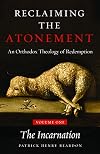
Fr. Patrick Henry Reardon seeks to address a theme that, in much of non-Orthodox Christianity, has been skewed and distorted: the atonement. For Fr. Pat, it's critical that the atonement isn't narrowed to the topic of our redemption by Christ's atoning death on the cross -- though that is clearly critical -- rather "atonement" is the only properly English word that approximates the Greek "theosis" or the Latin "deification." Thus "atonement", for Fr. Pat, encompasses the entirety of show more salvation in Christ, which is why it must begin with the Incarnation, which is the focus of this volume.
For that reason, many may find this volume to not really be about atonement, in the way it's normally understood and discussed. One suspects that in the second volume, on the passion and the cross, these expectations will be met. But the seemingly "off-topic" nature of this volume is precisely the point: the cross and atonement can't be approached before or apart from the mystery of God-become-man, and in the teachings of the fathers, Christ's taking on flesh is itself salvific and atoning.
Fr. Pat relays early in this volume the patristic tripartite division of men from God -- being/well-being/eternal-being in St. Maximos and nature/sin/death in St. Nicolas Cabasilas -- and how these are correspondingly healed by Christ's Incarnation, Passion, and Resurrection. This is the basis for structuring his work this way, and it brilliantly conveys the full scope of Orthodox salvation, and that each specific 'element' -- including Christ's life and teaching, for instance -- can't be separated from any other. show less
For that reason, many may find this volume to not really be about atonement, in the way it's normally understood and discussed. One suspects that in the second volume, on the passion and the cross, these expectations will be met. But the seemingly "off-topic" nature of this volume is precisely the point: the cross and atonement can't be approached before or apart from the mystery of God-become-man, and in the teachings of the fathers, Christ's taking on flesh is itself salvific and atoning.
Fr. Pat relays early in this volume the patristic tripartite division of men from God -- being/well-being/eternal-being in St. Maximos and nature/sin/death in St. Nicolas Cabasilas -- and how these are correspondingly healed by Christ's Incarnation, Passion, and Resurrection. This is the basis for structuring his work this way, and it brilliantly conveys the full scope of Orthodox salvation, and that each specific 'element' -- including Christ's life and teaching, for instance -- can't be separated from any other. show less
I received this book free from the publisher through the BookSneeze.com book review bloggers program. I was not required to write a positive review. The opinions I have expressed are my own. I am disclosing this in accordance with the Federal Trade Commission's 16 CFR, Part 255 : "Guides Concerning the Use of Endorsements and Testimonials in Advertising.
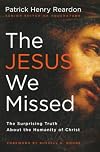
As a Non-Trinitarian (someone who doesn't believe in the Trinity, and, at least in my case, the divinity of Christ), I was excited to read a show more book focused on the humanity of Jesus. Which means I was slightly disappointed when the point seemed more to prove Jesus' divinity and purpose, etc, through understanding his humanity. Despite that, though, this book was a pretty interesting read, even if I don't completely agree with the author in his theology (I'm the unorthodox one, not him, lol).
He tells us that in this book he wants to ask:
"Who is this Jesus, what happened to him to make him appear so different from the citizens of Nazereth, and what other things came of it?" (page xvii)
Taking the first four chapters to look at Jesus' life prior to, as he calls it, "the episode at Nazareth," which starts his public ministry, the rest of the book then progresses onward, culminating in his death and the idea of his resurrection, touching along the way how Jesus did fully experience life, and death, as a human, and grew in understanding of his purpose and sacrifice.
I found a lot of the places where the author looked at the variations in the Gospel accounts to be interesting, as well as where he would explore themes and different ways of looking at the text, as well as the language used in certain places, even if I don't always agree with him when it comes down to what the text is trying to tell us.
I probably would have been more impressed if I believed the same way the author does, in terms of Jesus' message and purpose, because it's kind of hard to read something that works to prove something you don't really agree with, you know? It was a well written book, and, like I said, interesting in many places. Even though I don't come to the same conclusions the author has, many of the points he made were usable in my own interpretation, which means I know I'll go back and re-read at least certain sections as I continue my spiritual education, so to speak.
That said, this book is something I would recommend to those more orthodox than myself, though I do feel it will be a reliable resource for my own use down the road, in fact, looking back I see where I made quite a few bookmarks for future reference. I just feel that those who believe in a more "traditional" way would get more out of it than "heretics" like myself. ;) show less
As a Non-Trinitarian (someone who doesn't believe in the Trinity, and, at least in my case, the divinity of Christ), I was excited to read a show more book focused on the humanity of Jesus. Which means I was slightly disappointed when the point seemed more to prove Jesus' divinity and purpose, etc, through understanding his humanity. Despite that, though, this book was a pretty interesting read, even if I don't completely agree with the author in his theology (I'm the unorthodox one, not him, lol).
He tells us that in this book he wants to ask:
"Who is this Jesus, what happened to him to make him appear so different from the citizens of Nazereth, and what other things came of it?" (page xvii)
Taking the first four chapters to look at Jesus' life prior to, as he calls it, "the episode at Nazareth," which starts his public ministry, the rest of the book then progresses onward, culminating in his death and the idea of his resurrection, touching along the way how Jesus did fully experience life, and death, as a human, and grew in understanding of his purpose and sacrifice.
I found a lot of the places where the author looked at the variations in the Gospel accounts to be interesting, as well as where he would explore themes and different ways of looking at the text, as well as the language used in certain places, even if I don't always agree with him when it comes down to what the text is trying to tell us.
I probably would have been more impressed if I believed the same way the author does, in terms of Jesus' message and purpose, because it's kind of hard to read something that works to prove something you don't really agree with, you know? It was a well written book, and, like I said, interesting in many places. Even though I don't come to the same conclusions the author has, many of the points he made were usable in my own interpretation, which means I know I'll go back and re-read at least certain sections as I continue my spiritual education, so to speak.
That said, this book is something I would recommend to those more orthodox than myself, though I do feel it will be a reliable resource for my own use down the road, in fact, looking back I see where I made quite a few bookmarks for future reference. I just feel that those who believe in a more "traditional" way would get more out of it than "heretics" like myself. ;) show less
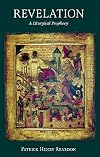
Fr. Patrick Reardon shows that Revelation has to be understood in the terms of the Early Church’s understanding. In essence, Revelation describes the world we exist in now and the world that is to come. It is foremost, a liturgical prophecy and spoke directly the the early Christians regarding their trials. Yet, there is still much wisdom to be gained about the nature of worship and the Kingdom of God from reading Revelation. It's a common sense, non-fear based approach to interpretation show more and I appreciate it. show less
Reclaiming the Atonement: An Orthodox Theology of Redemption: Volume 1: The Incarnate Word by Patrick Henry Reardon
Starts out a bit slow, but it really gets interesting in the middle and towards the end. It is not a quick read. Fr. Reardon really goes into great detail on the meaning and importance of the incarnation.
You May Also Like


Associated Authors
Statistics
- Works
- 17
- Also by
- 1
- Members
- 1,056
- Popularity
- #24,394
- Rating
- 4.3
- Reviews
- 5
- ISBNs
- 15
- Favorited
- 1