
Francis O'Gorman (1) (1967–2024)
Author of Victorian Poetry: An Annotated Anthology
For other authors named Francis O'Gorman, see the disambiguation page.
Works by Francis O'Gorman
Associated Works
The Duke's Children (1880) — Editor, some editions; Introduction, some editions — 1,278 copies, 22 reviews
A Companion to Romance: From Classical to Contemporary (Blackwell Companions to Literature and Culture) (2004) — Contributor — 12 copies
Edward Thomas: Prose Writings: A Selected Edition. Volume V: Critical studies : Swinburne and Pater (2017) — Editor. — 2 copies
Tagged
Common Knowledge
- Birthdate
- 1967-09-21
- Date of death
- 2024-04-11
- Gender
- male
- Education
- Lady Margaret Hall, Oxford University
- Organizations
- Pembroke College, Oxford University
Westminster College, Oxford University
University of Leeds
University of Edinburgh
English Association (UK)
Ruskin Society - Awards and honors
- Society of Antiquaries of London
Royal Historical Society - Relationships
- Birch, Dinah (PhD supervisor)
- Cause of death
- cancer
Members
Reviews
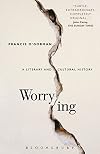
Although only a short book, he packs a lot of ideas into less than 200 pages. I am interested in the history of psychiatry and mental health, but hadn't really thought about worrying as coming under this category. O'Gorman doesn't limit himself to worry, but tackles the enormous subject of the birth of reason (the creation of worry?); the ways in which self help seems preoccupied with worry (and the flaws within the idea that 'we' (as human beings in a capitalist society) are failing if our show more thoughts and emotions don't fit into the ideal type envisioned by market economies. He even questions the place of CBT as used to rewrite individuals' personal beliefs about themselves, which given its status as magic bullet in the NHS, is brave. He references plenty of other books on worry, and even talks about ways in which the worrier might be an asset in paticular roles or tasks at work. I really liked this book, and am going to add it to the 'buy if you can' list. show less
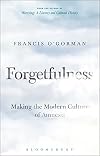
Who knew being forward-looking was a liability? According to Francis O’Gorman, all our planning and building and expanding is just wrong. What we need to do is look backwards more. Forgetfulness is all about retrieving and appreciating the past. An ode to historians, paleontologists and archaeologists – without ever saying so. Instead, he says “poetry and architecture are two of the strong conquerors of the forgetfulness of men.”
The bulk of the book seems to be O’Gorman’s show more collection of nefarious references to the future – future success, planning, execution, training, hopes and dreams. Our vocabulary is full of possibilities and O’Gorman has no trouble finding numerous words as evidence. As if this accent on the future were some sort of perversion. There is a long explanation of how 1800s railroad timetables set the rot of having us look for the next, not the previous. But why would society waste time enjoying old timetables? The only thing more useless would be yesterday’s weather forecast.
It is a difficult book. It ranges far and wide, without cohesion. But O’Gorman goes too far when he says “We are half conscious that we already have figurative Alzheimer’s.” Alzheimer’s is not forgetfulness; it is brain damage in which victims are unable to remember their own lives. This is not the same as failing to appreciate what and who have come before, where that is even possible.
There is a kind of arrogance in his belief that everything we have ever done is precious. We know far more today, and the way of life of our ancestors is less relevant by the minute. It has been a very short time since the majority of us could read at all. Before then, there was universal ignorance of past, present or future. Since then, there has been a veritable explosion of books, papers, speeches, documentaries and websites extolling research, discovery and interpretation of everything from the ages of the Earth to the workings of the brain. The best and the brightest among us could not hope to absorb more than an infinitesimal portion of it. No one person can even make sense of it all. And O’Gorman never argues convincingly that in 2017 we are any more forgetful than we have ever been.
David Wineberg show less
The bulk of the book seems to be O’Gorman’s show more collection of nefarious references to the future – future success, planning, execution, training, hopes and dreams. Our vocabulary is full of possibilities and O’Gorman has no trouble finding numerous words as evidence. As if this accent on the future were some sort of perversion. There is a long explanation of how 1800s railroad timetables set the rot of having us look for the next, not the previous. But why would society waste time enjoying old timetables? The only thing more useless would be yesterday’s weather forecast.
It is a difficult book. It ranges far and wide, without cohesion. But O’Gorman goes too far when he says “We are half conscious that we already have figurative Alzheimer’s.” Alzheimer’s is not forgetfulness; it is brain damage in which victims are unable to remember their own lives. This is not the same as failing to appreciate what and who have come before, where that is even possible.
There is a kind of arrogance in his belief that everything we have ever done is precious. We know far more today, and the way of life of our ancestors is less relevant by the minute. It has been a very short time since the majority of us could read at all. Before then, there was universal ignorance of past, present or future. Since then, there has been a veritable explosion of books, papers, speeches, documentaries and websites extolling research, discovery and interpretation of everything from the ages of the Earth to the workings of the brain. The best and the brightest among us could not hope to absorb more than an infinitesimal portion of it. No one person can even make sense of it all. And O’Gorman never argues convincingly that in 2017 we are any more forgetful than we have ever been.
David Wineberg show less
Lists
Awards

You May Also Like
Associated Authors
Statistics
- Works
- 15
- Also by
- 7
- Members
- 168
- Popularity
- #126,678
- Rating
- 4.0
- Reviews
- 2
- ISBNs
- 40