
Dan Murphy (6)
Author of The Legend of the Christmas Witch
For other authors named Dan Murphy, see the disambiguation page.
Series
Works by Dan Murphy
Tagged
Common Knowledge
- Education
- Tisch School of the Arts, New York University
- Occupations
- producer
- Organizations
- Evil Hag Productions
Members
Reviews
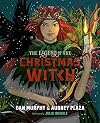
This originally appeared at The Irresponsible Reader.
---
WHAT'S THE LEGEND OF THE CHRISTMAS WITCH ABOUT?
We open with a couple of twin children, Kristoffer and Kristtörn, both of them have some magic which they mostly use in the games they play with each other. They have no parents when we meet them, and don't appear to remember them.
They're separated at one point, and Kristoffer is taken in by a couple from a nearby village and grows up among people—eventually delivering baked goods from show more his adoptive mother's bakery. Kristtörn is heartbroken by their separation, and a witch from the woods comes along to raise her.
Time passes and Kristoffer becomes Santa Claus. Kristtörn tries to make contact with him but is unable to. So she starts visiting places just before Christmas Eve, hoping their paths cross. A legend around her (mostly misunderstanding her) grows at the same pace as her brother's does.
This all leads somewhere, but I'm not going to go further than that.
THE ARTWORK
Iredale's work struck me like a classic storybook, the kind of art that was in the books I read as a kid—especially the books that were old by the time I read them. It was fitting for the kind of story. It wasn't knock-out gorgeous, and I think it would've hurt the book overall had it been. There's some sharpness to the art—almost the kind of thing that would've been carved into wood.
It's vibrant and I can't imagine a kid who won't want to pour over the pictures as much as the story.
SO, WHAT DID I THINK ABOUT THE LEGEND OF THE CHRISTMAS WITCH?
The best way to describe this book is—imagine that the Grimm Brothers wrote a story about where Santa came from as well as telling us about his sister. Now imagine that someone took that Grimm's Fairy Tale and sanitized it for contemporary kids. That result would be a lot like this. A little dark, a little light...
Because of that tone, I do think that parents/caregivers/etc. should exercise some judgment in who gets to read this one—some of it is going to go over the heads of young ones of a certain age, and some of it could be considered too dark for some little ones. But for the right reader, this take on Santa's origin is going to be a lot of fun.
I'm glad that I indulged my curiosity, I'm not going to suggest that this filled me with the Christmas spirit or anything, I'm not off to buy the biggest goose for anyone and my heart is the same size as it was before. But when it comes to a reworking of the Santa Myth, this was a very satisfying one. show less
---
WHAT'S THE LEGEND OF THE CHRISTMAS WITCH ABOUT?
We open with a couple of twin children, Kristoffer and Kristtörn, both of them have some magic which they mostly use in the games they play with each other. They have no parents when we meet them, and don't appear to remember them.
They're separated at one point, and Kristoffer is taken in by a couple from a nearby village and grows up among people—eventually delivering baked goods from show more his adoptive mother's bakery. Kristtörn is heartbroken by their separation, and a witch from the woods comes along to raise her.
Time passes and Kristoffer becomes Santa Claus. Kristtörn tries to make contact with him but is unable to. So she starts visiting places just before Christmas Eve, hoping their paths cross. A legend around her (mostly misunderstanding her) grows at the same pace as her brother's does.
This all leads somewhere, but I'm not going to go further than that.
THE ARTWORK
Iredale's work struck me like a classic storybook, the kind of art that was in the books I read as a kid—especially the books that were old by the time I read them. It was fitting for the kind of story. It wasn't knock-out gorgeous, and I think it would've hurt the book overall had it been. There's some sharpness to the art—almost the kind of thing that would've been carved into wood.
It's vibrant and I can't imagine a kid who won't want to pour over the pictures as much as the story.
SO, WHAT DID I THINK ABOUT THE LEGEND OF THE CHRISTMAS WITCH?
The best way to describe this book is—imagine that the Grimm Brothers wrote a story about where Santa came from as well as telling us about his sister. Now imagine that someone took that Grimm's Fairy Tale and sanitized it for contemporary kids. That result would be a lot like this. A little dark, a little light...
Because of that tone, I do think that parents/caregivers/etc. should exercise some judgment in who gets to read this one—some of it is going to go over the heads of young ones of a certain age, and some of it could be considered too dark for some little ones. But for the right reader, this take on Santa's origin is going to be a lot of fun.
I'm glad that I indulged my curiosity, I'm not going to suggest that this filled me with the Christmas spirit or anything, I'm not off to buy the biggest goose for anyone and my heart is the same size as it was before. But when it comes to a reworking of the Santa Myth, this was a very satisfying one. show less
Read like a bedtime story a parent makes up on the spot, with inconsistencies and logical missteps twined with too-convenient explanations and resolutions. Illustrations are engaging.
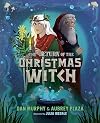
This originally appeared at The Irresponsible Reader.
---
WHAT'S THE RETURN OF THE CHRISTMAS WITCH ABOUT?
Kristtörn wakes from her frozen slumber to find a world she cannot recognize—it's a dystopian world where the joy of Christmas is gone and everyone is left with an automated, sanitized, homogenized, corporation-run day of market-driven consumption. Santa is nowhere to be found—and many doubt he ever existed—in his place, we have the Kringle Corporation.
We get to spend time with one show more family—grandmother remembers Santa and longs for his return, but her grandchildren don't (but aren't fans of Kringle, either). Kristtörn watches the girl and the two strike up a relationship at a distance, and ultimately team up to take down the corporation and bring back Kristtörn's brother.
That's a sloppy job on my part, but it'll do for these purposes. Murphy and Plaza tell it so much better.
THE ARTWORK
On the whole, I'd just want to repeat what I said about the first book, so I will.
Iredale's work struck me like a classic storybook, the kind of art that was in the books I read as a kid—especially the books that were old by the time I read them. It was fitting for the kind of story. It wasn't knock-out gorgeous, and I think it would've hurt the book overall had it been. There's some sharpness to the art—almost the kind of thing that would've been carved into wood.
It's vibrant and I can't imagine a kid who won't want to pour over the pictures as much as the story.
So much for repeating—I did think this work wasn't as well done as the previous book. There are a couple of illustrations that...sloppy isn't the right word, but they don't seem as finished. It felt like Iredale ran out of time and rushed one or two drawings/characters. That's likely not right—and probably not that fair of me to say. But that was my impression. I doubt that any of the target audience will pick up on it (or care if they do), but it surprised me that I wasn't as impressed with the art.
SO, WHAT DID I THINK ABOUT THE RETURN OF THE CHRISTMAS WITCH?
This takes a darker turn than I expected from this story—the first book had a hint of this, and it's not out of place, but I raised an eyebrow at the dystopia. That said—I thought it was a great choice, and offered a new take on the usual "over-commercialization of Christmas" and "we need to get back to the essence of the holiday" stories. But that's what it is at its core—and I'm all for that kind of story.
I did think the ending felt a little rushed—like the authors ran into a hard page limit/word count. It wouldn't have taken much more, but after the well-established set-up, I thought we needed a little more development to the magical ending.
The door is left open to one more book in the series—it's maybe even suggested. If so, I'm totally on board for it. I can see the authors leaving it here, too—and I'd be okay with that.
The words-to-image ratio for this kind of book leans toward the words side, so that will limit some younger fans—but as long as there's a willing adult around, I think this will satisfy fans of the first book. show less
---
WHAT'S THE RETURN OF THE CHRISTMAS WITCH ABOUT?
Kristtörn wakes from her frozen slumber to find a world she cannot recognize—it's a dystopian world where the joy of Christmas is gone and everyone is left with an automated, sanitized, homogenized, corporation-run day of market-driven consumption. Santa is nowhere to be found—and many doubt he ever existed—in his place, we have the Kringle Corporation.
We get to spend time with one show more family—grandmother remembers Santa and longs for his return, but her grandchildren don't (but aren't fans of Kringle, either). Kristtörn watches the girl and the two strike up a relationship at a distance, and ultimately team up to take down the corporation and bring back Kristtörn's brother.
That's a sloppy job on my part, but it'll do for these purposes. Murphy and Plaza tell it so much better.
THE ARTWORK
On the whole, I'd just want to repeat what I said about the first book, so I will.
Iredale's work struck me like a classic storybook, the kind of art that was in the books I read as a kid—especially the books that were old by the time I read them. It was fitting for the kind of story. It wasn't knock-out gorgeous, and I think it would've hurt the book overall had it been. There's some sharpness to the art—almost the kind of thing that would've been carved into wood.
It's vibrant and I can't imagine a kid who won't want to pour over the pictures as much as the story.
So much for repeating—I did think this work wasn't as well done as the previous book. There are a couple of illustrations that...sloppy isn't the right word, but they don't seem as finished. It felt like Iredale ran out of time and rushed one or two drawings/characters. That's likely not right—and probably not that fair of me to say. But that was my impression. I doubt that any of the target audience will pick up on it (or care if they do), but it surprised me that I wasn't as impressed with the art.
SO, WHAT DID I THINK ABOUT THE RETURN OF THE CHRISTMAS WITCH?
This takes a darker turn than I expected from this story—the first book had a hint of this, and it's not out of place, but I raised an eyebrow at the dystopia. That said—I thought it was a great choice, and offered a new take on the usual "over-commercialization of Christmas" and "we need to get back to the essence of the holiday" stories. But that's what it is at its core—and I'm all for that kind of story.
I did think the ending felt a little rushed—like the authors ran into a hard page limit/word count. It wouldn't have taken much more, but after the well-established set-up, I thought we needed a little more development to the magical ending.
The door is left open to one more book in the series—it's maybe even suggested. If so, I'm totally on board for it. I can see the authors leaving it here, too—and I'd be okay with that.
The words-to-image ratio for this kind of book leans toward the words side, so that will limit some younger fans—but as long as there's a willing adult around, I think this will satisfy fans of the first book. show less
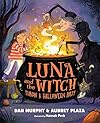
Luna Lopez wants to be a witch, so she makes a bargain with the witch who lives on her block. If Luna can help the witch throw a successful Halloween party, she will be taken on as a student. As the planning progresses Luna realizes why the witch's past parties have not gone so well and gently urges her to make some course corrections.
I was expecting something subversive and/or hilarious from Aubrey Plaza, but this subdued tale really disappointed. It may appeal though to kids and parents show more who find the addled Amelia Bedelia to be the height of humor. show less
I was expecting something subversive and/or hilarious from Aubrey Plaza, but this subdued tale really disappointed. It may appeal though to kids and parents show more who find the addled Amelia Bedelia to be the height of humor. show less
You May Also Like
Associated Authors
Statistics
- Works
- 3
- Members
- 147
- Popularity
- #140,981
- Rating
- 3.4
- Reviews
- 8
- ISBNs
- 45
- Languages
- 1