
Ken Robbins (1945–2017)
Author of Autumn Leaves
About the Author
Ken Robbins was born in Brooklyn, New York in 1945. He graduated from Cornell University in 1967. He worked as a book editor at Doubleday before becoming a children's book author and photographer. He wrote and illustrated more than 20 children's books including Pumpkins, Apples, and Earth. He show more primarily took photographs of scenery and still lifes. His photographs were reproduced on book jackets, record album covers, and in magazines including the cover of Time. They were also collected in books including The Hamptons Suite. He died on March 9, 2017 at the age of 71. (Bowker Author Biography) show less
Image credit: via Macmillan Publishers
Works by Ken Robbins
For Good Measure: The Ways We Say How Much, How Far, How Heavy, How Big, How Old (2010) 103 copies, 19 reviews
Buttermilk Bottoms 1 copy
Springs, a celebration 1 copy
Associated Works
Tagged
Common Knowledge
- Birthdate
- 1945
- Date of death
- 2017-03-09
- Gender
- male
- Education
- Cornell University (BA|1967)
- Occupations
- book editor
children's book author
photographer - Nationality
- USA
- Birthplace
- Brooklyn, New York, USA
- Associated Place (for map)
- New York, USA
Members
Reviews
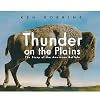
Love this book. Robbins captures the magnificence of the largest mammal native to North America with reverance but without being overly sentimental. He describes how buffalo herds were affected when Native Americans migrated to the plains, techniques they used for hunting them, how Native Americans used every part of the buffalo for food, clothing and religious ceremony, how their hunting habits changed as white settlers introduced guns, and finally, how white people made short work of show more almost extinguishing the entire North American buffalo population by hunting them for sport. Robbins brings ends with the current status of the buffalo population: "The American buffalo is no longer endangered - we certainly ought to be happy about that. But there is one further thing that we should want to remember: the millions are gone, and they will never be back." A great book to start a discussion with students about animal ethics and stewardship. show less
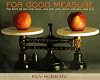
On the inside of the dust jacket, the explanation of why we use lb. to abbreviate pound is given. As an adult, I never knew the reason behind it so I was immediately drawn in and couldn't wait to find the answers to more things I did not know!
Not only is this written in an interesting format, with large photographs with large font, but incorporating this text into a math lesson would also be effortless. If it can be measured, it is in this text. Ken Robbins even covers the cubit!
Not only is this written in an interesting format, with large photographs with large font, but incorporating this text into a math lesson would also be effortless. If it can be measured, it is in this text. Ken Robbins even covers the cubit!
I loved this book. It is going on my list of books to purchase to use in teaching secondary math. This book in whole or in parts could be used for "break time" in math while teaching important concepts not readily found otherwise in such a concise manner. In addition to middle grades reading this for themselves, I feel this book has value as a read-aloud book to younger ages. It will definitely improve listening vocabulary and help connect words used in measurement. My experience in 15 years show more of tutoring is that children are extremely uninformed about measurement and have no realistic understanding of how to gage 3 inches, a centimeter, or a pound.
This survey book uses a great deal of photographs and illustrations to supplement a very informative text. The objects used to explain a point are interesting in themselves and could generate conversations when read-aloud. The author has produced many nonfiction books for children. All art reproductions are credited, but there is no bibliography. Most of the information could be obtained from dictionaries (eytomology) and encyclopedia, but it is nice to have the author do the work for you. The focus of the book is both the eytomology of the words of measurement from a historical sense and the inter-relation of the actual quantities of measurement. The tone is serious with a little tonge-in-cheek humor. The writing style is clear with exacting use of vocabulary. The overall organization moves from one topic to another, perhaps moving from simplest or most familiar to more abstract concepts. There is no table of contents, just an introduction. New topic areas are in large font with a type of introduction page. Each topic starts with the way the words came to be used for that type of measurement. Then the various sub-units of measurement in that category are explained. The flow of topics feels natural. At times some of the sub-topics are contrasted with each other to clarify or prevent confusion. The author's consistent approach to uncovering each topic help unify the book. This book is a pleasure to read. show less
This survey book uses a great deal of photographs and illustrations to supplement a very informative text. The objects used to explain a point are interesting in themselves and could generate conversations when read-aloud. The author has produced many nonfiction books for children. All art reproductions are credited, but there is no bibliography. Most of the information could be obtained from dictionaries (eytomology) and encyclopedia, but it is nice to have the author do the work for you. The focus of the book is both the eytomology of the words of measurement from a historical sense and the inter-relation of the actual quantities of measurement. The tone is serious with a little tonge-in-cheek humor. The writing style is clear with exacting use of vocabulary. The overall organization moves from one topic to another, perhaps moving from simplest or most familiar to more abstract concepts. There is no table of contents, just an introduction. New topic areas are in large font with a type of introduction page. Each topic starts with the way the words came to be used for that type of measurement. Then the various sub-units of measurement in that category are explained. The flow of topics feels natural. At times some of the sub-topics are contrasted with each other to clarify or prevent confusion. The author's consistent approach to uncovering each topic help unify the book. This book is a pleasure to read. show less
I loved this book. It broke down measurements into real world things for students to see and compare. I think even students in older grades could use this book because it goes over tons of measurement that people do not think to use and forget to use. I think a fun way to incorporate this into a classroom is by giving the students things to measure and letting them find different ways to convert them into their new found measurements. I think this book is engaging and something that could be show more used in research as well. show less
Lists
Awards


You May Also Like


Associated Authors
Statistics
- Works
- 32
- Also by
- 4
- Members
- 2,942
- Popularity
- #8,696
- Rating
- 3.9
- Reviews
- 54
- ISBNs
- 76
- Languages
- 2