
Sarah Mitchell (1)
Author of The Lost Letters
For other authors named Sarah Mitchell, see the disambiguation page.
Works by Sarah Mitchell
Tagged
Common Knowledge
- Birthdate
- 20th century
- Education
- University of Cambridge (law)
University of East Anglia (MA|Creative writing – prose fiction) - Occupations
- barrister
novelist - Places of residence
- Norfolk, England, UK
- Associated Place (for map)
- England, UK
Members
Reviews
The Lost Letters: Absolutely heartbreaking wartime fiction about love and family secrets by Sarah Mitchell
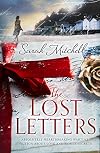
I do love a dual timeline story, especially when one of the stories is set during the Second World War, so The Lost Letters had immediate appeal for me.
The two timelines are that of Martha in the present day and that of Sylvie in 1940s Norfolk. Martha's father has just passed away before completing his memoirs and she finds that what he has left behind leaves her with more questions than answers. She leaves her home in Canada to spend the month of May in Norfolk to try and answer the show more questions she has: who is Catkins and why is a beach hut significant?
Sylvie meets a woman and child by a beach hut in Norfolk just before war breaks out and they become friends. And this friendship leads to some far-reaching consequences over the years that follow.
Normally with dual timeline stories, it's the modern day story that really engages me, probably because there are usually a lot of discoveries to be made about the story in the past. But in the case of The Lost Letters I think I much preferred Sylvie's story. It's a perfect snapshot of wartime and how much it changed people and families. It's so engaging, so interesting. I found it similar in a way to Kate Atkinson's wartime writing - very intuitive and evocative.
But that's not to say that Martha's story is not engaging because it is. She's a bit adrift after losing her father. Her daughter is away from home at Cambridge University and is drifting away from Martha. She's wondering which way to turn in her life. I really enjoyed her journey of discovery about herself, her daughter, her family and her life.
I thought The Lost Letters was a beautifully written story. It's not overly sentimental but it did move me and I think that was because of the quality of the writing and the way that I started to care about the characters and what happened to them. After a slightly slow start I found myself completely embroiled in a story that is quite melancholy at times, full of emotion and depth. After a debut of this quality I shall very much look forward to Sarah Mitchell's next book. show less
The two timelines are that of Martha in the present day and that of Sylvie in 1940s Norfolk. Martha's father has just passed away before completing his memoirs and she finds that what he has left behind leaves her with more questions than answers. She leaves her home in Canada to spend the month of May in Norfolk to try and answer the show more questions she has: who is Catkins and why is a beach hut significant?
Sylvie meets a woman and child by a beach hut in Norfolk just before war breaks out and they become friends. And this friendship leads to some far-reaching consequences over the years that follow.
Normally with dual timeline stories, it's the modern day story that really engages me, probably because there are usually a lot of discoveries to be made about the story in the past. But in the case of The Lost Letters I think I much preferred Sylvie's story. It's a perfect snapshot of wartime and how much it changed people and families. It's so engaging, so interesting. I found it similar in a way to Kate Atkinson's wartime writing - very intuitive and evocative.
But that's not to say that Martha's story is not engaging because it is. She's a bit adrift after losing her father. Her daughter is away from home at Cambridge University and is drifting away from Martha. She's wondering which way to turn in her life. I really enjoyed her journey of discovery about herself, her daughter, her family and her life.
I thought The Lost Letters was a beautifully written story. It's not overly sentimental but it did move me and I think that was because of the quality of the writing and the way that I started to care about the characters and what happened to them. After a slightly slow start I found myself completely embroiled in a story that is quite melancholy at times, full of emotion and depth. After a debut of this quality I shall very much look forward to Sarah Mitchell's next book. show less
Martha Rodwell’s father passed away less than a month ago and she now finds herself on a plane heading to Europe. Her father was writing a memoir, but never got the chance to finish it before his passing. After his death, Martha and her sister, Elizabeth, discovered that their father had booked a hotel and rented a beach hut in a small English coastal town named Wells-next-to-the sea. Martha is unsure why her father chose this location in particular to finish his book especially since he show more hadn’t been to Europe in at least seventy years. So, she decides to take his booking to figure out why her father was drawn to this particular coastal town and also to find out why he had folders on his computer consisting of letters to someone named Catkins. Did her father have an affair and also who is Catkins?
The Lost Letters interweaves two stories switching from the present to the beginning of World War II where we also meet Sylvie and her family. Sylvie’s husband is away fighting in the war leaving her alone to raise two young children. Her only saving grace besides her children is her friendship with Connie. Here, we witness the day to day conflict and the terror people faced with bombings and the loss of loved ones. Sylvie also has to make difficult decisions regarding her family that tie in to our present story.
There is not one thing I did not love about this story. Right from the beginning I was drawn in to the mystery surrounding Martha and her family. The mystery is so intricately weaved throughout the pages and it's almost as if it is a puzzle and little by little we fit the pieces together until we get this final masterpiece right in front of us. Sarah Mitchell penned incredible stand out characters with heart and soul and we get to know them intimately and we can feel their pain and sadness and also the hope that each of them has. Family plays such an important role in this story in both the present and the past and we can see this through Martha and the love she has for her own daughter even though their relationship is strained. We also see the love Sylvie has for her children and the sacrifices she has made for them while trying to raise them during wartime.
The historical aspect of The Lost Letters story was by far my absolute favorite and here is where I found myself completely drawn into the story and you can see just how much research went into it. As an author, Sarah Mitchell really shines here. It was just so emotional and heartbreaking just reading about the bombs being dropped and the loss of lives and never knowing from one moment to the next if you will live or die. Just imagine the fear families had, women whose husbands went off to war, not knowing if they would ever return, their children being sent off to fight some never even coming back. Mitchell really shows the realities of wartime. It truly is heart wrenching.
The Lost Letters is a beautiful and poignant story that has completely captured my heart. It is a story about love, life, family, and the bonds of friendship that stand the test of time. The story is so simple and yet so intricate and brilliantly done. It takes an author like Sarah Mitchell to make me realize why I have such a love of reading. By far, this might just be my top read for the year. I will definitely be looking forward to more books by Sarah Mitchell. show less
The Lost Letters interweaves two stories switching from the present to the beginning of World War II where we also meet Sylvie and her family. Sylvie’s husband is away fighting in the war leaving her alone to raise two young children. Her only saving grace besides her children is her friendship with Connie. Here, we witness the day to day conflict and the terror people faced with bombings and the loss of loved ones. Sylvie also has to make difficult decisions regarding her family that tie in to our present story.
There is not one thing I did not love about this story. Right from the beginning I was drawn in to the mystery surrounding Martha and her family. The mystery is so intricately weaved throughout the pages and it's almost as if it is a puzzle and little by little we fit the pieces together until we get this final masterpiece right in front of us. Sarah Mitchell penned incredible stand out characters with heart and soul and we get to know them intimately and we can feel their pain and sadness and also the hope that each of them has. Family plays such an important role in this story in both the present and the past and we can see this through Martha and the love she has for her own daughter even though their relationship is strained. We also see the love Sylvie has for her children and the sacrifices she has made for them while trying to raise them during wartime.
The historical aspect of The Lost Letters story was by far my absolute favorite and here is where I found myself completely drawn into the story and you can see just how much research went into it. As an author, Sarah Mitchell really shines here. It was just so emotional and heartbreaking just reading about the bombs being dropped and the loss of lives and never knowing from one moment to the next if you will live or die. Just imagine the fear families had, women whose husbands went off to war, not knowing if they would ever return, their children being sent off to fight some never even coming back. Mitchell really shows the realities of wartime. It truly is heart wrenching.
The Lost Letters is a beautiful and poignant story that has completely captured my heart. It is a story about love, life, family, and the bonds of friendship that stand the test of time. The story is so simple and yet so intricate and brilliantly done. It takes an author like Sarah Mitchell to make me realize why I have such a love of reading. By far, this might just be my top read for the year. I will definitely be looking forward to more books by Sarah Mitchell. show less

Wow! This is a book that, like some of my favorite movies, I really disliked at first but then couldn‰Ãªt stop thinking about it. I'm glad I didn't write this review immediately after finishing - I almost missed the "breathtaking twist" that the tagline mentioned. I had to mull it over for awhile, and once it hit me, I liked the book that much more. I LOVE when I get fooled.
I will hide the rest of the review because it contains a complete spoiler:
The timeline switches between "now" show more and "five years ago." In the present, Claire is an immigration lawyer in London, engaged to Angus and planning her wedding. But sheÂês hesitant to move forward, haunted by the memory of the great love of her life, ex-boyfriend Daniel.
The chapters from five years ago describe how Daniel was being stalked by his psychotic ex-girlfriend, which ultimately resulted in his death. One of my issues with the book was that the two timelines seemed to have absolutely nothing to do with each other. Then it finally sunk in. Even though it's clearly spelled out towards the end, at first you don't get it: all of the chapters from the past are narrated by Julie, Daniel's new girlfriend - not Claire. Which means that the psycho-stalker-ex being described IS CLAIRE! [Okay, it's kind of a cheat. But it's totally fun; and the character of Julie IS introduced fairly early in the book so I give it a pass.]
So that explains why itÂês hard to warm up to Claire as a character - sheÂês a nut. And this realization throws into question everything that came before. Obviously, Claire has reality issues. Some of the scenes have a surreal, almost dream-like quality. Did they really happen as she describes? Well, in her own words:
"Like I say, if somebody is lying about one element of their story the chances are the rest is made-up too."
"The almost-truth can be very plausible indeed."
"The trick is to believe the story yourself."
According to Claire, she was torn between her fiancé and Mark, the man who sold them his house.
It seems that she was powerfully drawn to Mark because he reminded her so strongly of Daniel. But then - so she says - she discovers that Angus and Mark were involved in a convoluted scheme of blackmail, corruption, and the terrible exploitation of female immigrants. They were conspiring together, lying to her and using her. Like Daniel, both of these men end up dead.
At the very end, a new man is introduced, and - uh oh! - he reminds Claire powerfully of Daniel. I fear this character is a goner.
(I suggest that if you havenÂêt read the book but are interested in it, donÂêt read too many of the reviews or comments beforehand. At some point you will read something that will probably spoil the ending for you, and that would be a shame! PS, Based on some of the reviews I read, I think I'm not the only one who almost - or completely - missed the twist.) show less
I will hide the rest of the review because it contains a complete spoiler:
The chapters from five years ago describe how Daniel was being stalked by his psychotic ex-girlfriend, which ultimately resulted in his death. One of my issues with the book was that the two timelines seemed to have absolutely nothing to do with each other. Then it finally sunk in. Even though it's clearly spelled out towards the end, at first you don't get it: all of the chapters from the past are narrated by Julie, Daniel's new girlfriend - not Claire. Which means that the psycho-stalker-ex being described IS CLAIRE! [Okay, it's kind of a cheat. But it's totally fun; and the character of Julie IS introduced fairly early in the book so I give it a pass.]
So that explains why itÂês hard to warm up to Claire as a character - sheÂês a nut. And this realization throws into question everything that came before. Obviously, Claire has reality issues. Some of the scenes have a surreal, almost dream-like quality. Did they really happen as she describes? Well, in her own words:
"Like I say, if somebody is lying about one element of their story the chances are the rest is made-up too."
"The almost-truth can be very plausible indeed."
"The trick is to believe the story yourself."
According to Claire, she was torn between her fiancé and Mark, the man who sold them his house.
It seems that she was powerfully drawn to Mark because he reminded her so strongly of Daniel. But then - so she says - she discovers that Angus and Mark were involved in a convoluted scheme of blackmail, corruption, and the terrible exploitation of female immigrants. They were conspiring together, lying to her and using her. Like Daniel, both of these men end up dead.
At the very end, a new man is introduced, and - uh oh! - he reminds Claire powerfully of Daniel. I fear this character is a goner.
(I suggest that if you havenÂêt read the book but are interested in it, donÂêt read too many of the reviews or comments beforehand. At some point you will read something that will probably spoil the ending for you, and that would be a shame! PS, Based on some of the reviews I read, I think I'm not the only one who almost - or completely - missed the twist.) show less
The English Girl: A heartbreaking and emotional World War 2 historical novel, based on a true story by Sarah Mitchell
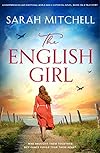
I read a lot of historical fiction based on World War II so it always surprises me when an author gives us a different perspective. This novel is based after the war in England and looks at how life in a small town has been affected. This is a well-written dual time line novel that is based on true facts.
1946 - Norfolk England. In this quiet part of England, the government decided to create a camp for German prisoners of war to help remove the barbed wire and mines from the beach. The people show more of the village were angered by this - many of them lost their loved ones during the war and didn't want Germans in their town as a reminder. Fran lived with her sister June and her parents and had lost a brother during the war. Her sister hates the Germans and wants nothing to do with them, while Fran is more forgiving and goes to work at the camp as a secretary. When Fran first sees Thomas, one of the prisoners, she is aware of his blue eyes that seemed to see into her soul. She and Thomas fall in love but know that they have to keep it hidden because there was a law about fraternizing with the enemy. Thomas makes plans to stay in England after the war but they aren't sure how to accomplish this goal. He gets repatriated back to Germany and has to decide if he will look for his family at home or stay in England with his love. There is also a dual story line in this time period of the camp commander who is suffering from what we would now call PTSD and how his wife deals with it.
1989 - Berlin. Tiffany arrives in Berlin as the wall is coming done opening up the ability to travel to east Germany. She is Fran's granddaughter and is on a mission to find someone from the past. The 1989 part of the novel brackets the 1946 section and provides closure to the story of Fran and Thomas.
This is an interesting look at the trauma that many soldiers face when they go home after war. There is also a look at the way a person is treated by the people in town for not being able to fight due to health issues. This sweeping story looks at the power of hope and love after a war. Several parts of the book had me checking Google to see if they really happened. One of the most interesting was that the people of the area were encouraged by their church to invite a German prisoner to Christmas dinner and that many of the English families did open their homes. It showed the goal of many people to create peace after the long war.
Overall, this was a well written look at love and hope, family, and the effects of war on both the soldiers and their families. I am going to read some of the earlier books by this author.
Thanks to the publisher for a copy of this book to read and review. show less
1946 - Norfolk England. In this quiet part of England, the government decided to create a camp for German prisoners of war to help remove the barbed wire and mines from the beach. The people show more of the village were angered by this - many of them lost their loved ones during the war and didn't want Germans in their town as a reminder. Fran lived with her sister June and her parents and had lost a brother during the war. Her sister hates the Germans and wants nothing to do with them, while Fran is more forgiving and goes to work at the camp as a secretary. When Fran first sees Thomas, one of the prisoners, she is aware of his blue eyes that seemed to see into her soul. She and Thomas fall in love but know that they have to keep it hidden because there was a law about fraternizing with the enemy. Thomas makes plans to stay in England after the war but they aren't sure how to accomplish this goal. He gets repatriated back to Germany and has to decide if he will look for his family at home or stay in England with his love. There is also a dual story line in this time period of the camp commander who is suffering from what we would now call PTSD and how his wife deals with it.
1989 - Berlin. Tiffany arrives in Berlin as the wall is coming done opening up the ability to travel to east Germany. She is Fran's granddaughter and is on a mission to find someone from the past. The 1989 part of the novel brackets the 1946 section and provides closure to the story of Fran and Thomas.
This is an interesting look at the trauma that many soldiers face when they go home after war. There is also a look at the way a person is treated by the people in town for not being able to fight due to health issues. This sweeping story looks at the power of hope and love after a war. Several parts of the book had me checking Google to see if they really happened. One of the most interesting was that the people of the area were encouraged by their church to invite a German prisoner to Christmas dinner and that many of the English families did open their homes. It showed the goal of many people to create peace after the long war.
Overall, this was a well written look at love and hope, family, and the effects of war on both the soldiers and their families. I am going to read some of the earlier books by this author.
Thanks to the publisher for a copy of this book to read and review. show less
Statistics
- Works
- 4
- Members
- 53
- Popularity
- #303,172
- Rating
- 3.6
- Reviews
- 10
- ISBNs
- 8