

John Farrell (2)
Author of The Day Without Yesterday: Lemaitre, Einstein, and the Birth of Modern Cosmology
For other authors named John Farrell, see the disambiguation page.
Works by John Farrell
The Day Without Yesterday: Lemaitre, Einstein, and the Birth of Modern Cosmology (2005) 50 copies, 1 review
The Clock and the Camshaft: And Other Medieval Inventions We Still Can't Live Without (2020) 19 copies, 2 reviews
Tagged
Common Knowledge
- Gender
- male
- Education
- Harvard College (BA|English and American literature)
- Occupations
- writer
producer - Places of residence
- Boston, Massachusetts, USA
- Associated Place (for map)
- Massachusetts, USA
Members
Reviews
The Clock and the Camshaft: And Other Medieval Inventions We Still Can't Live Without by John Farrell
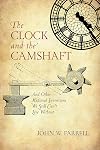
Highlights the importance of medieval innovations as the basis for later technological progressThis history of medieval inventions, focusing on the eleventh to the fourteenth centuries, vividly portrays a thriving era of human ingenuity--and the results are still being felt to this day. From the mechanical clock to the first eyeglasses, both of which revolutionized society, many of the commonplace devices we now take for granted had their origin in the Middle Ages. Divided into ten thematic show more chapters, the accessible text allows the reader to sample areas of interest or read the book from beginning to end for a complete historical overview.A chapter on the paper revolution shows that innovations in mill power enabled the mass production of cheap paper, which was instrumental in the later success of the printing press as a means of disseminating affordable books to more people. Another chapter examines the importance of Islamic civilization in preserving ancient Greek texts and the role of translation teams in Sicily and Spain in making those texts available in Latin for a European readership. A chapter on instruments of discovery describes the impact of the astrolabe, which was imported from Islamic lands, and the compass, originally invented in China; these tools plus innovations in ship building spurred on the expansion of European trade and the later age of discovery at the time of Columbus.Complete with original drawings to illustrate how these early inventions worked, this guided tour through a distant era reveals how medieval farmers, craftsmen, women artisans, and clerical scholars laid the foundations of the modern world. show less
I wholeheartedly concur with Randy's review of this one: http://www.goodreads.com/review/show/58436314
One of the criticisms Randy makes is that this is largely based on secondary sources. In fact there is a huge archive available of Lemaitre's papers etc. and yet I don't believe this book refers to it at all. That is quite incredible. The cover boasts that it is the first biography of Lemaitre when there was already a substantial one available in French referred to occasionally in the course show more of this book. Although French works are given in the bibliography and referred to in the endnotes, I wonder if Farrell actually speaks/reads French.
Not surprisingly, then, from the historian's point of view, I find this book entirely inadequate.
As a writer, ditto. The book is a complete shambles. Why a publishing house would have published this as it, is beyond me. EMPLOY EDITORS. Everybody. EDITORS. P-leeaasssse.
An hour later...having said that, it is no easy matter, I imagine, to write a biography of somebody in which something highly technical and specialised plays so big a part. Maybe if I read more books of this type I will come around to thinking that as far as presentation goes, the author hasn't done as bad a job as I now feel he has.
And I have to say this: much as it claims otherwise, this is NOT a biography of Lemaitre. It is the story of his physics, that's all. show less
One of the criticisms Randy makes is that this is largely based on secondary sources. In fact there is a huge archive available of Lemaitre's papers etc. and yet I don't believe this book refers to it at all. That is quite incredible. The cover boasts that it is the first biography of Lemaitre when there was already a substantial one available in French referred to occasionally in the course show more of this book. Although French works are given in the bibliography and referred to in the endnotes, I wonder if Farrell actually speaks/reads French.
Not surprisingly, then, from the historian's point of view, I find this book entirely inadequate.
As a writer, ditto. The book is a complete shambles. Why a publishing house would have published this as it, is beyond me. EMPLOY EDITORS. Everybody. EDITORS. P-leeaasssse.
An hour later...having said that, it is no easy matter, I imagine, to write a biography of somebody in which something highly technical and specialised plays so big a part. Maybe if I read more books of this type I will come around to thinking that as far as presentation goes, the author hasn't done as bad a job as I now feel he has.
And I have to say this: much as it claims otherwise, this is NOT a biography of Lemaitre. It is the story of his physics, that's all. show less
The Clock and the Camshaft: And Other Medieval Inventions We Still Can't Live Without by John Farrell
Interesting, useful, and insightful.
Awards

Statistics
- Works
- 2
- Members
- 69
- Popularity
- #250,751
- Rating
- 3.8
- Reviews
- 3
- ISBNs
- 33
- Languages
- 1