
Benjamin R. Foster (1) (1945–)
Author of The Epic of Gilgamesh (Norton Critical Editions)
For other authors named Benjamin R. Foster, see the disambiguation page.
Benjamin R. Foster (1) has been aliased into Benjamin Read Foster.
Works by Benjamin R. Foster
Works have been aliased into Benjamin Read Foster.
Associated Works
Works have been aliased into Benjamin Read Foster.
War and Peace in the Ancient World (Ancient World: Comparative Histories) (2007) — Contributor — 23 copies
Tagged
Common Knowledge
- Birthdate
- 1945-09-15
- Education
- Princeton University (AB|1968)
Yale University (MA 1973, MPhil 1974, PhD 1975) - Nationality
- USA
- Map Location
- USA
Members
Reviews
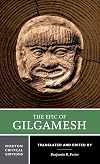
BkC2) THE EPIC OF GILGAMESH: Not sorry I read it, but what a slog.
The Book Report: Evil King Gilgamesh is hatefully cruel to the citizens of Uruk, his kingdom. The gods, hearing the cries of his oppressed people, send Gilgamesh a companion, Enkidu. (Yes, that's right, a man.) Gilgamesh falls so in love with Enkidu, and has such big fun playing around and exploring the world and generally raising hell with Enkidu that his people are left alone to get on with...whatever it was that they show more weren't allowed to do before. And there was much rejoicing *yay*
No one is allowed to be too happy for too long. Gilgamesh learns this when he royally screws up by refusing to screw goddess Ishtar because he's busy having fun with Enkidu. It is **NEVER** a good idea to turn down nookie from a goddess. She gets her knickers in a twist and decides that, if he's gonna be *that* way about it, he's not gonna have his boy-toy either! THEN the boys do the colossally stupid thing of stealing Ishtar's bull, and it's lights out for Enkidu.
Gilgamesh's grief, to his peoples' relief, sends him on a quest for immortality. Which, frankly, makes not one whit of sense. Grief, in my extensive experience, makes one want oblivion, not eternity. Well, whatever, not me writin' the story, so off goes Gilgamesh to have more adventures.
My Review: A whole bunch of the Old Testament is lifted from this book. Amazingly whole and entire, too. Methuselah, Noah...all here first.
It's a slog to read, like the Bible, but it's fascinating if kept to smaller doses. I had no faith for it to rock, but it might rock a religious person's sacred book fantasy pretty hard. Highly instructive is the treatment of a strong love between men as perfectly boringly ordinary. No sexual component is implied in their relationship, but go find me a more loving relationship in sacred literature. Their closeness was so complete that it threatened the gods. But, crucially, it was the *CLOSENESS* that threatened the gods, not any inherent evil. The men loved each other so completely that there was no room for gods, which pisses gods off somethin' fierce.
Food for thought, homophobes who think Leviticus is right on *this* count. show less
The Book Report: Evil King Gilgamesh is hatefully cruel to the citizens of Uruk, his kingdom. The gods, hearing the cries of his oppressed people, send Gilgamesh a companion, Enkidu. (Yes, that's right, a man.) Gilgamesh falls so in love with Enkidu, and has such big fun playing around and exploring the world and generally raising hell with Enkidu that his people are left alone to get on with...whatever it was that they show more weren't allowed to do before. And there was much rejoicing *yay*
No one is allowed to be too happy for too long. Gilgamesh learns this when he royally screws up by refusing to screw goddess Ishtar because he's busy having fun with Enkidu. It is **NEVER** a good idea to turn down nookie from a goddess. She gets her knickers in a twist and decides that, if he's gonna be *that* way about it, he's not gonna have his boy-toy either! THEN the boys do the colossally stupid thing of stealing Ishtar's bull, and it's lights out for Enkidu.
Gilgamesh's grief, to his peoples' relief, sends him on a quest for immortality. Which, frankly, makes not one whit of sense. Grief, in my extensive experience, makes one want oblivion, not eternity. Well, whatever, not me writin' the story, so off goes Gilgamesh to have more adventures.
My Review: A whole bunch of the Old Testament is lifted from this book. Amazingly whole and entire, too. Methuselah, Noah...all here first.
It's a slog to read, like the Bible, but it's fascinating if kept to smaller doses. I had no faith for it to rock, but it might rock a religious person's sacred book fantasy pretty hard. Highly instructive is the treatment of a strong love between men as perfectly boringly ordinary. No sexual component is implied in their relationship, but go find me a more loving relationship in sacred literature. Their closeness was so complete that it threatened the gods. But, crucially, it was the *CLOSENESS* that threatened the gods, not any inherent evil. The men loved each other so completely that there was no room for gods, which pisses gods off somethin' fierce.
Food for thought, homophobes who think Leviticus is right on *this* count. show less
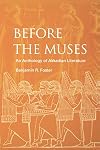
Knowing the mythological corpus of Akkad only briefly and supporting myself with historical volumes of Cambridge Ancient History altogether with some text on Babylonian-Assyrian astrology, I found it a pure treasury of ancient theology, which by and large may be derived from this tome. I've made some retro-active attempts at reconstructing certain magical techniques (later Hellenic bionic statues, in which spirits were scried into a statue), magickal blockades and all forms of spells and show more incantantations that had a well thought-over syntax of work. The charming scenario of Gods-as-friends to humanity in which the Great Lords are summoned even to help at childbirth, in which poor Ereshkigal moans over Nergal, while Erra-Nergal wreaks bloodthirsty destruction upon the land. A great stasis is threading behind all of those magnificent stories, both of astronomical, astrological, and cosmogenic proportions, a great stasis in which stories about Gods and forces at work are thin and blurry. All aspects of life were covered in myth, all consolation is found therein. All theology is interpretation, some is phantasy, what works has a grain of truth in it. Forewarned by Julian in his Hymn to Helios, that myths are for toothing children, it was to look beyond the fabric of words to peer into the cosmic events that in the eternal return of the sanctified narration are granting something new forever more. I have abolished many misconceptions, for example that mortals could no join Gods and they were condemned to the netherworlds by and large. It seems that there were ways of growing wings post-mortem and joining the mighty lot. With landscape populated with hungry ghosts, phantoms, cacodaimons and spirits, with mighty sorcerers and witches there was woe and extreme suffering, yet there were also remedies, joys and a great 'yes' to life. People of Mesopotamia had no issue with trafficking with Gods, spirits, yet constituting one of the greatest civilization(s) ever, building great libraries and rallying armies to destroy disobedient foes. Who knows, maybe Sun-Disked Igigi revealing themselves to you one day will embrace your mortal toil, so that you may taste the plums of the Tree of Life. show less
Knowing the mythological corpus of Akkad only briefly and supporting myself with historical volumes of Cambridge Ancient History altogether with some text on Babylonian-Assyrian astrology, I found it a pure treasury of ancient theology, which by and large may be derived from this tome. I've made some retro-active attempts at reconstructing certain magical techniques (later Hellenic bionic statues, in which spirits were scried into a statue), magickal blockades and all forms of spells and show more incantantations that had a well thought-over syntax of work. The charming scenario of Gods-as-friends to humanity in which the Great Lords are summoned even to help at childbirth, in which poor Ereshkigal moans over Nergal, while Erra-Nergal wreaks bloodthirsty destruction upon the land. A great stasis is threading behind all of those magnificent stories, both of astronomical, astrological, and cosmogenic proportions, a great stasis in which stories about Gods and forces at work are thin and blurry. All aspects of life were covered in myth, all consolation is found therein. All theology is interpretation, some is phantasy, what works has a grain of truth in it. Forewarned by Julian in his Hymn to Helios, that myths are for toothing children, it was to look beyond the fabric of words to peer into the cosmic events that in the eternal return of the sanctified narration are granting something new forever more. I have abolished many misconceptions, for example that mortals could no join Gods and they were condemned to the netherworlds by and large. It seems that there were ways of growing wings post-mortem and joining the mighty lot. With landscape populated with hungry ghosts, phantoms, cacodaimons and spirits, with mighty sorcerers and witches there was woe and extreme suffering, yet there were also remedies, joys and a great 'yes' to life. People of Mesopotamia had no issue with trafficking with Gods, spirits, yet constituting one of the greatest civilization(s) ever, building great libraries and rallying armies to destroy disobedient foes. Who knows, maybe Sun-Disked Igigi revealing themselves to you one day will embrace your mortal toil, so that you may taste the plums of the Tree of Life. show less
Knowing the mythological corpus of Akkad only briefly and supporting myself with historical volumes of Cambridge Ancient History altogether with some text on Babylonian-Assyrian astrology, I found it a pure treasury of ancient theology, which by and large may be derived from this tome. I've made some retro-active attempts at reconstructing certain magical techniques (later Hellenic bionic statues, in which spirits were scried into a statue), magickal blockades and all forms of spells and show more incantantations that had a well thought-over syntax of work. The charming scenario of Gods-as-friends to humanity in which the Great Lords are summoned even to help at childbirth, in which poor Ereshkigal moans over Nergal, while Erra-Nergal wreaks bloodthirsty destruction upon the land. A great stasis is threading behind all of those magnificent stories, both of astronomical, astrological, and cosmogenic proportions, a great stasis in which stories about Gods and forces at work are thin and blurry. All aspects of life were covered in myth, all consolation is found therein. All theology is interpretation, some is phantasy, what works has a grain of truth in it. Forewarned by Julian in his Hymn to Helios, that myths are for toothing children, it was to look beyond the fabric of words to peer into the cosmic events that in the eternal return of the sanctified narration are granting something new forever more. I have abolished many misconceptions, for example that mortals could no join Gods and they were condemned to the netherworlds by and large. It seems that there were ways of growing wings post-mortem and joining the mighty lot. With landscape populated with hungry ghosts, phantoms, cacodaimons and spirits, with mighty sorcerers and witches there was woe and extreme suffering, yet there were also remedies, joys and a great 'yes' to life. People of Mesopotamia had no issue with trafficking with Gods, spirits, yet constituting one of the greatest civilization(s) ever, building great libraries and rallying armies to destroy disobedient foes. Who knows, maybe Sun-Disked Igigi revealing themselves to you one day will embrace your mortal toil, so that you may taste the plums of the Tree of Life. show less
Lists
Awards

You May Also Like
Associated Authors
Statistics
- Works
- 13
- Also by
- 4
- Members
- 858
- Popularity
- #29,813
- Rating
- 4.1
- Reviews
- 6
- ISBNs
- 24
- Languages
- 1