

Daniel Kraus (1) (1975–)
Author of The Shape of Water [novelization]
For other authors named Daniel Kraus, see the disambiguation page.
About the Author
Image credit: Author Daniel Kraus at the Saturday zombie discussion panel on Day 3 of the 2012 New York Comic Con, Saturday October 13, 2012 at the Jacob K. Javits Convention Center in Manhattan. By Luigi Novi, CC BY 3.0, https://commons.wikimedia.org/w/index.php?curid=22563880
Series
Works by Daniel Kraus
The Ghost That Ate Us: The Tragic True Story of the Burger City Poltergeist (2022) 64 copies, 3 reviews
Partially Devoured: How Night of the Living Dead Saved My Life and Changed the World (2026) 19 copies, 1 review
Associated Works
Tagged
Common Knowledge
- Birthdate
- 1975-06-07
- Gender
- male
- Nationality
- USA
- Birthplace
- Midland, Michigan, USA
- Places of residence
- Fairfield, Iowa, USA
Chicago, Illinois, USA - Associated Place (for map)
- USA
Members
Reviews

Rating: 4.5* of five
The Publisher Says: The critically acclaimed author of the “crazily enjoyable” (The New York Times) Whalefall returns with an immersive, cinematic novel about five World War I soldiers who stumble upon a fallen angel that could hold the key to ending the war.
Private Cyril Bagger has managed to survive the unspeakable horrors of the Great War through his wits and deception, swindling fellow soldiers at every opportunity. But his survival instincts are put to the show more ultimate test when he and four other grunts are given a deadly venture into the perilous No Man’s Land to euthanize a wounded comrade.
What they find amid the ruined battlefield, however, is not a man in need of mercy but a fallen angel, seemingly struck down by artillery fire. This celestial being may hold the key to ending the brutal conflict, but only if the soldiers can suppress their individual desires and work together. As jealousy, greed, and paranoia take hold, the group is torn apart by their inner demons, threatening to turn their angelic encounter into a descent into hell.
Angel Down plunges you into the heart of World War I and weaves a polyphonic tale of survival, supernatural wonder, and moral conflict.
I RECEIVED A DRC FROM THE PUBLISHER VIA NETGALLEY. THANK YOU.
My Review: I learned early in life that humans are vile, irredeemable homunculi, ruled by hatred, greed, and envy. Church was a solid training ground, thank you Jesus. So the story of the men in this tale wasn't a revelation or a surprise, nor an insulting calumny on humankind. It merely felt like I was hearing from a cheerier, more forgiving soul-sibling of mine.
Did anyone I know read Ducks, Newburyport? That hugely long sentence has a smaller sibling now in Kraus's latest, weird-stop-full-out toccata for literary pipe organ. It's about greed and hate and jealous loathing and fear...it's about humans trying to cope with transcendent realities while in the mire of fantastical pestilential mud. It's what your soul wants and your body resists while you can't even see a yard ahead because you need not to be slaughtered.
Unlike Lucy Ellmann's genius work of transcendence in the quotidian...I'm too intimidated to review it, there's just too much in there I want to read aloud to you!...this sentence is more compressible. It feels like Author Kraus did what Warhol did in Empire...turned on the camera after framing the shot then went away...but the point of this story is not to watch as time passes but watch as feelings, desires, emotions pass. It's a Zen in-joke. It's the kind of technique that some bounce off hard. It's meant to enable you as reader to get inside a flow of experiences of reality without ever feeling you are limited to just one. White space is your resting point; the absence of periods/full stops is your clue to the emotional reality of the Great War these people are utterly mired in, consumed by, entrapped entombed enmeshed inside.
The experiences are all, mental emotional psychical transcendent one and all, all of them are brutal and honest and unsentimentally crudely Earthy. In the midst of a grinding torturous killing machine with no end to the horror pain cruelty waste dehumanization, how else could they be? An angel from God in Her Heaven wounded and suffering? A divine being in need? A war experience that encompasses this! An actual angel laid low and so accessible to the traumatized men in need of a miracle....
So now, this being the case, what do these men do? Why do they hesitate or even reject doing the "obvious" and stopping the War? but a nagging voice insists it’s a miracle, which only pisses him off, he’ll be goddamned if he’s going to start believing in miracles here in hell
Bagger is our PoV. He is not one bit better than he is forced to be. He is canny, savvy to the ways of the world; he has a limited intellect, and if he has a soul, I saw no evidence of it. Arno, his foil, is Lumpenproletariat on legs, though more redeemable in my eyes than Bagger.
So how to explain my four and a half stars, when everything I've said either points all the way up or all the way down? I'm missing one key thing to make it the holotype war-fantasy story to rule them all: Why? Within the story, the why? never comes. I understand it's deliberate, it's a choice not a lapse. I still think a "why"...why Bagger, why now, why angel not demon...anchors a story set in a brutally real setting better than a lingering question does.
Gore, wickedness, horror, and all, it's one of my favorite reads of 2025. show less
The Publisher Says: The critically acclaimed author of the “crazily enjoyable” (The New York Times) Whalefall returns with an immersive, cinematic novel about five World War I soldiers who stumble upon a fallen angel that could hold the key to ending the war.
Private Cyril Bagger has managed to survive the unspeakable horrors of the Great War through his wits and deception, swindling fellow soldiers at every opportunity. But his survival instincts are put to the show more ultimate test when he and four other grunts are given a deadly venture into the perilous No Man’s Land to euthanize a wounded comrade.
What they find amid the ruined battlefield, however, is not a man in need of mercy but a fallen angel, seemingly struck down by artillery fire. This celestial being may hold the key to ending the brutal conflict, but only if the soldiers can suppress their individual desires and work together. As jealousy, greed, and paranoia take hold, the group is torn apart by their inner demons, threatening to turn their angelic encounter into a descent into hell.
Angel Down plunges you into the heart of World War I and weaves a polyphonic tale of survival, supernatural wonder, and moral conflict.
I RECEIVED A DRC FROM THE PUBLISHER VIA NETGALLEY. THANK YOU.
My Review: I learned early in life that humans are vile, irredeemable homunculi, ruled by hatred, greed, and envy. Church was a solid training ground, thank you Jesus. So the story of the men in this tale wasn't a revelation or a surprise, nor an insulting calumny on humankind. It merely felt like I was hearing from a cheerier, more forgiving soul-sibling of mine.
Did anyone I know read Ducks, Newburyport? That hugely long sentence has a smaller sibling now in Kraus's latest, weird-stop-full-out toccata for literary pipe organ. It's about greed and hate and jealous loathing and fear...it's about humans trying to cope with transcendent realities while in the mire of fantastical pestilential mud. It's what your soul wants and your body resists while you can't even see a yard ahead because you need not to be slaughtered.
Unlike Lucy Ellmann's genius work of transcendence in the quotidian...I'm too intimidated to review it, there's just too much in there I want to read aloud to you!...this sentence is more compressible. It feels like Author Kraus did what Warhol did in Empire...turned on the camera after framing the shot then went away...but the point of this story is not to watch as time passes but watch as feelings, desires, emotions pass. It's a Zen in-joke. It's the kind of technique that some bounce off hard. It's meant to enable you as reader to get inside a flow of experiences of reality without ever feeling you are limited to just one. White space is your resting point; the absence of periods/full stops is your clue to the emotional reality of the Great War these people are utterly mired in, consumed by, entrapped entombed enmeshed inside.
The experiences are all, mental emotional psychical transcendent one and all, all of them are brutal and honest and unsentimentally crudely Earthy. In the midst of a grinding torturous killing machine with no end to the horror pain cruelty waste dehumanization, how else could they be? An angel from God in Her Heaven wounded and suffering? A divine being in need? A war experience that encompasses this! An actual angel laid low and so accessible to the traumatized men in need of a miracle....
So now, this being the case, what do these men do? Why do they hesitate or even reject doing the "obvious" and stopping the War? but a nagging voice insists it’s a miracle, which only pisses him off, he’ll be goddamned if he’s going to start believing in miracles here in hell
Bagger is our PoV. He is not one bit better than he is forced to be. He is canny, savvy to the ways of the world; he has a limited intellect, and if he has a soul, I saw no evidence of it. Arno, his foil, is Lumpenproletariat on legs, though more redeemable in my eyes than Bagger.
So how to explain my four and a half stars, when everything I've said either points all the way up or all the way down? I'm missing one key thing to make it the holotype war-fantasy story to rule them all: Why? Within the story, the why? never comes. I understand it's deliberate, it's a choice not a lapse. I still think a "why"...why Bagger, why now, why angel not demon...anchors a story set in a brutally real setting better than a lingering question does.
Gore, wickedness, horror, and all, it's one of my favorite reads of 2025. show less
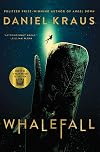
A strange, improbable, but wonderful thriller of man against/with nature and a son's reckoning with a difficult relationship with his deceased father. If you think The Martian but under the sea, you'd be in the right ballpark. I'm glad I didn't pass this up based on my fears that it might be too gruesome for me, because I loved this. There's certainly gore and horror and fear, but the execution was such that I never felt like I was being twisted up in dread, which is something I just don't show more like in my reading. If it pings you (ha!), recommended. show less
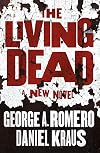
I really enjoyed this tome. It’s epic in every sense of the word. The writing is vivid, detailed, and beautiful. The story is multilayered, multifaceted, and intoxicating. The characters (major and minor) are interesting, believable, and wonderfully dynamic. The philosophies behind the zombie plague may wax poetic at times, but the ideas themselves are diverse and intriguing. And the zombies themselves...just wow. So many interesting moments and ideas I’ve never really seen before in a show more zombie story
I can certainly understand the qualms others have with the book, but for me those all wash away when I’m reading it. I was captivated and eagerly eating every word. It’s the world-altering apocalyptic vision of World War Z mixed with the gorgeous writing and character-building of All the Light We Cannot See. You can really tell the love and work author @kraus_author put into it. It’s 4.5/5 ⭐️ from me!! show less
I can certainly understand the qualms others have with the book, but for me those all wash away when I’m reading it. I was captivated and eagerly eating every word. It’s the world-altering apocalyptic vision of World War Z mixed with the gorgeous writing and character-building of All the Light We Cannot See. You can really tell the love and work author @kraus_author put into it. It’s 4.5/5 ⭐️ from me!! show less

In “Angel Down,” Daniel Kraus delivers a surreal and deeply unsettling anti-war novel that combines lyrical prose with scenes of almost unbearable brutality. The result is a fever dream of trench warfare in which mud, blood, greed, and superstition merge into something mythic and grotesque. Kraus creates a world where humanity appears trapped in an endless cycle of violence, unable—or unwilling—to escape its own appetite for destruction.
The protagonist, Bagger, is an especially show more compelling creation. He is the son of a bishop lost in the sinking of the Lusitania. Yet Bagger has rejected his father’s religion and all forms of altruism. Before the war, he survived by cheating at cards and exploiting others. Once drafted, he continues to evade danger whenever possible. Bagger initially seems almost irredeemable. He is selfish, cynical, and emotionally hollow. Yet Kraus wisely avoids making him a cartoonish figure. Beneath the greed and cowardice lies a damaged man whose moral instincts have not been entirely extinguished.
The novel’s central episode begins with a bizarre mission ordered by a power-hungry, physically damaged, and possibly insane general. Bagger and four other soldiers are ordered into no man’s land to silence a wounded man crying for help. Even this grim task becomes corrupted when the men decide who must go using a rigged game of rock, paper, scissors. Bagger cheats, naturally, but unexpectedly chooses to accompany the innocent young loser. That small act of reluctant decency becomes the hinge upon which the novel turns.
What they discover in the barbed wire is not a wounded soldier, but a fallen angel. From that moment forward, the novel abandons realism and plunges fully into hallucination and allegory. The angel becomes an object of obsession. The soldiers and general alike project onto her their desires for power, love, family, transcendence, or salvation. She appears capable of granting their wishes, yet every gift demands a terrible price, usually measured in suffering and death.
The imagery throughout the novel is extraordinary. Kraus writes with a lyrical intensity that often contrasts sharply with the horror he depicts. His trench warfare scenes are revolting in their physical detail, yet they possess a strange poetic beauty. Decaying body parts are everywhere, mud drowns men, and violence becomes almost overwhelming. The language itself reflects the chaos surrounding the characters, contributing to an increasingly dreamlike atmosphere.
At times, the novel’s hallucinatory structure threatens to overwhelm its meaning. As the plot grows stranger and more chaotic, the symbolism of the angel becomes elusive. She seems to represent many things simultaneously—faith, temptation, hope, war, human desire, even technological destruction. Because Kraus resists reducing her to a single interpretation, readers searching for a clear allegorical message may find the novel frustratingly opaque. Yet that uncertainty may be precisely Kraus’s point. War is chaotic. It destroys coherence, morality, and certainty. In this case, humanity cannot even encounter the divine without immediately seeking to possess, exploit, or weaponize it. Ultimately, Kraus suggests that killing not only persisted throughout history but has evolved to become easier, more technological, but more spiritually empty. This vision of humanity seems profoundly grim.
Still, Kraus leaves behind a faint glimmer of ambiguity. The angel’s fascination with Bagger’s unexpected moment of selflessness hints that even within a ruined soul, the capacity for compassion survives. That possibility never becomes sentimental or redemptive, but it prevents the novel from collapsing entirely into nihilism. The ending leaves the reader suspended between despair and hope, uncertain whether humanity is doomed to endless violence or merely unable to imagine another path. The final words are: “and, and, and…” echoing a level of uncertainty that leaves one questioning the future of humanity.
This is not an easy novel to interpret or endure. Its grotesque imagery, surreal narrative turns, and relentless darkness make it deeply unsettling. But it is also daring, imaginative, and hauntingly original. It is a novel interested in exposing the spiritual corruption that violence unleashes within the human soul. show less
The protagonist, Bagger, is an especially show more compelling creation. He is the son of a bishop lost in the sinking of the Lusitania. Yet Bagger has rejected his father’s religion and all forms of altruism. Before the war, he survived by cheating at cards and exploiting others. Once drafted, he continues to evade danger whenever possible. Bagger initially seems almost irredeemable. He is selfish, cynical, and emotionally hollow. Yet Kraus wisely avoids making him a cartoonish figure. Beneath the greed and cowardice lies a damaged man whose moral instincts have not been entirely extinguished.
The novel’s central episode begins with a bizarre mission ordered by a power-hungry, physically damaged, and possibly insane general. Bagger and four other soldiers are ordered into no man’s land to silence a wounded man crying for help. Even this grim task becomes corrupted when the men decide who must go using a rigged game of rock, paper, scissors. Bagger cheats, naturally, but unexpectedly chooses to accompany the innocent young loser. That small act of reluctant decency becomes the hinge upon which the novel turns.
What they discover in the barbed wire is not a wounded soldier, but a fallen angel. From that moment forward, the novel abandons realism and plunges fully into hallucination and allegory. The angel becomes an object of obsession. The soldiers and general alike project onto her their desires for power, love, family, transcendence, or salvation. She appears capable of granting their wishes, yet every gift demands a terrible price, usually measured in suffering and death.
The imagery throughout the novel is extraordinary. Kraus writes with a lyrical intensity that often contrasts sharply with the horror he depicts. His trench warfare scenes are revolting in their physical detail, yet they possess a strange poetic beauty. Decaying body parts are everywhere, mud drowns men, and violence becomes almost overwhelming. The language itself reflects the chaos surrounding the characters, contributing to an increasingly dreamlike atmosphere.
At times, the novel’s hallucinatory structure threatens to overwhelm its meaning. As the plot grows stranger and more chaotic, the symbolism of the angel becomes elusive. She seems to represent many things simultaneously—faith, temptation, hope, war, human desire, even technological destruction. Because Kraus resists reducing her to a single interpretation, readers searching for a clear allegorical message may find the novel frustratingly opaque. Yet that uncertainty may be precisely Kraus’s point. War is chaotic. It destroys coherence, morality, and certainty. In this case, humanity cannot even encounter the divine without immediately seeking to possess, exploit, or weaponize it. Ultimately, Kraus suggests that killing not only persisted throughout history but has evolved to become easier, more technological, but more spiritually empty. This vision of humanity seems profoundly grim.
Still, Kraus leaves behind a faint glimmer of ambiguity. The angel’s fascination with Bagger’s unexpected moment of selflessness hints that even within a ruined soul, the capacity for compassion survives. That possibility never becomes sentimental or redemptive, but it prevents the novel from collapsing entirely into nihilism. The ending leaves the reader suspended between despair and hope, uncertain whether humanity is doomed to endless violence or merely unable to imagine another path. The final words are: “and, and, and…” echoing a level of uncertainty that leaves one questioning the future of humanity.
This is not an easy novel to interpret or endure. Its grotesque imagery, surreal narrative turns, and relentless darkness make it deeply unsettling. But it is also daring, imaginative, and hauntingly original. It is a novel interested in exposing the spiritual corruption that violence unleashes within the human soul. show less
Lists
Awards


You May Also Like
Associated Authors
Statistics
- Works
- 35
- Also by
- 1
- Members
- 4,536
- Popularity
- #5,535
- Rating
- 3.7
- Reviews
- 208
- ISBNs
- 207
- Languages
- 9
- Favorited
- 1