
Polly Barton (1)
Author of Fifty Sounds
For other authors named Polly Barton, see the disambiguation page.
Works by Polly Barton
Associated Works
Tagged
Common Knowledge
- Birthdate
- 20th century
- Gender
- female
- Occupations
- author
translator - Nationality
- UK
- Birthplace
- London, England, UK
- Map Location
- England, UK
Members
Reviews
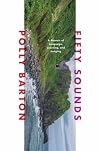
Polly Barton writes bravely and unashamedly about her experiences learning, teaching, translating, and otherwise experiencing the Japanese language. I feel, after reading Fifty Sounds, that any other descriptions that I've seen about learning a new language, while living in its home culture, has left something out.
Barton relates experiences with her students, her colleagues, her family, her English and Japanese friends and lovers, even her dictionaries and study material. She lets us know, show more in very interesting ways, how she felt along the way.
Each of the fifty chapter titles is a little puzzle, listing a Japanese expression, giving a partial meaning, and describing some experience Barton had with it. The expressions are complex ways of describing events and feelings, mostly expressions that can only be approximated in English.
I read this book as a very interesting memoir, and also read it for Barton's examples of how difficult understanding can sometimes be when people from one culture try to talk to people from another. It is almost like reading two books in parallel, books that talk to each other. show less
Barton relates experiences with her students, her colleagues, her family, her English and Japanese friends and lovers, even her dictionaries and study material. She lets us know, show more in very interesting ways, how she felt along the way.
Each of the fifty chapter titles is a little puzzle, listing a Japanese expression, giving a partial meaning, and describing some experience Barton had with it. The expressions are complex ways of describing events and feelings, mostly expressions that can only be approximated in English.
I read this book as a very interesting memoir, and also read it for Barton's examples of how difficult understanding can sometimes be when people from one culture try to talk to people from another. It is almost like reading two books in parallel, books that talk to each other. show less

Note that I found this suggested more as a focus on Japanese language, though I did realise when I had it it my hands and before I began reading that it is, in fact, a memoir merely nodding towards the idea of language for structure. (A language that is mangled to Barton's purposes in each section, opening with an onomotopeia that she misuses and often wrongly defines to draw the connection to the anecdote in that section. Done intentionally for the purpose, to be sure! But somewhat show more discombobulating.)
She also uses her own form of romanisation for Japanese words, of which I have never seen the like, sometimes making her quoted Japanese (or borrowed English-in-Japanese) words difficult to impossible to parse for someone who actually knows them or Japanese pronunciation/construction in general. . . And swings between different methods of representing the same sounds and structures, a rather graver sin.
Barton was a philosophy major prior to signing up to teach English in Japan and her thus immersive experience in learning the language there, and she will never let you forget it in her memoir - even when she expresses doubt or dismay at that part of herself. Her favourite philosopher is mentioned frequently ("and even the transformative philosophy of Ludwig Wittgenstein" the book blurb says of its contents; I think in fact the only things mentioned more frequently are Japan and Barton's unhealthy relationships) and her asides often have an impenetrable illogic one might find common amidst philosophy students. Some of them grow out of it as they cease to be young students. Some do not. Barton has not.
She explains she went to study philosophy rather apathetically, as something that happened to her rather than something she chose; a repeated theme for her life and major points in it - that something happened to her, or she wanted it to, and not to make a choice herself. This is how she came to Japan, as well. It is how she became a translator, which she at a later point in the book leans towards describing as her calling, only to shy away from having any such thing. (And to speak positively of having realised that building her house on the sand, a la the proverb about building on rock vs sand, is her comfortable zone. One raises a dubious eyebrow.)
In addition to this apathy she also emphasises her own misery, anxiety, ambivalence, arrogance, speaks down about herself frequently in a number of ways, both past and present.
Repeated throughout the anecdotes and invariably frustrating to me, she delivers a theme: 'people are horrible and small-minded and self-centred', she seems to say, again and again, 'and I am above that and different', only to wind up at the conclusion 'no, I, too, am awful and small-minded and selfish', declaring this the pinnacle in a fabulously miserable assessment of human nature.
She frequently makes sweeping generalisations as though whatever negative thought she displays is in fact the common and in fact default of humanity, or Westerners. They are often, it seems, expansions of how she felt herself with no other grounding.
"I am voicing the arrogance and judgmental nature of all Westerners, revealing the ugliness," she seems to say, with no particular basis outside herself.
It is all the more jarring and distasteful as she occasionally voices a common thread sort of experience that can be empathised with . . . only to jink back into such attitudes abruptly.
She seems, perhaps, to want, desperately, for her own embarrassment and judgement to be universal, as though she can justify such feelings by ascribing them to others. Yet at the same time she returns to the ways I am different - for example wondering how people cannot experience existential shifts in their very nature by speaking another language, and be devilled by such changes in their personality, horrified, wondering, baffled. She also speaks of how she began to deride each language when she spoke in the other, 'Japanese concepts only making sense when I spoke Japanese, only for me to declare them bizarre when speaking English with friends later'; it is one of the many things she suggests are a natural consequence of learning multiple languages.
One also gathers enough, from one of her screeds on this topic, to wonder if she thinks code-switching - such as the act of speaking differently with coworkers in a school than with friends at karaoke or again with family at home - is inauthentic, lying, a foible of mockery. She unironically mentions multiple personality disorder in this vein.
Barton swings wildly between venerating Japanese (the language and at times the culture) with a particularly personal stripe of romanticism (quite literally and in more than one sense; she several times anthropomorphises Japan in terms of a romantic partner to a somewhat startling degree) and fetishisation (even as she occasionally speaks with disdain and disgust of Orientalism), to infantilising or disdaining it; "it might occur to you to doubt whether this is, in fact, language" she says of one quote from a song lyric, for the way that the sound/words repeat. A thought I would not, in fact, have wondered.
I found far more troublesome and worrisome about her described relationships - such as her affair with a coworker (and superior) 'more than twice' her age (and married), which relationship she also characterises as the natural act of anyone learning a new language. (It is the relationship she focuses upon most in the book, both in depth and length, but one does come away with the uncomfortable wondering if Barton has ever had a non-toxic relationship, whether platonic or romantic.) show less
She also uses her own form of romanisation for Japanese words, of which I have never seen the like, sometimes making her quoted Japanese (or borrowed English-in-Japanese) words difficult to impossible to parse for someone who actually knows them or Japanese pronunciation/construction in general. . . And swings between different methods of representing the same sounds and structures, a rather graver sin.
Barton was a philosophy major prior to signing up to teach English in Japan and her thus immersive experience in learning the language there, and she will never let you forget it in her memoir - even when she expresses doubt or dismay at that part of herself. Her favourite philosopher is mentioned frequently ("and even the transformative philosophy of Ludwig Wittgenstein" the book blurb says of its contents; I think in fact the only things mentioned more frequently are Japan and Barton's unhealthy relationships) and her asides often have an impenetrable illogic one might find common amidst philosophy students. Some of them grow out of it as they cease to be young students. Some do not. Barton has not.
She explains she went to study philosophy rather apathetically, as something that happened to her rather than something she chose; a repeated theme for her life and major points in it - that something happened to her, or she wanted it to, and not to make a choice herself. This is how she came to Japan, as well. It is how she became a translator, which she at a later point in the book leans towards describing as her calling, only to shy away from having any such thing. (And to speak positively of having realised that building her house on the sand, a la the proverb about building on rock vs sand, is her comfortable zone. One raises a dubious eyebrow.)
In addition to this apathy she also emphasises her own misery, anxiety, ambivalence, arrogance, speaks down about herself frequently in a number of ways, both past and present.
Repeated throughout the anecdotes and invariably frustrating to me, she delivers a theme: 'people are horrible and small-minded and self-centred', she seems to say, again and again, 'and I am above that and different', only to wind up at the conclusion 'no, I, too, am awful and small-minded and selfish', declaring this the pinnacle in a fabulously miserable assessment of human nature.
She frequently makes sweeping generalisations as though whatever negative thought she displays is in fact the common and in fact default of humanity, or Westerners. They are often, it seems, expansions of how she felt herself with no other grounding.
"I am voicing the arrogance and judgmental nature of all Westerners, revealing the ugliness," she seems to say, with no particular basis outside herself.
It is all the more jarring and distasteful as she occasionally voices a common thread sort of experience that can be empathised with . . . only to jink back into such attitudes abruptly.
She seems, perhaps, to want, desperately, for her own embarrassment and judgement to be universal, as though she can justify such feelings by ascribing them to others. Yet at the same time she returns to the ways I am different - for example wondering how people cannot experience existential shifts in their very nature by speaking another language, and be devilled by such changes in their personality, horrified, wondering, baffled. She also speaks of how she began to deride each language when she spoke in the other, 'Japanese concepts only making sense when I spoke Japanese, only for me to declare them bizarre when speaking English with friends later'; it is one of the many things she suggests are a natural consequence of learning multiple languages.
One also gathers enough, from one of her screeds on this topic, to wonder if she thinks code-switching - such as the act of speaking differently with coworkers in a school than with friends at karaoke or again with family at home - is inauthentic, lying, a foible of mockery. She unironically mentions multiple personality disorder in this vein.
Barton swings wildly between venerating Japanese (the language and at times the culture) with a particularly personal stripe of romanticism (quite literally and in more than one sense; she several times anthropomorphises Japan in terms of a romantic partner to a somewhat startling degree) and fetishisation (even as she occasionally speaks with disdain and disgust of Orientalism), to infantilising or disdaining it; "it might occur to you to doubt whether this is, in fact, language" she says of one quote from a song lyric, for the way that the sound/words repeat. A thought I would not, in fact, have wondered.
I found far more troublesome and worrisome about her described relationships - such as her affair with a coworker (and superior) 'more than twice' her age (and married), which relationship she also characterises as the natural act of anyone learning a new language. (It is the relationship she focuses upon most in the book, both in depth and length, but one does come away with the uncomfortable wondering if Barton has ever had a non-toxic relationship, whether platonic or romantic.) show less
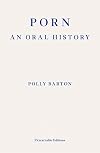
The Publisher Says: How do we talk about porn? Why it is that when we do talk about porn, we tend to retreat into the abstract? How do we have meaningful conversations about it with those closest to us? In Porn: An Oral History, her extraordinary second book, Polly Barton interrogates the absence of discussion around a topic that is ubiquitous and influences our daily lives. In her search for understanding, she spent a year initiating intimate conversations with twenty acquaintances of a show more range of ages, genders and sexualities about everything and anything related to porn: watching habits, emotions and feelings of guilt, embarrassment, disgust and shame, fantasy and desire. Soon, unfolding before her, was exactly the book that she had been longing to encounter - not a traditional history, but the raw, honest truth about what we aren't saying. A landmark work of oral history written in the spirit of Nell Dunn, Porn is a thrilling, thought-provoking, revelatory, revealing, joyfully informative and informal exploration of a subject that has always retained an element of the taboo.
I RECEIVED A DRC FROM THE PUBLISHER VIA EDELWEISS+. THANK YOU.
My Review: I really wanted a deeper experience of this read, something that didn't simply slip into my eyeholes frictionlessly, leaving behind a vaguely dirty, slightly disappointed emptiness.
Quite a part from the awful wordplay, that is my sincere opinion. Where the idea was a very interesting opportunity to dive into the deep end of a human obsession with porn with ample evidence that dates back to dynastic Egypt, five thousand years!, it left my old-man self instead with the skeevy sense of having eavesdropped on my grandchildrens' drunken dissection of what they and their friends thought about sex. I guess it would open up a young, or a sheltered, person's eyes, but for me the conversation I wanted to participate in was not here. show less
I RECEIVED A DRC FROM THE PUBLISHER VIA EDELWEISS+. THANK YOU.
My Review: I really wanted a deeper experience of this read, something that didn't simply slip into my eyeholes frictionlessly, leaving behind a vaguely dirty, slightly disappointed emptiness.
Quite a part from the awful wordplay, that is my sincere opinion. Where the idea was a very interesting opportunity to dive into the deep end of a human obsession with porn with ample evidence that dates back to dynastic Egypt, five thousand years!, it left my old-man self instead with the skeevy sense of having eavesdropped on my grandchildrens' drunken dissection of what they and their friends thought about sex. I guess it would open up a young, or a sheltered, person's eyes, but for me the conversation I wanted to participate in was not here. show less
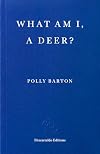
40ish woman relocates from London to Frankfurt for gaming company translator job. 200 plus pages of inner monologue as she flits about work and a new boyfriend while having a secret infatuation with a random umbrella carrying stranger she occasionally encounters.
Oh, and there are a few karaoke sessions.
Oh, and there are a few karaoke sessions.
Lists
Awards


You May Also Like
Associated Authors
Statistics
- Works
- 3
- Also by
- 14
- Members
- 265
- Popularity
- #86,990
- Rating
- 3.6
- Reviews
- 5
- ISBNs
- 9