
Valérie Perrin (1967–)
Author of Fresh Water for Flowers
Valérie Perrin is Valérie Perrin (1). For other authors named Valérie Perrin, see the disambiguation page.
About the Author
Image credit: leslivresadeuxplaces.com
Works by Valérie Perrin
Tagged
Common Knowledge
- Birthdate
- 1967-01-19
- Gender
- female
- Birthplace
- Remiremont, Vosges, France
- Map Location
- France
Members
Reviews

i really really liked this, especially for the first half or so. it's definitely not for everyone, as those 300 or so pages, that i liked so much, didn't really have much happen at all. it was just language and friendship and character development. plus a wee bit of obfuscation that made me wonder where things were going, and why i was confused. i loved that.
i am not sure i loved the clarification of that confusion, but i think it was well done. it was less deeply explored, which i thought show more was unfortunate, and the very end seemed a bit of a cheat. but i still really liked this. the writing was enough for me. i don't think i've read a book this long mostly just for the language in a while, and i so enjoyed it. i'd definitely read her again. show less
i am not sure i loved the clarification of that confusion, but i think it was well done. it was less deeply explored, which i thought show more was unfortunate, and the very end seemed a bit of a cheat. but i still really liked this. the writing was enough for me. i don't think i've read a book this long mostly just for the language in a while, and i so enjoyed it. i'd definitely read her again. show less
'We have come here in search, in search of something or someone. In search of that love that is stronger than death.'
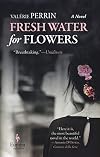
This is one of those books that just draws you in, wrings your heart out and leaves you, after the last page, emerging back into your world somehow profoundly changed. The story of Violette Toussaint (née Trenet), caretaker at a cemetery in a small French town, this develops slowly and in layers into a study of love, friendship and loss. Violette's husband, Philippe, is show more missing - not that she minds, for their marriage was not a happy one. Now she spends her days tending to the graves and lending a listening ear to those who come to mourn their loved ones, and to the small group who meet a share a coffee with her: the three gravediggers, the local undertakers and the parish priest. When one day a man turns up at the cemetery with a request that his mother's ashes be placed with a particular grave, Violette's life starts to take on a whole new course forwards as, at the same time, the narrative weaves back in time as we learn more about her past life and the heartaches she has suffered.
Beautifully written - and superbly translated by Hildegarde Serle - the stories of the main characters start to intertwine, and as we learn more then slowly we, as readers, start to change the way we judge some of them. The prose is often simple, meditative, reflective; each chapter opens with a saying or a quote, none of which are referenced or their source cited. In an interview, the translator revealed that these were either anonymous graveyard inscriptions or quotes from French songs and poems - but all of them mix with the story to give a general feeling of peace.
This could have veered into being just a little too schmaltzy, but the author avoids that. Ultimately it is a deeply affecting book about moving on, about finding peace and acceptance and that, when you least expect it, some happiness will come your way. I was in tears on many occasions, and the Toussaint family story will just break your heart. And there are also all the small stories of each of the deceased who come to be buried in the cemetery, reminding us that life is to be celebrated.
As a work of literature this is a wonderful, moving novel, but it is also a philosophical journey and meditation on life and death. Smile through the tears and wonder at the life force that is Violette Toussaint. Just a glorious and rewarding book. 5 stars for definite. show less
This is one of those books that just draws you in, wrings your heart out and leaves you, after the last page, emerging back into your world somehow profoundly changed. The story of Violette Toussaint (née Trenet), caretaker at a cemetery in a small French town, this develops slowly and in layers into a study of love, friendship and loss. Violette's husband, Philippe, is show more missing - not that she minds, for their marriage was not a happy one. Now she spends her days tending to the graves and lending a listening ear to those who come to mourn their loved ones, and to the small group who meet a share a coffee with her: the three gravediggers, the local undertakers and the parish priest. When one day a man turns up at the cemetery with a request that his mother's ashes be placed with a particular grave, Violette's life starts to take on a whole new course forwards as, at the same time, the narrative weaves back in time as we learn more about her past life and the heartaches she has suffered.
Beautifully written - and superbly translated by Hildegarde Serle - the stories of the main characters start to intertwine, and as we learn more then slowly we, as readers, start to change the way we judge some of them. The prose is often simple, meditative, reflective; each chapter opens with a saying or a quote, none of which are referenced or their source cited. In an interview, the translator revealed that these were either anonymous graveyard inscriptions or quotes from French songs and poems - but all of them mix with the story to give a general feeling of peace.
This could have veered into being just a little too schmaltzy, but the author avoids that. Ultimately it is a deeply affecting book about moving on, about finding peace and acceptance and that, when you least expect it, some happiness will come your way. I was in tears on many occasions, and the Toussaint family story will just break your heart. And there are also all the small stories of each of the deceased who come to be buried in the cemetery, reminding us that life is to be celebrated.
As a work of literature this is a wonderful, moving novel, but it is also a philosophical journey and meditation on life and death. Smile through the tears and wonder at the life force that is Violette Toussaint. Just a glorious and rewarding book. 5 stars for definite. show less
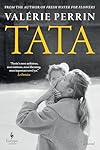
Tata, by Valérie Perrin, is like watching a life unfurl thematically and through connections (or disconnections) rather than chronologically. Because of the time taken to flesh out the characters and provide nuance to what happens I found this to be a very engaging read.
I've seen some of the less positive reviews and they made me think about some things in a different light. They didn't color my opinion but I came to the conclusion that the same qualities that annoy some readers were show more positives for me. Not in the simple way that liking or disliking time jumps in general do but in how we view things at certain times in our own lives. For instance, I saw far more connection with the jumps in time than some, but those things weren't highlighted, they were more about underlying feelings or similar character reactions rather than similar events. The idea of coincidences is another one. In a mystery that covers several weeks or a couple months, coincidences can seem like lazy ways for a writer to connect the dots. But over the course of a lifetime? I am 67 and I can't tell you how many coincidences have shaped my life. Not just little things but life-changing events that were nothing more than right time and right place. So I don't have a problem with coincidences in a story that covers a life span. Which is all to say: like any novel, this will appeal to some and not to others. Pretty obvious, I know, but some people end to take their preferences and turn them into the yardstick of faux objectivity by which to make their preferences sound like the difference between a "good" book and a "bad" book.
While I highly recommend this book to most readers, I would also make sure they understand it is best read at a moderate pace rather than the way one reads a thriller. And if this moment in your life isn't conducive to reading a longish book that should be savored and contemplated, then save it for when the time is right.
Reviewed from a copy made available by the publisher via NetGalley. show less
I've seen some of the less positive reviews and they made me think about some things in a different light. They didn't color my opinion but I came to the conclusion that the same qualities that annoy some readers were show more positives for me. Not in the simple way that liking or disliking time jumps in general do but in how we view things at certain times in our own lives. For instance, I saw far more connection with the jumps in time than some, but those things weren't highlighted, they were more about underlying feelings or similar character reactions rather than similar events. The idea of coincidences is another one. In a mystery that covers several weeks or a couple months, coincidences can seem like lazy ways for a writer to connect the dots. But over the course of a lifetime? I am 67 and I can't tell you how many coincidences have shaped my life. Not just little things but life-changing events that were nothing more than right time and right place. So I don't have a problem with coincidences in a story that covers a life span. Which is all to say: like any novel, this will appeal to some and not to others. Pretty obvious, I know, but some people end to take their preferences and turn them into the yardstick of faux objectivity by which to make their preferences sound like the difference between a "good" book and a "bad" book.
While I highly recommend this book to most readers, I would also make sure they understand it is best read at a moderate pace rather than the way one reads a thriller. And if this moment in your life isn't conducive to reading a longish book that should be savored and contemplated, then save it for when the time is right.
Reviewed from a copy made available by the publisher via NetGalley. show less
Forgotten on Sunday: From the million copy bestselling author of Fresh Water for Flowers by Valérie Perrin
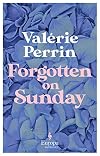
This is a real and achingly powerful book that will linger in you mind long after you close the book. Not only is this a beautifully written book, but it has been exquisitely translated from the original French by Hildegarde Serle. This book was a powerhouse of emotions that struck very close to home as a caregiver to my aging parents who has spend many hours in care homes and hospitals around the aged. The presence of the narrator throughout this book drew me into her story and showed, with show more such awareness of the value of life and the power of compassion and empathy, that life is to experienced in Life and In Storytelling. Told in a dual aspect style, Justine is trying to find her way through life as a 21 year old orphan who lives with her family and works in a care facility where she meets Helene, a 100 year old resident, and begins to follow the story of the older woman during the war. With the eye of a writer and her blue notebook to capture the stories she hears, Justine captures and shares with the reader Helene's story. This is a story told with all the bleakness and devastation of the war on the lives, bodies, and emotions of French, but it also shows the glimpses of love and hope and moments of joy that were found there as well.
To be honest, this book has left me thinking about the power of connection between us all and the need we have share our stories before they, like Helene, just fade away before our eyes almost without notice until we stop, ponder, seek out connection. With our individual story threads held fast in our own hands they are tenuous, precious, and isolated from support; however, once we bring those threads together and begin to plait and weave them together do those fragile threads become part of a collective, powerful and age defying story told via tapestry of our shared humanity. To remind us of what us good, rejoice in what is gifted. Mourn what is lost. And guide to reflect that all this IS what is to be human.
Haunting. Powerful. Compelling. Beautiful. Human. These are qualities of Perrin's story and Serle's translation that make this a book that will linger in my mind for a long time
Thank you Eeuropa Editions for an amazing international read that is a permanently on my shelves. show less
To be honest, this book has left me thinking about the power of connection between us all and the need we have share our stories before they, like Helene, just fade away before our eyes almost without notice until we stop, ponder, seek out connection. With our individual story threads held fast in our own hands they are tenuous, precious, and isolated from support; however, once we bring those threads together and begin to plait and weave them together do those fragile threads become part of a collective, powerful and age defying story told via tapestry of our shared humanity. To remind us of what us good, rejoice in what is gifted. Mourn what is lost. And guide to reflect that all this IS what is to be human.
Haunting. Powerful. Compelling. Beautiful. Human. These are qualities of Perrin's story and Serle's translation that make this a book that will linger in my mind for a long time
Thank you Eeuropa Editions for an amazing international read that is a permanently on my shelves. show less
Lists
Awards


You May Also Like
Associated Authors
Statistics
- Works
- 5
- Members
- 1,883
- Popularity
- #13,664
- Rating
- 4.1
- Reviews
- 88
- ISBNs
- 118
- Languages
- 16