

John Domini (1951–2025)
Author of Earthquake I.D.
Works by John Domini
Associated Works
Tagged
Common Knowledge
- Birthdate
- 1951
- Date of death
- 2025-03-27
- Gender
- male
- Places of residence
- Des Moines, Iowa, USA
- Associated Place (for map)
- Iowa, USA
Members
Discussions
John Domini's Library in Other People's Libraries (September 2016)
Reviews
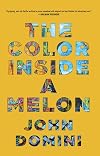
John Domini’s latest novel, The Color Inside a Melon, begins in media res, with a confrontation between two African immigrants at a dance-party in Naples, and for the next 42 pages (all of chapter 1), it stays with that scene, delivering a kaleidoscopic view of the city’s underworld in high-energy prose, skittering between past and present to lay out the basics of the story: a grisly murder with a sexual connection and a man who wants to find the killer.
That man is Aristofano Al’Kair, show more known by all as Risto, who fled violent Mogadishu as a child, leaving behind his family, and now, fifteen years later, has achieved great success. He runs a well-regarded art gallery called Wind & Confusion (a Biblical reference, but also suggesting the novel’s constant swirl) and lives in a nice apartment overlooking the bay with his wife Paola, a sexy and wise Italian native, and their two kids. But the happy life doesn’t prevent intrusions of Risto’s rough past. He’s haunted by flashbacks, and by recurring hallucinations of haloes that may or may not be a form of PTSD.
The persistent memories of his hardscrabble journey as an immigrant bring Risto to investigate the murder. Though he didn’t know the victim, he feels a sense of duty to find out why the young man, also from Africa, was stabbed and mutilated—a death and desecration, Risto fears, that no one else will care about.
The setup is a classic of film noir—a bizarre killing and a troubled hero in over his head—and Domini embraces the genre, giving us a femme fatale, a deal-making cop, shadowy characters, more bodies, rumors of greater evil, red herrings, and a wild scene at the end with the entire cast teetering at the edge of catastrophe.
But the film-noir elements are less about plotting than they are about background and mood. Domini is more interested in relating the immigrant experience, mostly that of Black, African men—their attempt at assimilation or the resistance to it, the constant xenophobic and racist treatment, the clandestine business of fake I.D.s, the mispronunciation of one’s last name (an ongoing bit of comedy in the book), and that occasional longing for the country of origin. The details are superb. Here’s Risto remembering a policeman during his escape from ‘Dishu:
As he made some prideful adjustment in his mufti, his eyes enflamed with khat though it wasn’t yet half past seven, his machete zigzagged before the faces of two or three squatters who hadn’t ducked into the scrub.
Later, Risto stares at his view of the Gulf:
The wakes of the fishing boats recalled the spring caterpillars in the Horn of Africa, a rare happy memory.
Domini immerses you in the life of Naples, too. The author, whose next book is a memoir of his time in that city, knows the streets well.
In the skyboxes of Naples, the depth of shadow took you back to when Caravaggio was in town, if not further. You could go all the way back to when Christ was a carpenter. Still, behind the door might be chiaroscuro, but it didn’t take an art historian to know what you’d find there. You’d have the opportunity, if you were of a mind, to cut a man’s throat.
Domini’s sentences often spin out into unexpected places, with off-beat rhythms and riffs, mixing erudition, slang, cultural observation, and snippets of Italian. The style, at times, approaches stream-of-consciousness. And while sticking mainly to the mode of realism, Domini doesn’t let you forget that he’s a fan of the self-reflexive hijinks of meta-fiction (see his excellent collection of criticism, The Sea-God’s Herb). Characters speak about “film noir,” and Risto refers to the term “Movieola,” which happens to be the title of one of Domini’s short story collections.
The density of it all may be occasionally overwhelming, but that “Wind & Confusion” mirrors the life of an immigrant in a city where everything’s different and strange. At the end, Risto’s friend sums things up by asking, “And isn’t our life here, in the North—isn’t it all a high-wire act?” Risto agrees, and the novel itself answers with a definite Yes. show less
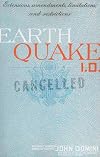
John Domini has written a dense, beautiful, deeply thoughtful novel. What a pleasure it is to read a book written by someone who not only has a profound regard for the power of words (his descriptions of landscape are splendid), but also a respect for great story-telling and an enormous sense of compassion for the human condition.
Set in Naples, Italy, in the aftermath chaos of a major earthquake, the Lulucita family arrive in the city, ostensibly to offer aid to undocumented, show more already-marginalized citizens (mostly Sub-Saharan refugees), now turned quake victims living in tent cities. Almost upon arrival, the family is mugged and their documents stolen. The Earthquake I.D.s of the title are replacement, temporary passports issued by the powers that be, and the central metaphor for the novel. We are all, Domini seems to be saying, people without permanent places, or even permanent identities.
The point of view is that of Barbara Lulucita, often referred to as "the mother," a woman seriously considering ending her marriage. Domini does a terrific joy of digging deep in the psyche of a woman in crisis. It's pitch-perfect -- the confusion, guilt, anguish, rage, passion and sorrow, all mixed together. The setting is also perfectly described and utilized, becoming a symbol for the tensions and chaos in the hearts and minds of the novel's characters.
This is a brilliant shape-shifter of a novel.
It is at times metaphysical: Paul, the middle son apparently has the power to heal by the laying on of hands, beginning with healing his father whose head is cracked wide open in the opening scenes. People follow him around, offering him holy trinkets to bless, pressing their lips to the windows of a car he rides in. He becomes an icon, and such things can be dangerous.
It is at times theological: Barbara, devoutly Catholic befriends a priest and their conversations are complex and nuanced. (It should be noted that the rhythm of the prose almost sounds as if it's been written by someone who speaks Italian as their mother tongue, and far from being irritating, for me this added to the sense of cultural laying at work.)
It is at times a meditation on culture clash: consider the jarring juxtaposition between the Lulucita's white-bread and mini-van Connecticut background and the teeming, messy, malodorous tent city. Consider the disturbing failed adoption of a Mexican teenager with marks on her body indicating she may have been kept in a cage -- and how the girl sexually fondles the boys in the family. Consider, too, that even though the Lulucitas find themselves battered and without I.D. as do the refugees, they are never treated like refugees, but always with the preference of assumed privilege, which of course only deepens the chiaroscuro.
At other times it is political: the displaced refugees, the toxicity of mass media, corrupt NATO corruption, the haves and have-nots.
And it is also a novel of family secrets and loyalties and the heart of a woman.
Okay, SMALL criticisms -- the title and the cover. The cover doesn't do the book justice -- bland and unappealing, and unlikely to seduce a buyer in a bookstore. Similarly, I don't like the title, finding it less-than-evocative. There is a phrase Domini uses early on in the book to describe Naples; he calls it a "city of prayers." All the way through, I couldn't help but wish he'd used that for the title. Domini might not have had much choice in these things, but I'm just saying...the work deserves better, in my humble opinion.
In the end, nothing is simple in this novel, and the complexity can be dizzying, but the pleasure is undeniable. Domini seems to be asking the reader to consider his/her own response to world events, to privilege and our responsibilities to each other. I, for one, know I'll be thinking about this novel for a long time to come. Well done. show less
Set in Naples, Italy, in the aftermath chaos of a major earthquake, the Lulucita family arrive in the city, ostensibly to offer aid to undocumented, show more already-marginalized citizens (mostly Sub-Saharan refugees), now turned quake victims living in tent cities. Almost upon arrival, the family is mugged and their documents stolen. The Earthquake I.D.s of the title are replacement, temporary passports issued by the powers that be, and the central metaphor for the novel. We are all, Domini seems to be saying, people without permanent places, or even permanent identities.
The point of view is that of Barbara Lulucita, often referred to as "the mother," a woman seriously considering ending her marriage. Domini does a terrific joy of digging deep in the psyche of a woman in crisis. It's pitch-perfect -- the confusion, guilt, anguish, rage, passion and sorrow, all mixed together. The setting is also perfectly described and utilized, becoming a symbol for the tensions and chaos in the hearts and minds of the novel's characters.
This is a brilliant shape-shifter of a novel.
It is at times metaphysical: Paul, the middle son apparently has the power to heal by the laying on of hands, beginning with healing his father whose head is cracked wide open in the opening scenes. People follow him around, offering him holy trinkets to bless, pressing their lips to the windows of a car he rides in. He becomes an icon, and such things can be dangerous.
It is at times theological: Barbara, devoutly Catholic befriends a priest and their conversations are complex and nuanced. (It should be noted that the rhythm of the prose almost sounds as if it's been written by someone who speaks Italian as their mother tongue, and far from being irritating, for me this added to the sense of cultural laying at work.)
It is at times a meditation on culture clash: consider the jarring juxtaposition between the Lulucita's white-bread and mini-van Connecticut background and the teeming, messy, malodorous tent city. Consider the disturbing failed adoption of a Mexican teenager with marks on her body indicating she may have been kept in a cage -- and how the girl sexually fondles the boys in the family. Consider, too, that even though the Lulucitas find themselves battered and without I.D. as do the refugees, they are never treated like refugees, but always with the preference of assumed privilege, which of course only deepens the chiaroscuro.
At other times it is political: the displaced refugees, the toxicity of mass media, corrupt NATO corruption, the haves and have-nots.
And it is also a novel of family secrets and loyalties and the heart of a woman.
Okay, SMALL criticisms -- the title and the cover. The cover doesn't do the book justice -- bland and unappealing, and unlikely to seduce a buyer in a bookstore. Similarly, I don't like the title, finding it less-than-evocative. There is a phrase Domini uses early on in the book to describe Naples; he calls it a "city of prayers." All the way through, I couldn't help but wish he'd used that for the title. Domini might not have had much choice in these things, but I'm just saying...the work deserves better, in my humble opinion.
In the end, nothing is simple in this novel, and the complexity can be dizzying, but the pleasure is undeniable. Domini seems to be asking the reader to consider his/her own response to world events, to privilege and our responsibilities to each other. I, for one, know I'll be thinking about this novel for a long time to come. Well done. show less
(Reprinted from the Chicago Center for Literature and Photography [cclapcenter.com]. I am the original author of this essay, as well as the owner of CCLaP; it is not being reprinted here illegally.)
Well, whaddya know -- January 8th and already one of my New Year's resolutions is shot all to hell. See, I promised myself this year to try to get through enough artistic projects to be able to publish five essays here a week; and that means reading roughly 100 to 150 pages of any particular book show more each day, or in other words a book every two or three days, punctuated with occasional movie reviews and personal essays to make up the difference, a schedule I frankly usually have no problems with at all. Ah, but then I come across a book like celebrated academic writer John Domini's Earthquake ID, and the next thing you know I'm down to 35 pages a day, suddenly finding myself facing day after day when I don't actually have a completed book to review; and that's because this book is one of those kind of novels, one of those dense metaphorical things that the academes love so much, with the same kind of careful, loving attention to each and every word that you usually only find in poetry. And thus does my reading rate slow to a crawl, simply so that I can soak up every word and make sure I understand the rich, multilayered story being told; and thus is it suddenly January 8th and I haven't published a review in three days, because of it taking me an entire week longer to actually finish the thing than I was expecting. Damn you, John Domini!
In fact, today's book is as good a time as any to delve more into an assertion I've made here several times before, now that I've been reviewing books professionally for about two years now, and am learning more and more about how the literary world works -- that so-called "mainstream fiction" or "literary fiction" or "general-audience fiction" is in fact just as much of a narrowly-defined genre as any so-called genre work, with the same kinds of rules and topics and touches that make any fan of that particular genre swoon, and that the reason this particular genre has become known as the "most important" one (i.e. the "serious" one, the one that wins all the awards) is because it's the genre academes love the most, the exact people spending the most time thinking about literature and handing out those awards in the first place. Take this inarguable fact, for example, that just like most "lit-fiction," Earthquake ID is much more interested in establishing an intriguing setting and complex characters than in following a traditional three-act plot; and that's because those who think about literature the most find this the part of literature where one is most able to make interesting and illuminating observations about the human condition, which most academes believe is the main point of literature in the first place. And this is versus the "And then they did this, and then they did this" nature of constructing a three-act plot, which the argument goes is precisely why "genre novels" do concentrate so much on plot, because they just naturally have less interesting observations to make about the human condition. Or like I said, so the argument goes.
To be more specific, the book is an examination of one Barbara Lulucita, and an ultra-detailed look at her unique yet relatable life: middle-aged American east-coast intellectual, devout Catholic and church-related counselor, now with her husband and five children in the exotic city of Naples, Italy, helping the place rebuild from a recent natural disaster that destroyed much of the poorer, immigrant-heavy districts. The book clearly concentrates much more on us learning as much as possible about Barbara, about what makes her tick and what her relationship is to her church, her family; and if this were a typical lit-fiction book, that's all this story would be, with academes fawning all over its "meta-texturalism" and non-academes grumbling about how "nothing happens." But like I said, this is actually a much better-than-average lit-fiction book, and one of those reasons is that Domini has injected a fascinating, unsettling detail into the middle of it; turns out that their middle child Paul, a sickly eleven-year-old who already has trouble navigating the ins-and-outs of normal society, has since arriving been regularly exhibiting what seems like the religious ability to heal people through the laying-on of hands, starting with fixing his dad after a mugging on their very first day there, from what witnesses could've sworn was actually a bit of brain matter oozing out of the side of his head wound.
This allows Domini to then add to the complexity of everything else going on in the story, making it a much more exciting thing than the usual academic snoozer; under this NEA-grant-recipient's very capable hands, this suddenly miraculous ability of her son's ends up flavoring Barbara's relationship with her newly adopted local priest, with the shady UN "advisor" who is technically her husband's boss, even the city itself and the way her family interacts with it. Because that's another major hallmark of literary fiction versus genre work; Earthquake ID is as much a portrait of Naples as it is a fictional narrative story, with the city itself becoming just as much a character as any of the humans we meet. This is where the book has already received a lot of critical praise, and it's easy to see why; because Domini paints an astoundingly magical portrait of the city by the time he's done, offering up such unique comparisons as the neighborhoods' gossipy nature to a group of teens gathered around a MySpace page, showing us an accumulated mass of four distinct cultures that make up this three-thousand-year-old space, showing how you can personally touch them each again with each new Neapolitan sub-basement you crawl through in the city's labyrinthine underground. And that's the main difference between a book like this and, say, Elizabeth Kostova's The Historian, and why one is so goose-bumpingly good and the other such a hacky mess; because Domini is a master of describing the flavor of a city, the tone of that city, the spirit of that city, instead of merely describing the same pictures that any of us can see at Flickr, or rattling off statistics that any of us can read at Wikipedia.
But like I said, make no mistake -- it's the quality of the writing itself that is the main reason to pick this up, yet another thing that you can say is a truism about all of lit-fiction, a subject at which this multiple award-winning author excels. (For those who don't know, Domini's CV is like an academe's wet dream -- publishing credits with The Paris Review and GQ, flowing praise from NPR, a critic gig with The Believer, former jobs at Harvard and Northwestern, even with this particular book being published by a special academic non-profit, one that concentrates on astonishingly written yet commercially questionable contemporary novels.) Because the fact is that Earthquake ID is one of those books I only come across once or twice a year, the kind that make me get a funny feeling in my stomach about halfway through, this absolute certainty all of a sudden that I'm in the presence of greatness, that I'm currently reading what will be known in another century as one of the best-written books of our times. It's a hard emotion to rationally describe, so let me just put it like this, that the last time I felt this way was fourteen months ago, while reading Denis Johnson's National Book Award winner Tree of Smoke; and if you're an obsessive fan of that book like I am, you'll know exactly what I mean by mentioning that gut-socking feeling you sometimes get with great books like these, that intensely personal pleasure that feels almost like a secret, like a brilliant secret you've come across and don't want to share with anyone else.
But of course that's silly; as a champion of the arts, I of course want you know about books like these, and in fact highly encourage you to check this one out if you get the chance; and in fact just next month I'll be reviewing yet another of Domini's novels, the newer A Tomb on the Periphery which apparently is part two of a story cycle related to today's book, which is why I was sent both titles at once. And in all fairness, there are things to warn you about too, and various annoying things about lit-fiction that Domini is also guilty of here; just to mention one very well-known example, his dialogue for the most part is extremely stilted and unrealistic-sounding throughout, pretty much the main reason the book didn't get a higher score here today than it did. I'm okay, though, with overlooking things like that with books like these, ready to dismiss them as necessary drawbacks to the great things that come with reading such titles; because the fact is that with stories this meticulous and poetic, of course every aspect of that story is going to be meticulous and poetic, even stuff like dialogue that is normally supposed to come out as more realistic than this in order to be truly effective.
As I've been learning recently more and more, there are strengths and weaknesses to any type of literature one decides to become a fan of, not just the hacky excesses of genre work that are usually held up as the main example; this is part of the very definition of being a fan of the arts, is to decide what things about the arts you're the biggest fan of, which things you'll overlook in order to enjoy the things you particularly love. And the fact is that a couple or several times a year I really love coming across books like these, deeply academic creatures that slow my reading rate to nearly zero, that hijack my entire publishing schedule here at CCLaP and make me scramble for a whole week afterwards, tearing through a bunch of tiny books just so I can get caught back up. In my case such books are a special treat only, like smoking a twenty-dollar cigar on your birthday; when the time does come, though, for that high-end literary cigar, Earthquake ID should certainly be on any book lover's must-read list. It's a real pleasure to get to recommend this today, and needless to say I'm highly looking forward to tackling Domini's next book in a few weeks.
Out of 10: 9.5 show less
Well, whaddya know -- January 8th and already one of my New Year's resolutions is shot all to hell. See, I promised myself this year to try to get through enough artistic projects to be able to publish five essays here a week; and that means reading roughly 100 to 150 pages of any particular book show more each day, or in other words a book every two or three days, punctuated with occasional movie reviews and personal essays to make up the difference, a schedule I frankly usually have no problems with at all. Ah, but then I come across a book like celebrated academic writer John Domini's Earthquake ID, and the next thing you know I'm down to 35 pages a day, suddenly finding myself facing day after day when I don't actually have a completed book to review; and that's because this book is one of those kind of novels, one of those dense metaphorical things that the academes love so much, with the same kind of careful, loving attention to each and every word that you usually only find in poetry. And thus does my reading rate slow to a crawl, simply so that I can soak up every word and make sure I understand the rich, multilayered story being told; and thus is it suddenly January 8th and I haven't published a review in three days, because of it taking me an entire week longer to actually finish the thing than I was expecting. Damn you, John Domini!
In fact, today's book is as good a time as any to delve more into an assertion I've made here several times before, now that I've been reviewing books professionally for about two years now, and am learning more and more about how the literary world works -- that so-called "mainstream fiction" or "literary fiction" or "general-audience fiction" is in fact just as much of a narrowly-defined genre as any so-called genre work, with the same kinds of rules and topics and touches that make any fan of that particular genre swoon, and that the reason this particular genre has become known as the "most important" one (i.e. the "serious" one, the one that wins all the awards) is because it's the genre academes love the most, the exact people spending the most time thinking about literature and handing out those awards in the first place. Take this inarguable fact, for example, that just like most "lit-fiction," Earthquake ID is much more interested in establishing an intriguing setting and complex characters than in following a traditional three-act plot; and that's because those who think about literature the most find this the part of literature where one is most able to make interesting and illuminating observations about the human condition, which most academes believe is the main point of literature in the first place. And this is versus the "And then they did this, and then they did this" nature of constructing a three-act plot, which the argument goes is precisely why "genre novels" do concentrate so much on plot, because they just naturally have less interesting observations to make about the human condition. Or like I said, so the argument goes.
To be more specific, the book is an examination of one Barbara Lulucita, and an ultra-detailed look at her unique yet relatable life: middle-aged American east-coast intellectual, devout Catholic and church-related counselor, now with her husband and five children in the exotic city of Naples, Italy, helping the place rebuild from a recent natural disaster that destroyed much of the poorer, immigrant-heavy districts. The book clearly concentrates much more on us learning as much as possible about Barbara, about what makes her tick and what her relationship is to her church, her family; and if this were a typical lit-fiction book, that's all this story would be, with academes fawning all over its "meta-texturalism" and non-academes grumbling about how "nothing happens." But like I said, this is actually a much better-than-average lit-fiction book, and one of those reasons is that Domini has injected a fascinating, unsettling detail into the middle of it; turns out that their middle child Paul, a sickly eleven-year-old who already has trouble navigating the ins-and-outs of normal society, has since arriving been regularly exhibiting what seems like the religious ability to heal people through the laying-on of hands, starting with fixing his dad after a mugging on their very first day there, from what witnesses could've sworn was actually a bit of brain matter oozing out of the side of his head wound.
This allows Domini to then add to the complexity of everything else going on in the story, making it a much more exciting thing than the usual academic snoozer; under this NEA-grant-recipient's very capable hands, this suddenly miraculous ability of her son's ends up flavoring Barbara's relationship with her newly adopted local priest, with the shady UN "advisor" who is technically her husband's boss, even the city itself and the way her family interacts with it. Because that's another major hallmark of literary fiction versus genre work; Earthquake ID is as much a portrait of Naples as it is a fictional narrative story, with the city itself becoming just as much a character as any of the humans we meet. This is where the book has already received a lot of critical praise, and it's easy to see why; because Domini paints an astoundingly magical portrait of the city by the time he's done, offering up such unique comparisons as the neighborhoods' gossipy nature to a group of teens gathered around a MySpace page, showing us an accumulated mass of four distinct cultures that make up this three-thousand-year-old space, showing how you can personally touch them each again with each new Neapolitan sub-basement you crawl through in the city's labyrinthine underground. And that's the main difference between a book like this and, say, Elizabeth Kostova's The Historian, and why one is so goose-bumpingly good and the other such a hacky mess; because Domini is a master of describing the flavor of a city, the tone of that city, the spirit of that city, instead of merely describing the same pictures that any of us can see at Flickr, or rattling off statistics that any of us can read at Wikipedia.
But like I said, make no mistake -- it's the quality of the writing itself that is the main reason to pick this up, yet another thing that you can say is a truism about all of lit-fiction, a subject at which this multiple award-winning author excels. (For those who don't know, Domini's CV is like an academe's wet dream -- publishing credits with The Paris Review and GQ, flowing praise from NPR, a critic gig with The Believer, former jobs at Harvard and Northwestern, even with this particular book being published by a special academic non-profit, one that concentrates on astonishingly written yet commercially questionable contemporary novels.) Because the fact is that Earthquake ID is one of those books I only come across once or twice a year, the kind that make me get a funny feeling in my stomach about halfway through, this absolute certainty all of a sudden that I'm in the presence of greatness, that I'm currently reading what will be known in another century as one of the best-written books of our times. It's a hard emotion to rationally describe, so let me just put it like this, that the last time I felt this way was fourteen months ago, while reading Denis Johnson's National Book Award winner Tree of Smoke; and if you're an obsessive fan of that book like I am, you'll know exactly what I mean by mentioning that gut-socking feeling you sometimes get with great books like these, that intensely personal pleasure that feels almost like a secret, like a brilliant secret you've come across and don't want to share with anyone else.
But of course that's silly; as a champion of the arts, I of course want you know about books like these, and in fact highly encourage you to check this one out if you get the chance; and in fact just next month I'll be reviewing yet another of Domini's novels, the newer A Tomb on the Periphery which apparently is part two of a story cycle related to today's book, which is why I was sent both titles at once. And in all fairness, there are things to warn you about too, and various annoying things about lit-fiction that Domini is also guilty of here; just to mention one very well-known example, his dialogue for the most part is extremely stilted and unrealistic-sounding throughout, pretty much the main reason the book didn't get a higher score here today than it did. I'm okay, though, with overlooking things like that with books like these, ready to dismiss them as necessary drawbacks to the great things that come with reading such titles; because the fact is that with stories this meticulous and poetic, of course every aspect of that story is going to be meticulous and poetic, even stuff like dialogue that is normally supposed to come out as more realistic than this in order to be truly effective.
As I've been learning recently more and more, there are strengths and weaknesses to any type of literature one decides to become a fan of, not just the hacky excesses of genre work that are usually held up as the main example; this is part of the very definition of being a fan of the arts, is to decide what things about the arts you're the biggest fan of, which things you'll overlook in order to enjoy the things you particularly love. And the fact is that a couple or several times a year I really love coming across books like these, deeply academic creatures that slow my reading rate to nearly zero, that hijack my entire publishing schedule here at CCLaP and make me scramble for a whole week afterwards, tearing through a bunch of tiny books just so I can get caught back up. In my case such books are a special treat only, like smoking a twenty-dollar cigar on your birthday; when the time does come, though, for that high-end literary cigar, Earthquake ID should certainly be on any book lover's must-read list. It's a real pleasure to get to recommend this today, and needless to say I'm highly looking forward to tackling Domini's next book in a few weeks.
Out of 10: 9.5 show less
(Reprinted from the Chicago Center for Literature and Photography [cclapcenter.com]. I am the original author of this essay, as well as the owner of CCLaP; it is not being reprinted here illegally.)
(By the way, I recently got a chance to interview Domini, for an episode of the CCLaP Podcast that will be airing next week. I hope you'll get a chance to stop by the website for that as well.)
As regular readers know, I don't believe in such a thing as "mainstream literary fiction" (or "general show more literature," or "academic fiction," or whatever you want to call it), versus so-called "genre" work; I believe the former to be a type of genre as well, simply one more concentrated on character than on plot, and that such academic fiction contains just as many easy tropes its fans are on the lookout for (the miserable suburbanite, the philandering professor) as there are references within sci-fi novels to lasers and spaceships. And so just like any other genre out there, there are some academic writers who are little more than hacks, and others who appeal specifically to the highest end of the spectrum; and then there are the privileged few who manage to find that super-fine balance between dense literary complexity and mainstream appeal, all the Michael Chabons and John Irvings and Tom Wolfes of the world who are able to turn in award-winning tomes that still appeal to the beach-and-airport crowd. And these just happen to be my favorite type of writers of all, so am of course always thrilled when coming across one of them.
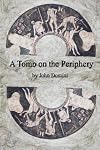
And you can now officially add to that list author John Domini, who is having quite the hot streak indeed in his literary career these days; just a year after his astonishing surprise Pulitzer nominee Earthquake ID (which I reviewed here just a few weeks ago, by the way), comes now the second book of his so-called "Naples Trilogy," the smart and fast-paced crime noir A Tomb on the Periphery, itself nominated for the National Book Critics Circle Award last year when it first came out. It reminded me a lot of an author like Michael Chabon, in fact, simply from the way Domini is able to move so effortlessly from the twee academe stereotypes of the trilogy's first book (a densely metaphorical magical-realism tale in love with language) to the much more genre-oriented conventions of the second (a straight-ahead Mid-Century-Modernist-style European crime thriller, along the lines of Rififi or The Talented Mr. Ripley), all while elegantly transferring all the things that make these two parts of a trilogy to begin with, not only from a plot standpoint but also a stylistic one. Sheesh, who knew that this former Harvard professor and NEA grant recipient would be so good at churning out a contemporary pulp-fiction piece?!
In fact, that's the first thing to understand about this book; that much like Cormac McCarthy's "Border Trilogy," Domini's "Naples" books are not direct sequels to each other at all, but rather are connected in these more ephemeral, more complex ways. To begin with, as easily guessed, they all take place in the Italian city of Naples, in the months following a speculative earthquake supposedly in the early 2000s that never actually happened in real life; and then all of them as well deal mostly with three specific groups of people found there after the earthquake -- the Italians who grew up there, the Bush-Era do-gooder Americans there with NATO and the UN, and the poor African immigrant community out on the edges of the city, who as always were hit hardest by the natural disaster. Each of the books, then, concentrate on one group or another, mostly standalone tales between books but with certain fun little connections, like a major character of one having a cameo in another.
As those who read my review of the original book know, Earthquake ID concentrated mostly on Americans, fashioning a complicated and highly symbolic story regarding a suburban teen from a relief-org family who seems to develop the ability to magically heal through touch, and the overstressed guilty-Catholic mother who is suddenly worshipped by the locals like a Madonna for it; so what a surprise, then, to find that Periphery is written mostly from the point of view of the Italians, and that at the end it's mostly a traditional potboiler melodrama, albeit one superbly written (but more on that in a bit). To be specific, it's the story of young art historian Fabbrizio, who has dreams of an eventual aboveground conservator position at some cushy museum, but for now because of family financial problems has been lured into the decidedly shadier world of the contemporary Mafia (violent thugs known as the Camorra), appraising stolen antiques for a group of neighborhood criminals and even sometimes creating exquisite fakes. His reputation has already started spreading across the gossipy network of the city's underground (which Domini smartly compares more than once to a real-life city-sized physical version of MySpace); and that's how he comes to the attention of a beautiful, manipulative American who sometimes goes by Shanti, sometimes by Daphne, who claims pasts not only as a savvy dealer in New York but a trainwreck lesbian in San Francisco and a naive farmgirl in Iowa.
"Shanti" first presents herself as a sexy New-Ager, in need of a guide to take her to an "unsullied" tomb and to grant her some private time at it one night, so that she can perform a certain Goddess ceremony in the "pure environment" it was designed for; ah, but just five pages into the novel, we learn just as Fabbro does that the earthquake-disturbed tomb they end up going to out on the periphery of town (hence the book's title) was not picked at random by Shanti at all, and that the nighttime pagan ritual was all an elaborate ruse in order to steal a partially-dug jewel-covered necklace from it, so that she can smuggle it back to the US and into the hands of waiting buyers. And how does she plan on doing this? Oh, that's right, by being "Daphne" during the day, a Gap-wearing sorority-girl mid-level bureaucrat at the American consulate, taking advantage of the earthquake's chaos in order to transport hundreds of thousands in stolen goods in her diplomatic pouch, without any of her coffee-slurping officemates being the wiser.
And so I guess all this begs for a certain piece of information right away -- that for all of you simply looking for a well-done crime novel, you can rest assured that this actually is one, not one of those fussy, overly-written pretentious messes that professors like calling "a meditation on crime" or whatever the f-ck. In fact, as mentioned, this was one of the pleasant surprises of this book, after first reading Earthquake ID and falling so in love with the very deliberate concentration on language shown there; that's half the reason to read that original book in the first place, the same reason one reads Denis Johnson or John Updike, so to wallow in the attention to ultra-intelligent writing being displayed. It's the sign of a truly gifted artist, I think, when they can shift gears so profoundly like this, and really embrace the details of whatever style they've chosen to work in; it elevates a writer in my mind to a level I just insanely worship, a rare level in my life that only a handful of writers like TC Boyle and Philip Roth ever reach.
But make no mistake; this is a gorgeously written book, easily one the most lit-dense crime thrillers you'll ever read, and there's a good reason I think that it reminds me so much more of the classy post-noir work of Mid-Century Modernism than the crappy supermarket fare of so many contemporary genre pieces. And that frankly taps as well into why this should be considered the second book in an ideological trilogy, because of all the delicious little jokes and connections that Domini slips into the manuscript, not only just dozens of wonderful turns of phrase but also sly references to characters and locations from the first novel. I love, for example, how an important aspect of both books turns out to be the muddy refugee camp set up by the UN; but how this camp plays two very different roles in two very different storylines, and is seen by the main characters from two entirely different viewpoints. (And in fact Domini admitted in a recent interview that the third book of this trilogy, which he's working on as we speak, will concentrate on characters from this African immigrant community already mentioned; so I have a feeling that we're in for yet another profoundly different look at this refugee camp by the time the trilogy is finished.)
The book is full of things like this -- references again to the sociological strata of civilizations found in the basements of these crumbling old homes and churches, references again to the fascinating relationship this city has with the nearby Rome, references again to the Chicago-style institutional corruption that makes the city ironically function pretty well on a day-to-day basis. I love that Domini is able to throw all these things into such a chaotic mix, along with the usual touchstones of a typical genre story, plus his own very unique, very layered personal style, and somehow comes out on the other end with something even readable, much less stunning in its quality and deserving of all the award nominations the entire trilogy has so far racked up. It is again a perfect example of the fabled rare book I am constantly on the lookout for here at CCLaP -- a book that effortlessly straddles the line between high and low art, that is imminently worth it to the discerning heavy reader but not an overwhelming challenge to the casual one. It's been a real treat to get to read these first two volumes of the trilogy so far, and needless to say that I'm highly looking forward to the third.
Out of 10: 9.6 show less
(By the way, I recently got a chance to interview Domini, for an episode of the CCLaP Podcast that will be airing next week. I hope you'll get a chance to stop by the website for that as well.)
As regular readers know, I don't believe in such a thing as "mainstream literary fiction" (or "general show more literature," or "academic fiction," or whatever you want to call it), versus so-called "genre" work; I believe the former to be a type of genre as well, simply one more concentrated on character than on plot, and that such academic fiction contains just as many easy tropes its fans are on the lookout for (the miserable suburbanite, the philandering professor) as there are references within sci-fi novels to lasers and spaceships. And so just like any other genre out there, there are some academic writers who are little more than hacks, and others who appeal specifically to the highest end of the spectrum; and then there are the privileged few who manage to find that super-fine balance between dense literary complexity and mainstream appeal, all the Michael Chabons and John Irvings and Tom Wolfes of the world who are able to turn in award-winning tomes that still appeal to the beach-and-airport crowd. And these just happen to be my favorite type of writers of all, so am of course always thrilled when coming across one of them.
And you can now officially add to that list author John Domini, who is having quite the hot streak indeed in his literary career these days; just a year after his astonishing surprise Pulitzer nominee Earthquake ID (which I reviewed here just a few weeks ago, by the way), comes now the second book of his so-called "Naples Trilogy," the smart and fast-paced crime noir A Tomb on the Periphery, itself nominated for the National Book Critics Circle Award last year when it first came out. It reminded me a lot of an author like Michael Chabon, in fact, simply from the way Domini is able to move so effortlessly from the twee academe stereotypes of the trilogy's first book (a densely metaphorical magical-realism tale in love with language) to the much more genre-oriented conventions of the second (a straight-ahead Mid-Century-Modernist-style European crime thriller, along the lines of Rififi or The Talented Mr. Ripley), all while elegantly transferring all the things that make these two parts of a trilogy to begin with, not only from a plot standpoint but also a stylistic one. Sheesh, who knew that this former Harvard professor and NEA grant recipient would be so good at churning out a contemporary pulp-fiction piece?!
In fact, that's the first thing to understand about this book; that much like Cormac McCarthy's "Border Trilogy," Domini's "Naples" books are not direct sequels to each other at all, but rather are connected in these more ephemeral, more complex ways. To begin with, as easily guessed, they all take place in the Italian city of Naples, in the months following a speculative earthquake supposedly in the early 2000s that never actually happened in real life; and then all of them as well deal mostly with three specific groups of people found there after the earthquake -- the Italians who grew up there, the Bush-Era do-gooder Americans there with NATO and the UN, and the poor African immigrant community out on the edges of the city, who as always were hit hardest by the natural disaster. Each of the books, then, concentrate on one group or another, mostly standalone tales between books but with certain fun little connections, like a major character of one having a cameo in another.
As those who read my review of the original book know, Earthquake ID concentrated mostly on Americans, fashioning a complicated and highly symbolic story regarding a suburban teen from a relief-org family who seems to develop the ability to magically heal through touch, and the overstressed guilty-Catholic mother who is suddenly worshipped by the locals like a Madonna for it; so what a surprise, then, to find that Periphery is written mostly from the point of view of the Italians, and that at the end it's mostly a traditional potboiler melodrama, albeit one superbly written (but more on that in a bit). To be specific, it's the story of young art historian Fabbrizio, who has dreams of an eventual aboveground conservator position at some cushy museum, but for now because of family financial problems has been lured into the decidedly shadier world of the contemporary Mafia (violent thugs known as the Camorra), appraising stolen antiques for a group of neighborhood criminals and even sometimes creating exquisite fakes. His reputation has already started spreading across the gossipy network of the city's underground (which Domini smartly compares more than once to a real-life city-sized physical version of MySpace); and that's how he comes to the attention of a beautiful, manipulative American who sometimes goes by Shanti, sometimes by Daphne, who claims pasts not only as a savvy dealer in New York but a trainwreck lesbian in San Francisco and a naive farmgirl in Iowa.
"Shanti" first presents herself as a sexy New-Ager, in need of a guide to take her to an "unsullied" tomb and to grant her some private time at it one night, so that she can perform a certain Goddess ceremony in the "pure environment" it was designed for; ah, but just five pages into the novel, we learn just as Fabbro does that the earthquake-disturbed tomb they end up going to out on the periphery of town (hence the book's title) was not picked at random by Shanti at all, and that the nighttime pagan ritual was all an elaborate ruse in order to steal a partially-dug jewel-covered necklace from it, so that she can smuggle it back to the US and into the hands of waiting buyers. And how does she plan on doing this? Oh, that's right, by being "Daphne" during the day, a Gap-wearing sorority-girl mid-level bureaucrat at the American consulate, taking advantage of the earthquake's chaos in order to transport hundreds of thousands in stolen goods in her diplomatic pouch, without any of her coffee-slurping officemates being the wiser.
And so I guess all this begs for a certain piece of information right away -- that for all of you simply looking for a well-done crime novel, you can rest assured that this actually is one, not one of those fussy, overly-written pretentious messes that professors like calling "a meditation on crime" or whatever the f-ck. In fact, as mentioned, this was one of the pleasant surprises of this book, after first reading Earthquake ID and falling so in love with the very deliberate concentration on language shown there; that's half the reason to read that original book in the first place, the same reason one reads Denis Johnson or John Updike, so to wallow in the attention to ultra-intelligent writing being displayed. It's the sign of a truly gifted artist, I think, when they can shift gears so profoundly like this, and really embrace the details of whatever style they've chosen to work in; it elevates a writer in my mind to a level I just insanely worship, a rare level in my life that only a handful of writers like TC Boyle and Philip Roth ever reach.
But make no mistake; this is a gorgeously written book, easily one the most lit-dense crime thrillers you'll ever read, and there's a good reason I think that it reminds me so much more of the classy post-noir work of Mid-Century Modernism than the crappy supermarket fare of so many contemporary genre pieces. And that frankly taps as well into why this should be considered the second book in an ideological trilogy, because of all the delicious little jokes and connections that Domini slips into the manuscript, not only just dozens of wonderful turns of phrase but also sly references to characters and locations from the first novel. I love, for example, how an important aspect of both books turns out to be the muddy refugee camp set up by the UN; but how this camp plays two very different roles in two very different storylines, and is seen by the main characters from two entirely different viewpoints. (And in fact Domini admitted in a recent interview that the third book of this trilogy, which he's working on as we speak, will concentrate on characters from this African immigrant community already mentioned; so I have a feeling that we're in for yet another profoundly different look at this refugee camp by the time the trilogy is finished.)
The book is full of things like this -- references again to the sociological strata of civilizations found in the basements of these crumbling old homes and churches, references again to the fascinating relationship this city has with the nearby Rome, references again to the Chicago-style institutional corruption that makes the city ironically function pretty well on a day-to-day basis. I love that Domini is able to throw all these things into such a chaotic mix, along with the usual touchstones of a typical genre story, plus his own very unique, very layered personal style, and somehow comes out on the other end with something even readable, much less stunning in its quality and deserving of all the award nominations the entire trilogy has so far racked up. It is again a perfect example of the fabled rare book I am constantly on the lookout for here at CCLaP -- a book that effortlessly straddles the line between high and low art, that is imminently worth it to the discerning heavy reader but not an overwhelming challenge to the casual one. It's been a real treat to get to read these first two volumes of the trilogy so far, and needless to say that I'm highly looking forward to the third.
Out of 10: 9.6 show less
Awards

You May Also Like
Associated Authors
Statistics
- Works
- 9
- Also by
- 1
- Members
- 66
- Popularity
- #259,058
- Rating
- 4.7
- Reviews
- 5
- ISBNs
- 20
- Languages
- 1