
Bryan Stevenson (1)
Author of Just Mercy: A Story of Justice and Redemption
For other authors named Bryan Stevenson, see the disambiguation page.
Bryan Stevenson (1) has been aliased into Bryan A. Stevenson.
About the Author
Image credit: Bryan Stevenson [By James Duncan Davidson]
Works by Bryan Stevenson
Works have been aliased into Bryan A. Stevenson.
Just Mercy, Adapted for Young Adults: A True Story of the Fight for Justice (2018) 595 copies, 8 reviews
Associated Works
Works have been aliased into Bryan A. Stevenson.
The Sun Does Shine: How I Found Life and Freedom on Death Row (2018) — Foreword — 1,207 copies, 54 reviews
America's Original Sin: Racism, White Privilege, and the Bridge to a New America (2016) — Foreword, some editions — 451 copies, 7 reviews
Chasing Me to My Grave: An Artist's Memoir of the Jim Crow South (2021) — Foreword — 183 copies, 6 reviews
The 1619 Project {The New York Times Magazine, August 18, 2019} (2019) — Contributor — 137 copies, 5 reviews
Waste: One Woman's Fight Against America's Dirty Secret (2020) — Foreword, some editions — 103 copies, 4 reviews
My Time Will Come: A Memoir of Crime, Punishment, Hope, and Redemption (2021) — Foreword — 60 copies, 1 review
Narrative of the Life of Frederick Douglass, an American Slave, Written by Himself (Annotated): Bicentennial Edition with Douglass Family Histories and Images (2017) — Introduction — 34 copies, 1 review
Tagged
Common Knowledge
There is no Common Knowledge data for this author yet. You can help.
Members
Reviews
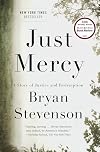
Summary: A narrative of the author’s work with the Equal Justice Initiative, representing death row inmates and other prisoners–people of color, the indigent, mentally impaired, and children–not always served well by our justice system.
Bryan Stevenson, a young black man from a poor community in Delaware, was on the fast track to a successful legal career as a Harvard Law student. All that changed after an internship in Georgia with the Southern Prisoners Defense Committee (SPDC), show more working with death row inmates, discovering that often one of his greatest gifts to them was simply listening to their stories. After graduation, he returned to work with the SPDC. One of the first cases, that he carried over into the new organization he eventually founded was to represent death row inmate Walter McMillian.
His investigation of McMillian’s case revealed a travesty of justice. McMillian was arrested months after the murder of a young woman killed at a dry cleaners. The main “witness” for the prosecution was mixed up in bad dealings with a white woman with whom McMillian, a black man, had made the mistake of having an affair. Ralph Myers, the witness, could not pick out McMillian and McMillian, in fact, had never met Myers. He was accused of forcing Myers to drive him to the cleaners in his “low rider” truck, where he murdered the woman. McMillian’s truck was only modified into a “low rider” six months after the murder. At the time of the murder, McMillian was at a family gathering miles away, corroborated by numerous family and friends. Nevertheless, he was found guilty. Because of a quirk in Alabama law, the judge reversed the jury recommendation, and sentenced him to be executed on Alabama’s electric chair.
Much of the book is Stevenson’s account of his efforts to appeal this verdict. In doing so, he encounters death threats, and a pattern of concealment of exculpatory evidence, including evidence that Myers’ testimony was coerced by the state. As you read, you find yourself shaking your head at the resistance of the justice system to admit its error, and do the right thing, and in fact the efforts of law enforcement and prosecution to send a man to death who clearly could not have committed the crime. His only crimes were being poor, black, and offending social norms.
Interwoven with the story of Walter McMillian are the stories of many others. He recounts the growth of the new organization he formed, the Equal Justice Initiative, not only in representing death row inmates but other indigent and mentally impaired clients, including those sentenced as adults while children. Often, these clients had lacked the resources for good legal representation that would have led to lesser charges, juvenile rather than adult sentencing, or even provision of mental health care that was needed. He notes the great cost society bears for all of this, even while prison privatization brings a windfall of profit to a relative few. He observes:
“One in every fifteen people born in the United States in 2001 is expected to go to jail or prison; one in every three black male babies born in this century is expected to be incarcerated.
“. . . Some states have no minimum age for prosecuting children as adults; we’ve sent a quarter million kids to adult jails and prisons to serve long prison terms, some under the age of twelve. For years, we’ve been the only country in the world that condemns children to life imprisonment without parole; nearly three thousand juveniles have been sentenced to die in prison.
“Hundreds of thousands of nonviolent offenders have been forced to spend decades in prison. We’ve created laws that make writing a bad check or committing a petty theft or minor property crime an offense that can result in life imprisonment” (p. 15).
Stevenson is not denying that in many cases crimes were committed. Rather, his contention is that justice has neither been equal, nor has there been mercy. In many cases, the race, economic status, and mental capacity of defendants deprives them of good legal representation, even while law enforcement and prosecutorial bias makes convictions all but inevitable, and often for far longer terms than crimes may warrant. Furthermore, given some of the egregious errors in capital cases that result in the innocent being sentenced to death, and in many cases executed, Stevenson raises the question, “Do we deserve to kill” (italics are the author’s).
This is not an easy book to read. Stevenson describes a world different from my own experience. I’ve served on juries and been impressed with the care given to instruct us on “innocent until proven guilty.” I know people in law enforcement and prosecutors who are honorable people. And yet, I consider the evidence Stevenson and others like Michelle Alexander present, and realize that the world I have experienced is light years away from the experience of some of our fellow citizens. In practice, we do not afford equal protection under the law for all of our citizens, at least not in all places around our country. We must ask if long prison sentences and mass incarceration of non-violent offenders really makes sense.
There is a lot of talk about American greatness going around. Our system of justice, at its best is, I believe, one of the great things about our country. When we pledge allegiance to the flag, we conclude with the words “with liberty and justice for all.” It seems to me that if we love the flag, and the country that flag stands for, then we cannot ignore cries for justice like the ones in this book. It is what we have pledged ourselves to.
Just Mercy is the 2017 Buckeye Book Community selection. Seven thousand first year students at The Ohio State University have received and are discussing this book. The author will speak on campus Thursday, October 26, 2017. show less
Bryan Stevenson, a young black man from a poor community in Delaware, was on the fast track to a successful legal career as a Harvard Law student. All that changed after an internship in Georgia with the Southern Prisoners Defense Committee (SPDC), show more working with death row inmates, discovering that often one of his greatest gifts to them was simply listening to their stories. After graduation, he returned to work with the SPDC. One of the first cases, that he carried over into the new organization he eventually founded was to represent death row inmate Walter McMillian.
His investigation of McMillian’s case revealed a travesty of justice. McMillian was arrested months after the murder of a young woman killed at a dry cleaners. The main “witness” for the prosecution was mixed up in bad dealings with a white woman with whom McMillian, a black man, had made the mistake of having an affair. Ralph Myers, the witness, could not pick out McMillian and McMillian, in fact, had never met Myers. He was accused of forcing Myers to drive him to the cleaners in his “low rider” truck, where he murdered the woman. McMillian’s truck was only modified into a “low rider” six months after the murder. At the time of the murder, McMillian was at a family gathering miles away, corroborated by numerous family and friends. Nevertheless, he was found guilty. Because of a quirk in Alabama law, the judge reversed the jury recommendation, and sentenced him to be executed on Alabama’s electric chair.
Much of the book is Stevenson’s account of his efforts to appeal this verdict. In doing so, he encounters death threats, and a pattern of concealment of exculpatory evidence, including evidence that Myers’ testimony was coerced by the state. As you read, you find yourself shaking your head at the resistance of the justice system to admit its error, and do the right thing, and in fact the efforts of law enforcement and prosecution to send a man to death who clearly could not have committed the crime. His only crimes were being poor, black, and offending social norms.
Interwoven with the story of Walter McMillian are the stories of many others. He recounts the growth of the new organization he formed, the Equal Justice Initiative, not only in representing death row inmates but other indigent and mentally impaired clients, including those sentenced as adults while children. Often, these clients had lacked the resources for good legal representation that would have led to lesser charges, juvenile rather than adult sentencing, or even provision of mental health care that was needed. He notes the great cost society bears for all of this, even while prison privatization brings a windfall of profit to a relative few. He observes:
“One in every fifteen people born in the United States in 2001 is expected to go to jail or prison; one in every three black male babies born in this century is expected to be incarcerated.
“. . . Some states have no minimum age for prosecuting children as adults; we’ve sent a quarter million kids to adult jails and prisons to serve long prison terms, some under the age of twelve. For years, we’ve been the only country in the world that condemns children to life imprisonment without parole; nearly three thousand juveniles have been sentenced to die in prison.
“Hundreds of thousands of nonviolent offenders have been forced to spend decades in prison. We’ve created laws that make writing a bad check or committing a petty theft or minor property crime an offense that can result in life imprisonment” (p. 15).
Stevenson is not denying that in many cases crimes were committed. Rather, his contention is that justice has neither been equal, nor has there been mercy. In many cases, the race, economic status, and mental capacity of defendants deprives them of good legal representation, even while law enforcement and prosecutorial bias makes convictions all but inevitable, and often for far longer terms than crimes may warrant. Furthermore, given some of the egregious errors in capital cases that result in the innocent being sentenced to death, and in many cases executed, Stevenson raises the question, “Do we deserve to kill” (italics are the author’s).
This is not an easy book to read. Stevenson describes a world different from my own experience. I’ve served on juries and been impressed with the care given to instruct us on “innocent until proven guilty.” I know people in law enforcement and prosecutors who are honorable people. And yet, I consider the evidence Stevenson and others like Michelle Alexander present, and realize that the world I have experienced is light years away from the experience of some of our fellow citizens. In practice, we do not afford equal protection under the law for all of our citizens, at least not in all places around our country. We must ask if long prison sentences and mass incarceration of non-violent offenders really makes sense.
There is a lot of talk about American greatness going around. Our system of justice, at its best is, I believe, one of the great things about our country. When we pledge allegiance to the flag, we conclude with the words “with liberty and justice for all.” It seems to me that if we love the flag, and the country that flag stands for, then we cannot ignore cries for justice like the ones in this book. It is what we have pledged ourselves to.
Just Mercy is the 2017 Buckeye Book Community selection. Seven thousand first year students at The Ohio State University have received and are discussing this book. The author will speak on campus Thursday, October 26, 2017. show less
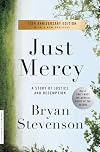
I think one quote from the book sums it up - Capital Punishment means people without capital are the ones who get punished. Although as some reviewers noted the book focuses on cases where Mr Stevenson won reduced sentences or even won overturns of convictions, but it's through those cases you really get to see how unjust our justice system is and remains. Yes people like Mr Stevenson have helped to make some improvements, in particular in juvenile sentences, but there is still so much more show more to be done. Unfortunately capitalism has made incarceration a huge private industry with all of its lobbyists to grease the pockets in D.C. to keep it as is. Very well written. If you don't mind putting the book down at night and sitting there angry unable to sleep, then it is a must read. show less
I was amazed by the empathy and dedication at work in this book. I also definitely cried at least once. I wasn't sure at first what I thought of the structure -- one overarching story of a particular case combined with details on trends related to death row cases -- but I thought he did a beautiful job of showing where all of the threads of his career tied together. And while the book is technically about his career, this must be the most selfless memoir ever written. I feel like I learned a show more lot of these issues and especially about the individuals affected, too. show less
This is an amazing book that is more challenging than it is comforting. I was exhausted while preparing a sermon on how we fail to love one another and care for the widow and orphan, so I went in search of a relaxing read. I thought this book, Just Mercy, would be a nice break. I was so wrong! I loved the title and did not read the subtitle until it was too late and I was too enthralled to put it down. The author tells stories of our broken justice system, complete with statistics and show more undergirded by research. Because he is sharing the stories of people he has defended, one man in particular, it reads like a story. The content, however, is not fiction, and that is very unfortunate. The system is broken, and it is only through efforts like Bryan Stevenson's and other groups like the Equal Justice Initiative and the Innocence Project, that steps are being taken to remediate the inequality of the current system. He talks at length about the absence of compassion and the need we all have for mercy and justice. I carried this book with me to bible studies and church meetings the week I read it and many quotes found their way into my sermon. I strongly recommend this book to anyone who cares about those accused, those ignored, those on the margins. show less
 This review was written for LibraryThing Early Reviewers.
Lists
Awards


You May Also Like
Associated Authors
Statistics
- Works
- 5
- Also by
- 12
- Members
- 6,689
- Popularity
- #3,658
- Rating
- 4.5
- Reviews
- 274
- ISBNs
- 53
- Languages
- 5
