
John Purcell (7)
Author of The Girl On The Page
For other authors named John Purcell, see the disambiguation page.
Series
Works by John Purcell
2. Distractions 1 copy
Tagged
Common Knowledge
- Other names
- Walker, Natasha
- Map Location
- Australia
Members
Reviews
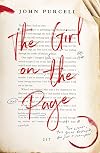
The Girl on the Page has been getting a lot of positive media coverage in Australia lately. It sounded like my kind of book – a heroine who couldn’t care less what the world thinks about her, life in publishing and two reclusive literary authors. So naturally I jumped in and started reading. The first thing I noticed is the writing. John Purcell’s writing is easy to read and easy to relate to – you’re in Amy’s world now, lock, stock and barrel. Amy is also a unique character as show more she should be unlikeable – but she isn’t. Whether that’s due to the chapters told by her in the first person or that none of the other characters disliked her wholly, I’m not sure.
The first thing the reader notices is that Amy is in a world of her own. She’s a brilliant enigma in the publishing world – she gets excellent results from her authors, even if the methods of pushing them to their brilliance is unorthodox. She’s also primarily self-taught with a lot of gumption – she got her start by retyping a mediocre thriller and editing it, then sending it to the author with a proposal. That’s how Amy became half of the wizardry behind the bestselling Jack Cade thriller novels. Amy’s personal life is also unorthodox. She jumps anything that’s on offer and shuns long-term relationships after having her heart broken. She’s also wealthy with no need to work, but usually rocks up to work at the publishing house drunk. If she bothers. She’s also extraordinarily beautiful. So really, everyone should hate her – a stunning, foul mouthed genius. But Amy has a vulnerability that is not fully exposed until she’s given the task of finding literary great Helen Ryan’s overdue manuscript. This involves moving into the flat below the townhouse Helen and husband Malcolm bought with the advance. Helen’s terrified she will lose the first glimpse of luxury she’s seen at the cost of selling out, going commercial. Her husband Malcolm believes she’s already sold out, grieving for the loss of their old life and refuses to read any more of her work. This is happening as Malcolm’s ‘horrible little book’ is longlisted for the Booker Prize and he’s thrust into the spotlight with meme-worthy results. As Amy works through Helen’s versions of the novel, she gets entangled in their lives. This leads her to question her current lifestyle and what she truly values. Helen and Malcolm do this too, but separately in a grief stricken way. All the characters circle around each other and don’t seek help until the last possible point, meaning that the ending turns out to be incredibly unexpected! (I’m not sure how else the book could have ended, but I wasn’t expecting that).
The Girl on the Page references a lot of books, authors and literary figures from Australia and worldwide. A recurring theme asks, what is literature and who defines that? Helen, Amy and Malcolm all have varying thoughts on the topic. Amy’s co-writer Liam (of Jack Cade fame) also desperately wants to be seen as a literary author, but his thoughts on this path are confused. But who is right? All the characters offer some insight into their perceptions and prejudices but ultimately there is no one truth. (As it should be!)
This is a book that combines the wild ride of a thriller novel with the insightful exploration of life of a slower paced, more literary novel. It’s certainly a ride I enjoyed.
Thank you to Harper Collins for the ARC of this book. My review is honest.
http://samstillreading.wordpress.com show less
The first thing the reader notices is that Amy is in a world of her own. She’s a brilliant enigma in the publishing world – she gets excellent results from her authors, even if the methods of pushing them to their brilliance is unorthodox. She’s also primarily self-taught with a lot of gumption – she got her start by retyping a mediocre thriller and editing it, then sending it to the author with a proposal. That’s how Amy became half of the wizardry behind the bestselling Jack Cade thriller novels. Amy’s personal life is also unorthodox. She jumps anything that’s on offer and shuns long-term relationships after having her heart broken. She’s also wealthy with no need to work, but usually rocks up to work at the publishing house drunk. If she bothers. She’s also extraordinarily beautiful. So really, everyone should hate her – a stunning, foul mouthed genius. But Amy has a vulnerability that is not fully exposed until she’s given the task of finding literary great Helen Ryan’s overdue manuscript. This involves moving into the flat below the townhouse Helen and husband Malcolm bought with the advance. Helen’s terrified she will lose the first glimpse of luxury she’s seen at the cost of selling out, going commercial. Her husband Malcolm believes she’s already sold out, grieving for the loss of their old life and refuses to read any more of her work. This is happening as Malcolm’s ‘horrible little book’ is longlisted for the Booker Prize and he’s thrust into the spotlight with meme-worthy results. As Amy works through Helen’s versions of the novel, she gets entangled in their lives. This leads her to question her current lifestyle and what she truly values. Helen and Malcolm do this too, but separately in a grief stricken way. All the characters circle around each other and don’t seek help until the last possible point, meaning that the ending turns out to be incredibly unexpected! (I’m not sure how else the book could have ended, but I wasn’t expecting that).
The Girl on the Page references a lot of books, authors and literary figures from Australia and worldwide. A recurring theme asks, what is literature and who defines that? Helen, Amy and Malcolm all have varying thoughts on the topic. Amy’s co-writer Liam (of Jack Cade fame) also desperately wants to be seen as a literary author, but his thoughts on this path are confused. But who is right? All the characters offer some insight into their perceptions and prejudices but ultimately there is no one truth. (As it should be!)
This is a book that combines the wild ride of a thriller novel with the insightful exploration of life of a slower paced, more literary novel. It’s certainly a ride I enjoyed.
Thank you to Harper Collins for the ARC of this book. My review is honest.
http://samstillreading.wordpress.com show less

This book has everything: a setting in the publishing industry, ageing and eccentric authors, bestselling authors, publishing personalities, editing and proofreading, manuscripts aplenty, sex, ambition, literary debate and tragedy. The Girl On The Page by John Purcell has been the most surprising read for me so far this year and I absolutely loved it!
Australian author John Purcell is currently the Director of Books at Booktopia and before that he ran a secondhand bookshop in Sydney for 10 show more years, so it shouldn't come as a surprise that he has such a firm grip on what it's like to work in the book industry. I've heard that John's portrayal of the industry is too sexy to bear any resemblance to the Australian publishing industry. I'll never know for sure, but this definitely kept me enthralled from start to finish.
The references to real authors and actors in the story enhanced my enjoyment and gave the novel a real contemporary feel. The title is also quite playful and possibly a stab at all the books with 'girl' in the title.
Punchy, sexy, witty, entertaining and containing intelligent debate on literature versus bestselling fiction, I'm recommending The Girl On The Page by John Purcell far and wide.
* Copy courtesy of Harper Collins * show less
Australian author John Purcell is currently the Director of Books at Booktopia and before that he ran a secondhand bookshop in Sydney for 10 show more years, so it shouldn't come as a surprise that he has such a firm grip on what it's like to work in the book industry. I've heard that John's portrayal of the industry is too sexy to bear any resemblance to the Australian publishing industry. I'll never know for sure, but this definitely kept me enthralled from start to finish.
The references to real authors and actors in the story enhanced my enjoyment and gave the novel a real contemporary feel. The title is also quite playful and possibly a stab at all the books with 'girl' in the title.
Punchy, sexy, witty, entertaining and containing intelligent debate on literature versus bestselling fiction, I'm recommending The Girl On The Page by John Purcell far and wide.
* Copy courtesy of Harper Collins * show less
It is no mean feat that despite John Purcell’s The Girl on the Page leading lady Amy being one of the most wantonly self-destructive characters I have come across, I was ultimately won over by the literary intelligence that oozes from this novel.
Amy’s behaviour is ‘wanton’ in every sense of the word – promiscuous, repeatedly whorish (prose is explicit), often spiteful and at times outright cruel, with very few of the people in the firing line (aka punching bags) deserving of such show more treatment. She’s almost an impossible person to like…. except, you can’t help but admire her chutzpah. Read full review >> show less
Amy’s behaviour is ‘wanton’ in every sense of the word – promiscuous, repeatedly whorish (prose is explicit), often spiteful and at times outright cruel, with very few of the people in the firing line (aka punching bags) deserving of such show more treatment. She’s almost an impossible person to like…. except, you can’t help but admire her chutzpah. Read full review >> show less
I read this book kind of accidentally. I was on Twitter (something I do only very occasionally), when up popped a tweet from Hatchette Australia about the book saying that the first 50 re-tweets would get a free copy. Though I knew absolutely nothing about the book or the author, in a ‘why not’ mood I responded immediately, and lo and behold, in due course an uncorrected proof copy arrived in the mail.
Not the kind of book I would normally pick up off the shelf, but I started reading it show more and got hooked.
I’m sure that by now we’re all tired of book titles which fit the formula:
The girl [random preposition] the [optional adjective][random noun].
…such as The Girl with the Dragon Tattoo or The Girl on the Train or The Girl in the Ice or…
However, this book is highly self-referential, being about writers, literature, and the British publishing industry, so it’s not surprising that there’s a passage in there which mocks the above formula of its own title.
There’s a lot of sex, in some frankly pornographic passages featuring the protagonist Amy, a young, beautiful female book editor. I may be a prude, but I honestly thought the book would have been much better if these had been at least toned down or reduced. Yes, we understand that she’s supposed to be living a wild, irresponsible lifestyle. We don’t need to be beaten over the head with it. And given that the author is male, I suspect all of this is just projected male sexual fantasy.
Somehow, though, despite the above, the book is actually gripping and at times deeply moving.
Amy has become very rich by editing, or really coauthoring, a series of bestselling thrillers. She has a reputation of being able to salvage hopeless manuscripts. Now she finds herself tasked with getting a publishable manuscript from Helen Owen, a highly distinguished ‘literary’ writer now in her 70s. A few years before, Helen was given a huge advance to deliver a new novel. On the basis of this advance she and her husband Malcolm Taylor, another distinguished literary writer who has just had a novel long-listed for the Man Booker prize, have moved out of a tiny flat in Brixton and into their own house. But Helen has missed the deadline for delivering her book. If she doesn’t deliver, she will have to return the advance, which will mean they will lose the house and be bankrupted.
Amy at first finds the task an impossible one, and has great trouble connecting with the literary world of Helen and Malcolm. Eventually it becomes clear that Malcolm sees Helen’s writing of a ‘commercial’ book and acceptance of the advance as a terrible betrayal of their 50 years of shared writing life, and he longs to return to the flat they lived in for so long.
There’s much more to the book than this, including the complexities of Amy’s relationships past and present. And some shattering tragedies. I haven’t yet decided how to categorise it in my mind. But at the end I can say that I certainly enjoyed reading it. show less
Not the kind of book I would normally pick up off the shelf, but I started reading it show more and got hooked.
I’m sure that by now we’re all tired of book titles which fit the formula:
The girl [random preposition] the [optional adjective][random noun].
…such as The Girl with the Dragon Tattoo or The Girl on the Train or The Girl in the Ice or…
However, this book is highly self-referential, being about writers, literature, and the British publishing industry, so it’s not surprising that there’s a passage in there which mocks the above formula of its own title.
There’s a lot of sex, in some frankly pornographic passages featuring the protagonist Amy, a young, beautiful female book editor. I may be a prude, but I honestly thought the book would have been much better if these had been at least toned down or reduced. Yes, we understand that she’s supposed to be living a wild, irresponsible lifestyle. We don’t need to be beaten over the head with it. And given that the author is male, I suspect all of this is just projected male sexual fantasy.
Somehow, though, despite the above, the book is actually gripping and at times deeply moving.
Amy has become very rich by editing, or really coauthoring, a series of bestselling thrillers. She has a reputation of being able to salvage hopeless manuscripts. Now she finds herself tasked with getting a publishable manuscript from Helen Owen, a highly distinguished ‘literary’ writer now in her 70s. A few years before, Helen was given a huge advance to deliver a new novel. On the basis of this advance she and her husband Malcolm Taylor, another distinguished literary writer who has just had a novel long-listed for the Man Booker prize, have moved out of a tiny flat in Brixton and into their own house. But Helen has missed the deadline for delivering her book. If she doesn’t deliver, she will have to return the advance, which will mean they will lose the house and be bankrupted.
Amy at first finds the task an impossible one, and has great trouble connecting with the literary world of Helen and Malcolm. Eventually it becomes clear that Malcolm sees Helen’s writing of a ‘commercial’ book and acceptance of the advance as a terrible betrayal of their 50 years of shared writing life, and he longs to return to the flat they lived in for so long.
There’s much more to the book than this, including the complexities of Amy’s relationships past and present. And some shattering tragedies. I haven’t yet decided how to categorise it in my mind. But at the end I can say that I certainly enjoyed reading it. show less
You May Also Like
Associated Authors
Statistics
- Works
- 8
- Members
- 89
- Popularity
- #207,491
- Rating
- 3.3
- Reviews
- 6
- ISBNs
- 72
- Languages
- 2