

David Dowling
Author of A Delicate Aggression: Savagery and Survival in the Iowa Writers' Workshop
About the Author
David Dowling is assistant professor in the University of Iowa's School of Journalism and Mass Communication and author of several books, most recently Literary Partnerships and the Marketplace: Writers and Mentors in Nineteenth-Century America.
Works by David Dowling
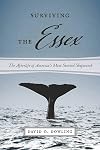
Surviving the Essex: The Afterlife of America's Most Storied Shipwreck (America and the Sea) (2016) 25 copies, 9 reviews
Chasing the White Whale: The Moby-Dick Marathon; or, What Melville Means Today (2010) 21 copies, 1 review
The Great Gatsby in the Classroom: "Searching for the American Dream" (Ncte High School Literature Series) (2006) 9 copies
A Writing Guide 1 copy
Associated Works
Tagged
Common Knowledge
- Gender
- male
Members
Reviews
Surviving the Essex: The Afterlife of America's Most Storied Shipwreck (America and the Sea) by David O. Dowling
Having read and enjoyed Nathaniel Philbrick’s non-fiction work, In the Heart of the Sea, I applied for a complimentary copy of this book, ostensibly a follow up to Philbrick’s in exchange for an honest review.
In 1819, the Nantucket based whale ship Essex set off on a two year journey, around Cape Horn and into the whale rich waters of the South Pacific. With a new captain, first mate and many green sailors, the trip suffered from several minor setbacks (not unusual in the trade), before show more the Essex was sunk in the first documented case of a ship being attacked by a sperm whale, estimated to be an 85 foot monster.
Relegated to whale boats, not suited for long trips on the open ocean, and hampered by trade winds which prevented steering a direct course for South America, the survivors spent three months in their whale boats, suffering through unimaginable bouts with starvation, dehydration, weather and ultimately cannibalism.
In the Heart of the Sea was a gripping account of this event and highly educational with respect to the culture of whaling in general and of the Nantucket trade in particular. Surviving the Essex not only follows the major actors in the drama as they continue with their lives and careers, but indulges in copious amounts of pop psychology and assumption with respect to the two major players, Captain George Pollard, Jr. and First Mate Owen Chase. Herman Melville also makes an appearance, as the Essex tragedy purportedly served as a template for Moby Dick.
The author clearly has decided that Captain Pollard has been badly represented in relation to the tragedy and takes every opportunity to put him in a good light. In order to do so, he must necessarily assign blame elsewhere and Owen Chase is his scapegoat. Certainly, it may be true that Chase played a large role in the tragedy, but in my opinion, the author overplays his hand in this regard, resorting to an enormous amount of undocumented assumption and hindsight to not only place the blame on Chase for selecting the disastrous post-accident decision to steer for South America instead of the possibly cannibal infested islands of French Polynesia (didn’t the final decision rest with the Captain?), but also to blame him for the sinking itself. In doing so, the author resorts to all sorts of pop psychology mumbo jumbo.
Putting aside the actual material content of the work, however, the biggest problem with the book is that it is simply not very interesting and reading it is something of a chore. It is written more in the style of a psychology textbook than the entertaining and educational experience that Philbrick’s book was.
SPOILERS. To summarize, Captain Pollard turned out to be very comfortable in his own skin, despite the Essex disaster and another sinking that immediately followed, becoming a well-respected and productive member of the Nantucket community (though a night watchman and not a whaler). Chase, on the other hand, though becoming enormously successful and wealthy in his whaling career, led a tortured existence and ultimately went insane. Chase, the author argues, is the model for Melville’s Captain Ahab, and not Captain Pollard. show less
In 1819, the Nantucket based whale ship Essex set off on a two year journey, around Cape Horn and into the whale rich waters of the South Pacific. With a new captain, first mate and many green sailors, the trip suffered from several minor setbacks (not unusual in the trade), before show more the Essex was sunk in the first documented case of a ship being attacked by a sperm whale, estimated to be an 85 foot monster.
Relegated to whale boats, not suited for long trips on the open ocean, and hampered by trade winds which prevented steering a direct course for South America, the survivors spent three months in their whale boats, suffering through unimaginable bouts with starvation, dehydration, weather and ultimately cannibalism.
In the Heart of the Sea was a gripping account of this event and highly educational with respect to the culture of whaling in general and of the Nantucket trade in particular. Surviving the Essex not only follows the major actors in the drama as they continue with their lives and careers, but indulges in copious amounts of pop psychology and assumption with respect to the two major players, Captain George Pollard, Jr. and First Mate Owen Chase. Herman Melville also makes an appearance, as the Essex tragedy purportedly served as a template for Moby Dick.
The author clearly has decided that Captain Pollard has been badly represented in relation to the tragedy and takes every opportunity to put him in a good light. In order to do so, he must necessarily assign blame elsewhere and Owen Chase is his scapegoat. Certainly, it may be true that Chase played a large role in the tragedy, but in my opinion, the author overplays his hand in this regard, resorting to an enormous amount of undocumented assumption and hindsight to not only place the blame on Chase for selecting the disastrous post-accident decision to steer for South America instead of the possibly cannibal infested islands of French Polynesia (didn’t the final decision rest with the Captain?), but also to blame him for the sinking itself. In doing so, the author resorts to all sorts of pop psychology mumbo jumbo.
Putting aside the actual material content of the work, however, the biggest problem with the book is that it is simply not very interesting and reading it is something of a chore. It is written more in the style of a psychology textbook than the entertaining and educational experience that Philbrick’s book was.
SPOILERS. To summarize, Captain Pollard turned out to be very comfortable in his own skin, despite the Essex disaster and another sinking that immediately followed, becoming a well-respected and productive member of the Nantucket community (though a night watchman and not a whaler). Chase, on the other hand, though becoming enormously successful and wealthy in his whaling career, led a tortured existence and ultimately went insane. Chase, the author argues, is the model for Melville’s Captain Ahab, and not Captain Pollard. show less
 This review was written for LibraryThing Early Reviewers.
This is an odd book. I expected one of two things, either a detailed review of the historical record, or a smart and light pop history retelling. Instead, this book reads like a literary analysis. The author compare the contemporary narratives written by survivors to various other literature starting with Moby Dick and moving on to other less obvious ones (Frankenstein, etc.)
The style is very dry and academic with copious annotations and quotations. It's also quite slow and repetitive with show more many points belabored and others made over and over again so that I wondered if I was going crazy. The author seemed equally interested in the historical event and contemporary fiction so that I would sometimes get lost in the midst of a dense paragraph and be unsure whether we were discussing actual happenings or one of numerous fictional narratives.
I was excited to learn more about the wreck of the Essex which I had touched on briefly in college. But this book really isn't about that event but how it was perceived in the culture of the day. The author doesn't go into detail on the history and assumes the reader is already very familiar with the events in question. This left me sorely disappointed. show less
The style is very dry and academic with copious annotations and quotations. It's also quite slow and repetitive with show more many points belabored and others made over and over again so that I wondered if I was going crazy. The author seemed equally interested in the historical event and contemporary fiction so that I would sometimes get lost in the midst of a dense paragraph and be unsure whether we were discussing actual happenings or one of numerous fictional narratives.
I was excited to learn more about the wreck of the Essex which I had touched on briefly in college. But this book really isn't about that event but how it was perceived in the culture of the day. The author doesn't go into detail on the history and assumes the reader is already very familiar with the events in question. This left me sorely disappointed. show less
This review was written for LibraryThing Early Reviewers.Surviving the Essex: The Afterlife of America's Most Storied Shipwreck (America and the Sea) by David O. Dowling
I've read and enjoyed both "In the Heart of the Sea" and "Moby Dick," so I was anticipating this book eagerly. This was not quite the book I was expecting. Given the description, I anticipated a work of history focusing on the impact that the sinking of Essex had on the sailors who survived and on the whaling industry in general, perhaps with a bit of how it became the root of one of the great American novels. This...wasn't that. Instead, I found it read more like literary criticism then show more anything else, as if the human beings who were involved in the Essex tragedy were characters under the control of an all knowing author whose actions could be analysed to find a deeper meaning. An early example, which left me scratching my head, was that Pollard's later work as a night watchman "suggests that his former actions were unassailable." The idea that a guilty party wouldn't have the "will to survive literally in darkness" is entirely something from a fictional narrative, not a real word idea. Since I don't buy into this concept, I found the book almost unreadable. It doesn't help that it's dense writing. I also wouldn't recommend reading this unless you have a basic understanding of the events of the Essex, since most of the analysis is presented without much background, assuming that you already know the story and the people involved. I'm not actually sure who this book is written for. It's certainly too dry and dense to interest a casual reader, and I admit it lost me as well, even with my interest in maritime history. show less
This review was written for LibraryThing Early Reviewers.Surviving the Essex: The Afterlife of America's Most Storied Shipwreck (America and the Sea) by David O. Dowling
I became interested in reading this book after watching the movie based on Nathan Philabrick's The Heart of the Sea. Dowling's book discusses the awful fate of the Essex, but its' primary purpose is to bring to life the fact behind the fictions. I found this book very interesting as it discussed many aspects of the survivor's tales (and the many different versions of them!) and tried to piece together the facts from the embellishments. I liked discovering what really happened to all of the show more crew and people surrounding the ill-fated Essex and would love to see a documentary based upon Philabeck's book and Dowling's book...they compliment each other well. show less
This review was written for LibraryThing Early Reviewers.You May Also Like
Associated Authors
Statistics
- Works
- 16
- Also by
- 1
- Members
- 132
- Popularity
- #153,554
- Rating
- 3.5
- Reviews
- 10
- ISBNs
- 47
