
J.M. Frey
Author of Triptych
Series
Works by J.M. Frey
A Woman of the Sea 1 copy
Associated Works
Doctor Who in Time and Space: Essays on Themes, Characters, History and Fandom, 1963-2012 (2013) — Contributor — 25 copies, 13 reviews
Tagged
Common Knowledge
Members
Reviews
(I received a free copy of this book in exchange for an honest review)
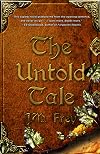
Forsyth Turn is a minor lord, brother of the famous hero Kintyre Turn, and the Shadow Hand to the king. When a young woman is rescued from the clutches of the evil viceroy, she is brought to his home, so she can recover in safety and secrecy under his protection. While very willing to help her, Forsyth is mystified by this woman. Lucy Piper is an enigma: she has clearly lived a life of luxury, but is not a noble; she knows show more things about Forsyth’s work as spymaster that she should have no way of knowing, and yet is ignorant of things that should be common knowledge; her appearance, speech and behaviour are startlingly different. Though he knows it’s nonsensical, Forsyth suspects that she may be one of those mythical beings: a Reader.
And he's right. Pip has been a fan of The Tales of Kintyre Turn ever since she was a little girl. She read them over and over again, and even wrote her thesis on the series, and now she’s become a part of it. With her genre savvy and intimate knowledge of the books, she must set out on a quest to find a way back home.
This book is awesome! I was completely swept up. It’s a biting send-up of fantasy tropes, and at the same time a loving homage to the genre and a damn good fantasy novel in its own right. Pip reacts to finding herself in a fantasy world the same way I imagine most of us would: a complicated mix of disbelief, joy, fannish squee, fear, outrage, disappointment, love and homesickness. After all, when you’re right there instead of reading off a page, it’s harder to ignore the misogyny, poverty and lack of modern medicine. It’s always the Hero of the story who gets to be the badass adventurer, even if he’s a misogynistic jackass, while women are more likely to be cast as love interest or damsel in distress. But the story moves through cynicism and out the other side to a more critical and nuanced kind of appreciation. This land is a magical place, adventures are pretty fun even if you’re not a typical adventurer, and while Pip’s childhood hero may be an asshole, that doesn’t necessarily mean there’s nothing good in him.
I adore the characters. Pip felt so real - it’s like she’s someone I met at uni, or follow on tumblr. I was charmed by her, and empatised with her, and saw her faults without resenting her for them. Forsyth is lovely, a far better man than he realises. As someone with anxiety issues, I loved the fact that he’s a spymaster who suffers from severe anxiety that actually makes him better at his job, but at the same time makes him rather miserable a lot of the time. His character development was very satisfying. (And, since I know people who hate the trope where a stutter marks weakness of character and goes away by the end of the book, let me note that Forsyth does not stop stuttering as he grows as a person, and isn’t magically cured either.) And Kintyre and his loyal companion Bevel are kind of dickheads (mostly Kintyre), but I couldn’t help loving them by the end. I liked the fact that the homoerotic tension between hero and sidekick wasn’t just left as subtext, but brought out into the light and ackowledged, and even analysed (Pip’s a fangirl, she knows what’s up).
In conclusion, I loved The Untold Tale and highly recommend it for fantasy fans, especially the kind who like to get meta. It was fun, exciting, full of feeling, and hit me with a twist that had me rushing back to reread a bunch of passages armed with this new knowledge. I’m thrilled that it’s the first in a series, because I want more! show less
Forsyth Turn is a minor lord, brother of the famous hero Kintyre Turn, and the Shadow Hand to the king. When a young woman is rescued from the clutches of the evil viceroy, she is brought to his home, so she can recover in safety and secrecy under his protection. While very willing to help her, Forsyth is mystified by this woman. Lucy Piper is an enigma: she has clearly lived a life of luxury, but is not a noble; she knows show more things about Forsyth’s work as spymaster that she should have no way of knowing, and yet is ignorant of things that should be common knowledge; her appearance, speech and behaviour are startlingly different. Though he knows it’s nonsensical, Forsyth suspects that she may be one of those mythical beings: a Reader.
And he's right. Pip has been a fan of The Tales of Kintyre Turn ever since she was a little girl. She read them over and over again, and even wrote her thesis on the series, and now she’s become a part of it. With her genre savvy and intimate knowledge of the books, she must set out on a quest to find a way back home.
This book is awesome! I was completely swept up. It’s a biting send-up of fantasy tropes, and at the same time a loving homage to the genre and a damn good fantasy novel in its own right. Pip reacts to finding herself in a fantasy world the same way I imagine most of us would: a complicated mix of disbelief, joy, fannish squee, fear, outrage, disappointment, love and homesickness. After all, when you’re right there instead of reading off a page, it’s harder to ignore the misogyny, poverty and lack of modern medicine. It’s always the Hero of the story who gets to be the badass adventurer, even if he’s a misogynistic jackass, while women are more likely to be cast as love interest or damsel in distress. But the story moves through cynicism and out the other side to a more critical and nuanced kind of appreciation. This land is a magical place, adventures are pretty fun even if you’re not a typical adventurer, and while Pip’s childhood hero may be an asshole, that doesn’t necessarily mean there’s nothing good in him.
I adore the characters. Pip felt so real - it’s like she’s someone I met at uni, or follow on tumblr. I was charmed by her, and empatised with her, and saw her faults without resenting her for them. Forsyth is lovely, a far better man than he realises. As someone with anxiety issues, I loved the fact that he’s a spymaster who suffers from severe anxiety that actually makes him better at his job, but at the same time makes him rather miserable a lot of the time. His character development was very satisfying. (And, since I know people who hate the trope where a stutter marks weakness of character and goes away by the end of the book, let me note that Forsyth does not stop stuttering as he grows as a person, and isn’t magically cured either.) And Kintyre and his loyal companion Bevel are kind of dickheads (mostly Kintyre), but I couldn’t help loving them by the end. I liked the fact that the homoerotic tension between hero and sidekick wasn’t just left as subtext, but brought out into the light and ackowledged, and even analysed (Pip’s a fangirl, she knows what’s up).
In conclusion, I loved The Untold Tale and highly recommend it for fantasy fans, especially the kind who like to get meta. It was fun, exciting, full of feeling, and hit me with a twist that had me rushing back to reread a bunch of passages armed with this new knowledge. I’m thrilled that it’s the first in a series, because I want more! show less
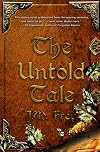
One can think of The Untold Tale as a sort of paired bookend at the fantasy end of the spectrum, along one axis, with Redshirts: both of them are about the relation between the characters in a Tolkienian sub-creation and the writer, and both choose a case where the work is an example of, not to put too fine a point on it, cliché-driven hackwork.
However, the parallel is only partial. The book also takes on fannish attitudes towards texts and characters, includes a running stream of show more commentary which comes out of the tradition of The Tough Guide to Fantasyland, refracts recent debates about harassment at cons and diversity in SFF, and wraps all of this in an inverted portal fantasy (i.e. the viewpoint is that of an inhabitant of the secondary world and not of the visitor from our own).
Or not quite our own. The whole conceit turns on a set of novels which seem to occupy about the same social space as Harry Potter does in our world; and they, assuredly, are not part of our world. It's still pretty close, though; there's even a (cleverly explicitly unattributed) reference to James Nicoll's quote about English worked in.
The novels do not (as far as I can tell) have prominent close parallels in our time; they look very much like a cross of cliché heroic fantasy (with plot coupon structures reminiscent, to that degree, of Silver on the Tree, The High King, or Percy Jackson) with a mediaeval romance's quest structure.
Let me make it clear that I liked this book. I intend to read its sequel. That being said, I have some issues with the book that nag at me.
First, it tries to do too much. The conceit of a portal fantasy story "from the other side" is distinct from a critique of inept or stereotypical formulaic fantasy. Both are distinct again from the "clay speaking to the potter" theme, or the critique of aspects of fandom, or the concern with agency and repression. Its not that one has to have one single focus, by any means, but the sheer number of tasks the narrative takes on makes it blurry, less focussed than it might have been.
Secondly, it's told using the historic present in the first person. There's a very long history of the historic present in the third person going back to the classical world, but in the first person it's essentially the mode of a pub story ("So I go into the room, and I see it's empty, and the package I'm looking for is on the table..."). As such, it's disconcerting, even though there's a thematic reason for it (it highlights interiority which is presumably absent from the published books, and from their general kind of story, at that). Eventually enough exposure renders it transparent; but while Frey's prose is reasonably good, it's not at the level which makes having one's attention shifted from the story to its textuality an actual pleasure.
Finally, there's a great big chunk of missing mechanism; and given that this was originally written as a stand-alone novel (the author then was offered a three-novel contract) I wonder very much whether it will end up being addressed. To wit: it is made very clear, on one hand, that this is not a case of an author tapping into knowledge of a general pre-existing world; it's very clearly shaped by his imagination. No mechanism is even gestured towards why the works of his imagination should have the power to call anyone from our world into them, nor why they should have enough substance to enter our world and live comfortably there. Is this some special gift of the author's? Is it true of all secondary worlds (if it is, it's the equivalent of perpetual motion, an ability to pull being out of nothing)? Is there an infinite continuum of worlds, a sheaf of which will match any given literary work (the Harold Shea model)? Is the "our world" of the story radically different from our own in other ways (Eris is real, and this is a joke on her part)? show less
However, the parallel is only partial. The book also takes on fannish attitudes towards texts and characters, includes a running stream of show more commentary which comes out of the tradition of The Tough Guide to Fantasyland, refracts recent debates about harassment at cons and diversity in SFF, and wraps all of this in an inverted portal fantasy (i.e. the viewpoint is that of an inhabitant of the secondary world and not of the visitor from our own).
Or not quite our own. The whole conceit turns on a set of novels which seem to occupy about the same social space as Harry Potter does in our world; and they, assuredly, are not part of our world. It's still pretty close, though; there's even a (cleverly explicitly unattributed) reference to James Nicoll's quote about English worked in.
The novels do not (as far as I can tell) have prominent close parallels in our time; they look very much like a cross of cliché heroic fantasy (with plot coupon structures reminiscent, to that degree, of Silver on the Tree, The High King, or Percy Jackson) with a mediaeval romance's quest structure.
Let me make it clear that I liked this book. I intend to read its sequel. That being said, I have some issues with the book that nag at me.
First, it tries to do too much. The conceit of a portal fantasy story "from the other side" is distinct from a critique of inept or stereotypical formulaic fantasy. Both are distinct again from the "clay speaking to the potter" theme, or the critique of aspects of fandom, or the concern with agency and repression. Its not that one has to have one single focus, by any means, but the sheer number of tasks the narrative takes on makes it blurry, less focussed than it might have been.
Secondly, it's told using the historic present in the first person. There's a very long history of the historic present in the third person going back to the classical world, but in the first person it's essentially the mode of a pub story ("So I go into the room, and I see it's empty, and the package I'm looking for is on the table..."). As such, it's disconcerting, even though there's a thematic reason for it (it highlights interiority which is presumably absent from the published books, and from their general kind of story, at that). Eventually enough exposure renders it transparent; but while Frey's prose is reasonably good, it's not at the level which makes having one's attention shifted from the story to its textuality an actual pleasure.
Finally, there's a great big chunk of missing mechanism; and given that this was originally written as a stand-alone novel (the author then was offered a three-novel contract) I wonder very much whether it will end up being addressed. To wit: it is made very clear, on one hand, that this is not a case of an author tapping into knowledge of a general pre-existing world; it's very clearly shaped by his imagination. No mechanism is even gestured towards why the works of his imagination should have the power to call anyone from our world into them, nor why they should have enough substance to enter our world and live comfortably there. Is this some special gift of the author's? Is it true of all secondary worlds (if it is, it's the equivalent of perpetual motion, an ability to pull being out of nothing)? Is there an infinite continuum of worlds, a sheaf of which will match any given literary work (the Harold Shea model)? Is the "our world" of the story radically different from our own in other ways (Eris is real, and this is a joke on her part)? show less
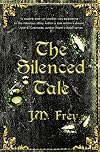
And I thought the last two books had achieved peak metafiction!
I don’t even know where to begin with this one. It is so fannish and too real and I don’t even know how Frey managed to upend some of the tropes she did, or how she thought to do so. I’m not even sure I can effectively compare the plot to the last two, because it was so different. It’s a very different feel compared to the other books in the trilogy, doesn’t follow the same patterns, but if you couldn’t guess from the show more summary, that’s sort of the point.
There’s actually not a lot I can discuss without spoiling things, now that I think of it. So much of the story relies on surprises and not knowing what comes next. But I can say, as a nerd who’s been steeped in lit and fandom for years, I a) can absolutely tell that Frey has too, with some of the things she’s tackling and the angles she’s used and b) was completely delighted by the metafictional hoops she wove this through. The climax is something else.
I’m also really pleased by the level of diversity in the book, and the portrayal of fandom, and the fact that (see: hoops, metafictional) there are 110% valid plot reasons for them too.
This isn’t to say it’s a totally perfect book. There were a few sections that felt slow without adding all that much to the tension, and while the fandom stuff jived, the police stuff and some of the legal/financial things felt off-kilter, like there was fudging for plot reasons. Those things threw me, made it a bit easier to wander off for a while, but I can forgive the latter because getting all that pitch-perfect would’ve changed the story for the worse. The slowness? Could just be me. It’s not like those sections didn’t have important stuff in them either.
I’m definitely more of a fan of this series now that I’ve finished it. They’re more complex than they sound, especially this one, and, as I predicted before I bought the first one, absolutely my thing. (So complex one could pull a Pip and write their dissertation on them.) Good fantasy, good story, good characters, good themes, good understanding of tropes and craft, with a lot of smart things to say.
Warnings: Gore. Villain who thinks nothing of stalking, abuse, killing animals, or mind-rape. Allusions to torture. Sexist old white man trying to be better. Several misogynistic and racially insensitive comments, shot down and called out. Radicalized fans. Earthquake- or bombing-like scenario.
8.5/10 show less
I don’t even know where to begin with this one. It is so fannish and too real and I don’t even know how Frey managed to upend some of the tropes she did, or how she thought to do so. I’m not even sure I can effectively compare the plot to the last two, because it was so different. It’s a very different feel compared to the other books in the trilogy, doesn’t follow the same patterns, but if you couldn’t guess from the show more summary, that’s sort of the point.
There’s actually not a lot I can discuss without spoiling things, now that I think of it. So much of the story relies on surprises and not knowing what comes next. But I can say, as a nerd who’s been steeped in lit and fandom for years, I a) can absolutely tell that Frey has too, with some of the things she’s tackling and the angles she’s used and b) was completely delighted by the metafictional hoops she wove this through. The climax is something else.
I’m also really pleased by the level of diversity in the book, and the portrayal of fandom, and the fact that (see: hoops, metafictional) there are 110% valid plot reasons for them too.
This isn’t to say it’s a totally perfect book. There were a few sections that felt slow without adding all that much to the tension, and while the fandom stuff jived, the police stuff and some of the legal/financial things felt off-kilter, like there was fudging for plot reasons. Those things threw me, made it a bit easier to wander off for a while, but I can forgive the latter because getting all that pitch-perfect would’ve changed the story for the worse. The slowness? Could just be me. It’s not like those sections didn’t have important stuff in them either.
I’m definitely more of a fan of this series now that I’ve finished it. They’re more complex than they sound, especially this one, and, as I predicted before I bought the first one, absolutely my thing. (So complex one could pull a Pip and write their dissertation on them.) Good fantasy, good story, good characters, good themes, good understanding of tropes and craft, with a lot of smart things to say.
Warnings: Gore. Villain who thinks nothing of stalking, abuse, killing animals, or mind-rape. Allusions to torture. Sexist old white man trying to be better. Several misogynistic and racially insensitive comments, shot down and called out. Radicalized fans. Earthquake- or bombing-like scenario.
8.5/10 show less
I’m a sucker for metafiction—books about reading or writing or books in general—especially when there’s some commentary involved. I won’t necessary read everything along these lines (who has the time?) but any metafiction I come across inevitably ends up on my TBR list. I am very glad I read this one. The story itself, with its twists and turns, romance and revelations, is fantastic. I kept thinking about it, and wondering what would happen, and grinning at the best bits. Then show more there’s the metafictional angle, which takes the idea of “real-life person in a fantasy kingdom” to all sorts of places I’ve never seen it go before and which make total sense, like why hadn’t anyone considered that particular problem before? And then there are the themes of self-worth and self-acceptance and … things that would be spoilers … which had me rooting for the main characters and wanting to give them hugs. The only flaw is that sometimes the themes feel a bit heavy-handed, but at the same time, making them lighter would have given the story a lot less depth, so *shrugs*. In any case, this is an excellent book. Go read it.
8.5/10 show less
8.5/10 show less
Lists
Awards


You May Also Like
Associated Authors
Statistics
- Works
- 17
- Also by
- 10
- Members
- 211
- Popularity
- #105,255
- Rating
- 3.8
- Reviews
- 16
- ISBNs
- 31