
Edward L. Dreyer (1940–2007)
Author of Zheng He: China and the Oceans in the Early Ming Dynasty, 1405-1433 (Library of World Biography Series)
Works by Edward L. Dreyer
Zheng He: China and the Oceans in the Early Ming Dynasty, 1405-1433 (Library of World Biography Series) (2006) 63 copies, 1 review
Associated Works
Tagged
Common Knowledge
- Other names
- Dreyer, Ed
- Birthdate
- 1940
- Date of death
- 2007-06-29
- Gender
- male
- Education
- Harvard University (BA, MA, PhD)
- Occupations
- professor
historian - Organizations
- University of Miami
- Nationality
- USA
- Birthplace
- San Diego, California, USA
- Associated Place (for map)
- California, USA
Members
Reviews
Zheng He: China and the Oceans in the Early Ming Dynasty, 1405-1433 (Library of World Biography Series) by Edward L. Dreyer
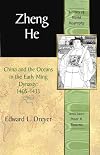
In the early 15th century, the coastal states of Southeast Asia and the Indian Ocean were the subjects of a remarkable event, as they received repeated visitations by a large fleet of Chinese ships. Dispatched by the order of the Ming emperor Yongle, they consisted of thousands of men on board the largest wooden ships ever built. The expeditions were all commanded by Zheng He, a eunuch with a long history of service to the emperor. Yet in spite of the dramatic novelty of the voyages, they show more and their commander received only the scantiest attention in the Chinese historical sources, with many of their exploits becoming as much myth as reality. In this book, Edward Dreyer attempts to uncover the man behind the myths, assessing his goals and achievements by evaluating them in the context of his times.
To do this, Dreyer reconstructs Zheng’s life as completely as possible from the available contemporary and near-contemporary sources. This provides at best only a sketchy outline, which the author then fills in with a broader analysis of the voyage, the ships and men involved, and the broader background of events. He argues that, contrary to later writers, Zheng’s expeditions were not voyages of exploration or assertions of naval hegemony but an effort to extend the Chinese tributary system to that part of the world. Though far less inspiring a motivation than the others, it is one that helps to explain the subsequent abandonment of the effort after a final voyage in 1431-33, as the returns were far outweighed by the considerable expense of the effort – a factor that became critical during a time of enormous expenditure on military expeditions to Mongolia and construction of a new imperial capital in Beijing.
Though thin in some areas and repetitive of its major points, Dreyer has succeeded in writing a clear and accessible study of a legendary figure. Though it, readers can better understand both the scope of his achievement and why it was not followed up by Yongle’s successors. For anyone seeking to understand the early Ming dynasty or why a tantalizing opportunity was never fully exploited, Dreyer’s clear, thoroughly researched, and well-argued study is an excellent place to begin. show less
To do this, Dreyer reconstructs Zheng’s life as completely as possible from the available contemporary and near-contemporary sources. This provides at best only a sketchy outline, which the author then fills in with a broader analysis of the voyage, the ships and men involved, and the broader background of events. He argues that, contrary to later writers, Zheng’s expeditions were not voyages of exploration or assertions of naval hegemony but an effort to extend the Chinese tributary system to that part of the world. Though far less inspiring a motivation than the others, it is one that helps to explain the subsequent abandonment of the effort after a final voyage in 1431-33, as the returns were far outweighed by the considerable expense of the effort – a factor that became critical during a time of enormous expenditure on military expeditions to Mongolia and construction of a new imperial capital in Beijing.
Though thin in some areas and repetitive of its major points, Dreyer has succeeded in writing a clear and accessible study of a legendary figure. Though it, readers can better understand both the scope of his achievement and why it was not followed up by Yongle’s successors. For anyone seeking to understand the early Ming dynasty or why a tantalizing opportunity was never fully exploited, Dreyer’s clear, thoroughly researched, and well-argued study is an excellent place to begin. show less
You May Also Like
Associated Authors
Statistics
- Works
- 3
- Also by
- 2
- Members
- 94
- Popularity
- #199,201
- Rating
- 3.1
- Reviews
- 1
- ISBNs
- 7