
Marilyn Wood
Author of DK Eyewitness Travel Guides: New Orleans
About the Author
Marilyn Wood came to the United States from England to study journalism at Columbia University. The former editorial director of Macmillan Travel, she has also worked as a reporter, ranch hand, press officer, and book reviewer
Works by Marilyn Wood
"Studious to please" : a profile of Jane West an eighteenth-century author (2003) 2 copies, 1 review
Frommer's '91 on $40 a day 1 copy
Associated Works
Tagged
Common Knowledge
- Legal name
- Wood, Marilyn
- Birthdate
- 20th century
- Gender
- female
Members
Reviews
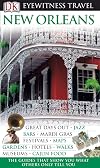
From my Cannonball Read VI Review ...
First off, I fully recognize that this review would probably be best saved for AFTER I visit the city for which I purchased it. However, that trip is over five months away, so I don’t know if I’d really remember much at that point. If anything in the book has led me wildly astray, however, I’ll come back and update my review.
In my experience of the travel book world, there are a few big players, which I usually envision this way: Rick Steves (a.k.a. show more what your parents use); Fodor’s and Frommer’s (the sort of generic middle of the road); Lonely Planet (for the SLIGHTLY less mainstream traveler), and Eyewitness (for the person who likes shiny things and detailed maps). I know there are others; these are just the ones I have found to be the ones usually in stock at a bookstore. In looking at my husband’s and my travel bookshelf, we have 10 Lonely Planet guides and three Eyewitness Travel.
I chose the Eyewitness version of a New Orleans guide for a couple of reasons: this was the one with the newest edition, I’m a sucker for the photos and neighborhood maps, and we weren’t in need of accommodation recommendations, as our travelling companions had already found and booked us a place via AirBnB. And as an aside – I rarely find myself using the accommodations sections of travel books anymore. For our honeymoon, we did look at some of the recommendations, but then checked on trip advisor to see if there were any glaring problems with them.
This guide mostly met my expectations – it has good descriptions of different areas, and provides about 30 pages of history and overview of the area. As with most travel books, this one is broken down by general neighborhoods, and features the big highlights. A lot of the items are homes that are worth a look but are closed to the public, which on the one hand is kind of cool – it’s a good idea for where to wander if you enjoy looking at architecture as I do – but I don’t recall a guide book that devoted so much space to places you can look at but can’t go inside to visit. While we likely won’t be travelling outside of the city while there (we’re only in town from Friday night through Tuesday night), the book also includes 25 pages on areas outside of New Orleans, including Baton Rouge.
The biggest drawback to this guide, in my opinion, is actually the language used in some of the descriptions. I mean, the Civil War and history of slavery is mentioned at times (and the Confederacy is, I won’t way glorified, but monuments to the military ‘heroes’ certainly aren’t pointed out as problematic), but the author fails to mention what went on at these giant “beautiful” plantations. I think it’s kind of gross to go on about the “glories” accumulated by plantation owners without addressing the fact that they had all that money because they didn’t pay their laborers. The author also uses some questionable language – for example she uses the term mulatto, which, come on now. It would have only taken up a couple more characters to say ‘multi racial’ or a sentence to explain why that word was used (perhaps it was a term that meant something different in that context? Hard to say). It was sort of like seeing an Asian person referred to as an ‘Oriental’ – it’s just wrong and I feel like the editors should have caught that.
I would assume they are marketing these guides to the traveler who doesn’t want to think about these things (“I’m on vacation! I don’t want to worry about the problematic issues of slavery and such.”), but to me that’s disingenuous. I don’t think it would really be such a challenge to be more culturally sensitive, and not just ignore the realities of the history of the place.see show less
First off, I fully recognize that this review would probably be best saved for AFTER I visit the city for which I purchased it. However, that trip is over five months away, so I don’t know if I’d really remember much at that point. If anything in the book has led me wildly astray, however, I’ll come back and update my review.
In my experience of the travel book world, there are a few big players, which I usually envision this way: Rick Steves (a.k.a. show more what your parents use); Fodor’s and Frommer’s (the sort of generic middle of the road); Lonely Planet (for the SLIGHTLY less mainstream traveler), and Eyewitness (for the person who likes shiny things and detailed maps). I know there are others; these are just the ones I have found to be the ones usually in stock at a bookstore. In looking at my husband’s and my travel bookshelf, we have 10 Lonely Planet guides and three Eyewitness Travel.
I chose the Eyewitness version of a New Orleans guide for a couple of reasons: this was the one with the newest edition, I’m a sucker for the photos and neighborhood maps, and we weren’t in need of accommodation recommendations, as our travelling companions had already found and booked us a place via AirBnB. And as an aside – I rarely find myself using the accommodations sections of travel books anymore. For our honeymoon, we did look at some of the recommendations, but then checked on trip advisor to see if there were any glaring problems with them.
This guide mostly met my expectations – it has good descriptions of different areas, and provides about 30 pages of history and overview of the area. As with most travel books, this one is broken down by general neighborhoods, and features the big highlights. A lot of the items are homes that are worth a look but are closed to the public, which on the one hand is kind of cool – it’s a good idea for where to wander if you enjoy looking at architecture as I do – but I don’t recall a guide book that devoted so much space to places you can look at but can’t go inside to visit. While we likely won’t be travelling outside of the city while there (we’re only in town from Friday night through Tuesday night), the book also includes 25 pages on areas outside of New Orleans, including Baton Rouge.
The biggest drawback to this guide, in my opinion, is actually the language used in some of the descriptions. I mean, the Civil War and history of slavery is mentioned at times (and the Confederacy is, I won’t way glorified, but monuments to the military ‘heroes’ certainly aren’t pointed out as problematic), but the author fails to mention what went on at these giant “beautiful” plantations. I think it’s kind of gross to go on about the “glories” accumulated by plantation owners without addressing the fact that they had all that money because they didn’t pay their laborers. The author also uses some questionable language – for example she uses the term mulatto, which, come on now. It would have only taken up a couple more characters to say ‘multi racial’ or a sentence to explain why that word was used (perhaps it was a term that meant something different in that context? Hard to say). It was sort of like seeing an Asian person referred to as an ‘Oriental’ – it’s just wrong and I feel like the editors should have caught that.
I would assume they are marketing these guides to the traveler who doesn’t want to think about these things (“I’m on vacation! I don’t want to worry about the problematic issues of slavery and such.”), but to me that’s disingenuous. I don’t think it would really be such a challenge to be more culturally sensitive, and not just ignore the realities of the history of the place.see show less

I don't feel quite right about reviewing a document like this that is clearly a labour of love of a lot of people. And they have had to work with volunteers and the material that volunteers provided. As a consequence it's a bit patchy. Coverage of the various sections (by years) is uneven, the photographs are also generally poorly reproduced ...and I think that by 1992 the printers could have done a better job. (It looks like the photos that I was responsible for in my graduation class show more magazine at Uni in 1966). Still, I'm being a bit mean. I even recognised a few of the teachers there and some of the oral descriptions were also interesting. I had the opportunity of returning some years ago for the 100th year anniversary. My 3rd grade classroom was a "temporary" building ....a kind of demountable in 1953.....and it was essentially unchanged in 2017. So much for portability. My Uncle (and I think) my aunt started on the first day that the school opened and, I believe, my uncle was Dux of the school in 1917. He went on to Hawkesbury Agricultural College after this. So, all in all, interesting but not a world beater. I give it 4 stars ....mainly for it's historical interest to me. show less

I don't feel quite right about reviewing a document like this that is clearly a labour of love of a lot of people. And they have had to work with volunteers and the material that volunteers provided. As a consequence it's a bit patchy. Coverage of the various sections (by years) is uneven, the photographs are also generally poorly reproduced ...and I think that by 1992 the printers could have done a better job. (It looks like the photos that I was responsible for in my graduation class show more magazine at Uni in 1966). Still, I'm being a bit mean. I even recognised a few of the teachers there and some of the oral descriptions were also interesting. I had the opportunity of returning some years ago for the 100th year anniversary. My 3rd grade classroom was a "temporary" building ....a kind of demountable in 1953.....and it was essentially unchanged in 2017. So much for portability. My Uncle (and I think) my aunt started on the first day that the school opened and, I believe, my uncle was Dux of the school in 1917. He went on to Hawkesbury Agricultural College after this. So, all in all, interesting but not a world beater. I give it 4 stars ....mainly for it's historical interest to me. show less

Rhoda Broughton (1840-1920) was one of the leading writers of 'domestic novels' in her time. She enjoyed a powerful reputation as a 'thorny maid' for her outspokenness and caustic wit. In addition to writing some 27 major novels, she also corresponded with the leading literary figures of her day, such as Sheridan le Fanu (her uncle), Thomas Hardy, Robert Browning and Henry James. Oscar Wilde feared her because she could outwit him! This new study is the first biographical profile of her ever show more attempted and it includes a comprehensive bibliography of the editions her writings went through. This is an important work on a character at the centre of popular Victorian culture. show less
You May Also Like


Associated Authors
Statistics
- Works
- 18
- Also by
- 1
- Members
- 317
- Popularity
- #74,564
- Rating
- 3.7
- Reviews
- 6
- ISBNs
- 61
- Languages
- 3