

Chris Coppola
Author of Coppola: A Pediatric Surgeon in Iraq
About the Author
Image credit: Chris Coppola
Works by Chris Coppola
Associated Works
Tagged
Common Knowledge
- Gender
- male
Members
Reviews
This is one hell of a good book. It's good as a memoir, as a military memoir, as a personal look at an awful war that perhaps never should have happened - all of those things and more. But mostly it's good because of the writing. The subtitle calls Coppola a pediatric surgeon. Well, he is that certainly, and undoubtedly a very good one too, but as far as this book is concerned, Coppola is, first and foremost, a writer, and a damn good one at that. His Catholic school and Ivy League education show more are probably at least partially responsible for this, but I prefer to think that there's more to it than that. I think Coppola is just a natural-born storyteller. Because by the end of this book you feel like you've known this guy a long time and that you've sat in a room together and swapped stories from your lives. You know something about his childhood in Massachussetts, his closeness to his brothers and parents and grandparents and how much he loves his wife and three sons. And these aren't even the focus of this book. Coppola's two tours in Iraq are the main focus of this narrative, with an all too brief two year "intermission" at home in San Antonio. You know something about his doubts and innermost fears, mostly about the war itself, but also about his faith and about being a good son, husband and father. I was very moved by Chris's struggle to understand his role in this crappy war he finds himself embroiled in - not once, but twice. He is not a career officer. He is paying back a debt to the Air Force for financing his medical school and education. But he knew before he accepted the deal that he could have financed his training in other ways. He wanted to do something for his country though. He doesn't see himself as a patriot, but he is. He just didn't know it would be so hard, that there would be a war involved. And a STUPID war at that. He struggles constantly with his negative feelings about the war and the lies that got us into it. But in the end he concentrates on helping people, on saving lives. And this is how you know what a decent, caring compassionate human being Chris Coppola is. Here's a very brief sample of the writing that so impressed me -
"The landscape of Mesopotamia around us is a cold expanse of hard-packed ground ... Tonight the moon has yet to rise over the Tigris, but we see the evening star wink at us from the eastern horizon. Mars rises high, a luminous yellow-red speck ruling us from afar."
Mars the god of war, a star the color of fire. This is just plain good writing. Coppola's is a quiet voice of sanity mired in the midst of madness. A hell of a good book. I cannot recommend it highly enough. show less
"The landscape of Mesopotamia around us is a cold expanse of hard-packed ground ... Tonight the moon has yet to rise over the Tigris, but we see the evening star wink at us from the eastern horizon. Mars rises high, a luminous yellow-red speck ruling us from afar."
Mars the god of war, a star the color of fire. This is just plain good writing. Coppola's is a quiet voice of sanity mired in the midst of madness. A hell of a good book. I cannot recommend it highly enough. show less
 This review was written for LibraryThing Early Reviewers.
This is the book. To get a first-hand feel for doctoring near a war zone, this is the book. To see compassion in action, this is the book. For a well-written memoir, this is the book.
In fulfillment of his obligation to the military for its part in his medical education, Coppola finds himself thrust into the action at Balad Air Base in Iraq, serving in the hospital tent. His is a story of a patriotic man, who believes in giving his best for his country and its soldiers, yet finds himself torn show more inside. Of the death of an enemy soldier he was called upon to treat: “How am I supposed to comprehend his death when my duty as a doctor to heal contradicts my duty as an officer to defend?”
Established for the purpose of caring for wounded troops, the Balad Air Base hospital experiences “mission creep” – locals start arriving wounded by insurgents and who’ve found Iraqi doctors having fled the violence. His heart goes out to those youngest victims of the war. Did the military “need” a pediatric surgeon in Iraq? No, they needed a surgeon in Iraq, and one who was called to serve his time happened to have a pediatric specialty.
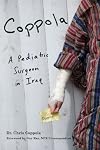
Ahh, but as it turns out, the local Iraqis DID need a pediatric surgeon. Word spread. The cover of my book illustrates one of the events in which a local family speaking only Arabic, arrive at the base with a slip of paper bearing the word ‘Coppola’. Often, wounded children are brought by soldiers. There are many stories here of children and soldiers cared for by the team at Balad, and you hear especially of the ones which most touched the author. He became close with some of these families, and with the interpreters who worked with him.
Between his two stints in Iraq, we also get to meet his wife and sons and see a bit of his life working for the military at Lackland Air Force Base in San Antonio. When back in Iraq, we experience his insomnia, missing his family and contrasting the hell that Iraqi families endure because of the violent among them. A Pediatric Surgeon in Iraq is an insightful memoir from an American hero.
Highly recommended. show less
In fulfillment of his obligation to the military for its part in his medical education, Coppola finds himself thrust into the action at Balad Air Base in Iraq, serving in the hospital tent. His is a story of a patriotic man, who believes in giving his best for his country and its soldiers, yet finds himself torn show more inside. Of the death of an enemy soldier he was called upon to treat: “How am I supposed to comprehend his death when my duty as a doctor to heal contradicts my duty as an officer to defend?”
Established for the purpose of caring for wounded troops, the Balad Air Base hospital experiences “mission creep” – locals start arriving wounded by insurgents and who’ve found Iraqi doctors having fled the violence. His heart goes out to those youngest victims of the war. Did the military “need” a pediatric surgeon in Iraq? No, they needed a surgeon in Iraq, and one who was called to serve his time happened to have a pediatric specialty.
Ahh, but as it turns out, the local Iraqis DID need a pediatric surgeon. Word spread. The cover of my book illustrates one of the events in which a local family speaking only Arabic, arrive at the base with a slip of paper bearing the word ‘Coppola’. Often, wounded children are brought by soldiers. There are many stories here of children and soldiers cared for by the team at Balad, and you hear especially of the ones which most touched the author. He became close with some of these families, and with the interpreters who worked with him.
Between his two stints in Iraq, we also get to meet his wife and sons and see a bit of his life working for the military at Lackland Air Force Base in San Antonio. When back in Iraq, we experience his insomnia, missing his family and contrasting the hell that Iraqi families endure because of the violent among them. A Pediatric Surgeon in Iraq is an insightful memoir from an American hero.
Highly recommended. show less
Dr. Chris Coppola's honest and unflinching memoir focuses on his two tours of duty as a paediatric surgeon in Iraq. As a result of scholarships he accepted for medical school, Dr. Coppola is deployed to Iraq to work at Balad Air Base as a surgeon. I was quite surprised to hear that the Army employed paediatric surgeons, but as Dr Coppola explains, it is often local children that get injured in a war situation - they are simply in the wrong place at the wrong time, and their larger heads, show more relative to the size of their bodies, makes shrapnel and flak wounds more likely. Also, Dr Coppola explains the benefits of being able to treat local children - it makes the army seem more human to the local population, and often leads to a better relationship between the army and the local people. In his first tour of duty, for example, Dr Coppola treats children with burns, head wounds and liver disease, as well as birth defects that the Iraqi medical system cannot help with. Of course, he also treats many injured soldiers at the hospital, and his trauma room skills are soon put to the test. As would be expected, the rudimentary conditions that he operates in, as well as the lack of follow-up care make his job very challenging.
I have read a number of similar memoirs this year, all featuring doctors in war situations (most notably, Six Months in Sudan: A Young Doctor in a War-Torn Village by James Maskalyk). All were well-written, but Dr. Coppola's is markedly different. As he struggles to treat children, soldiers, and locals (who may or may not be the enemy) in poor conditions he is conflicted as to his role in the army, his role in the war, and his role and responsibilities as a father and husband. He questions the role of the US in Iraq, and also considers the eventual withdrawal of the US, and how the Iraqi people will fare without a basic medical infrastructure.
I was constantly surprised by this book. I did not know anything about the medical role the US plays in conflicts. I did not know what life was like on the base for those who live there, and I haven't read many first-hand accounts of deployment. The people Dr. Coppola meets in Iraq, from his fellow medical personnel to the loyal translators who risk death every day they work for the US to the families who bring their children to him because their own health care system cannot help, to his growing family in San Antonio; every character is portrayed empathetically, and feels very real. I became emotionally involved in his story, and shed a few tears as the book progressed. I highly recommend this book for those who enjoy books about war, the medical profession, or the difference one person can make, but I also encourage those who do not usually read 'war' books to pick up this inspiring memoir. show less
I have read a number of similar memoirs this year, all featuring doctors in war situations (most notably, Six Months in Sudan: A Young Doctor in a War-Torn Village by James Maskalyk). All were well-written, but Dr. Coppola's is markedly different. As he struggles to treat children, soldiers, and locals (who may or may not be the enemy) in poor conditions he is conflicted as to his role in the army, his role in the war, and his role and responsibilities as a father and husband. He questions the role of the US in Iraq, and also considers the eventual withdrawal of the US, and how the Iraqi people will fare without a basic medical infrastructure.
I was constantly surprised by this book. I did not know anything about the medical role the US plays in conflicts. I did not know what life was like on the base for those who live there, and I haven't read many first-hand accounts of deployment. The people Dr. Coppola meets in Iraq, from his fellow medical personnel to the loyal translators who risk death every day they work for the US to the families who bring their children to him because their own health care system cannot help, to his growing family in San Antonio; every character is portrayed empathetically, and feels very real. I became emotionally involved in his story, and shed a few tears as the book progressed. I highly recommend this book for those who enjoy books about war, the medical profession, or the difference one person can make, but I also encourage those who do not usually read 'war' books to pick up this inspiring memoir. show less
This review was written for LibraryThing Early Reviewers.Dr. Chris Coppola introduces himself on the first page of his book in this way: “War isn’t anything I would ever choose. I am a pediatric surgeon, and my work is correcting birth defects and helping children who need emergency surgery. Now I’m being sent to Iraq as a trauma surgeon to take care of troops injured in the war. I don’t want to go. But I gave my word to serve when I accepted a medical school scholarship from the military during my last year at Brown University in 1990. I show more will keep my word.”
So begins Coppola’s compelling memoir as a military surgeon in Iraq during 2005 and again in 2007. Dr. Coppola’s first duty was to care for recently wounded troops. These troops often needed extensive surgery to become stable enough to be evacuated to Germany. In this capacity, he saw and operated successfully on a gruesome assortment of wounds—wounds that would have been lethal in previous wars. He also operated on civilians who were bystanders at checkpoints or in their homes during insurgent attacks. At times, he was called on to do surgery on the very insurgents who had wounded others in his care.
Unfortunately, many of the grievously injured bystanders were children. Some died. Some were close in age to his own three sons and he felt the wounds of their parents’ hearts. Almost unbelievably, one of the injured kids was a daughter of insurgents . Besides being wounded in the battle, she had just seen her parents killed in gunfire by US troops.
At each step, Coppola wrestled with his humanity; his desire was to fix all patients no matter who they happened to be. At the same time he was aware of his duty as a soldier and officer whose primary mission was to care for wounded American and Allied troops. As funds and tax dollars are limited for a military mission, it was not possible to medically care for all sick and wounded Iraqis—a matter where Coppola never found peace.
In his second deployment in 2007, he was grieved to find that Iraqi civilians were more at risk than ever, because insurgents, indistinguishable from civilians in the area, were targeting non-combatants. In addition, the Iraqi medical infrastructure had continued to break down as hospitals were destroyed and doctors were killed or fled the country.
My favorite passage from this skillfully written book is the following as Coppola talks about his fellow medical workers during his 2005 deployment: “I trust these people. I know they can turn in the goods; I see them do it day after day. They work miracles with duct tape and 550 Cord when things fall apart. They gently hold the hands of dying men and sometimes snatch them back from the brink. When I stumble, they catch my elbow. When I sink into a funk they tease me back into a good mood. They give me chocolate to keep the Dementors away.” 4 stars. show less
So begins Coppola’s compelling memoir as a military surgeon in Iraq during 2005 and again in 2007. Dr. Coppola’s first duty was to care for recently wounded troops. These troops often needed extensive surgery to become stable enough to be evacuated to Germany. In this capacity, he saw and operated successfully on a gruesome assortment of wounds—wounds that would have been lethal in previous wars. He also operated on civilians who were bystanders at checkpoints or in their homes during insurgent attacks. At times, he was called on to do surgery on the very insurgents who had wounded others in his care.
Unfortunately, many of the grievously injured bystanders were children. Some died. Some were close in age to his own three sons and he felt the wounds of their parents’ hearts. Almost unbelievably, one of the injured kids was a daughter of insurgents . Besides being wounded in the battle, she had just seen her parents killed in gunfire by US troops.
At each step, Coppola wrestled with his humanity; his desire was to fix all patients no matter who they happened to be. At the same time he was aware of his duty as a soldier and officer whose primary mission was to care for wounded American and Allied troops. As funds and tax dollars are limited for a military mission, it was not possible to medically care for all sick and wounded Iraqis—a matter where Coppola never found peace.
In his second deployment in 2007, he was grieved to find that Iraqi civilians were more at risk than ever, because insurgents, indistinguishable from civilians in the area, were targeting non-combatants. In addition, the Iraqi medical infrastructure had continued to break down as hospitals were destroyed and doctors were killed or fled the country.
My favorite passage from this skillfully written book is the following as Coppola talks about his fellow medical workers during his 2005 deployment: “I trust these people. I know they can turn in the goods; I see them do it day after day. They work miracles with duct tape and 550 Cord when things fall apart. They gently hold the hands of dying men and sometimes snatch them back from the brink. When I stumble, they catch my elbow. When I sink into a funk they tease me back into a good mood. They give me chocolate to keep the Dementors away.” 4 stars. show less
This review was written for LibraryThing Early Reviewers.Lists
Awards

You May Also Like
Associated Authors
Statistics
- Works
- 6
- Also by
- 2
- Members
- 97
- Popularity
- #194,531
- Rating
- 4.0
- Reviews
- 45
- ISBNs
- 7
- Languages
- 1
- Favorited
- 1
