
Radcliffe G. Edmonds, III
Author of Drawing Down the Moon: Magic in the Ancient Greco-Roman World
About the Author
Works by Radcliffe G. Edmonds, III
Associated Works
Initiation in Ancient Greek Rituals and Narratives: New Critical Perspectives (2003) — Contributor — 11 copies
Plato and Myth: Studies on the Use and Status of Platonic Myths (Mnemosyne Supplements) (2012) — Contributor — 10 copies
Women and Gender in Ancient Religions: Interdisciplinary Approaches (Wissenschaftliche Untersuchungen Zum Neuen Testament) (2010) — Contributor — 10 copies
Light and Darkness in Ancient Greek Myth and Religion (Greek Studies: Interdisciplinary Approaches) (2010) — Contributor — 6 copies
The Values of Nighttime in Classical Antiquity: Between Dusk and Dawn (Mnemosyne, Supplements) (2020) — Contributor — 1 copy
Tagged
Common Knowledge
- Canonical name
- Edmonds, Radcliffe G., III
- Birthdate
- 196X
- Gender
- male
- Places of residence
- Bryn Mawr, Pennsylvania, USA
- Associated Place (for map)
- Pennsylvania, USA
Members
Reviews
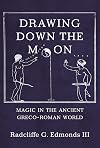
In the first couple of chapters, Edmonds lays out their method. After all, how can one tell the difference between religion and magic? They ascribe to the method of: "objectivity, ends, performance, and location" to draw the line between magic and religion. For example, "Drawing Down the Moon" is the ancient "trick" that the Thessalians had the power to control the moon. In all references, the act is "non-normative socially and politically" and therefore can be described as magic.
The most show more common form of magic though were curse tablets. Apparently there is a surplus of these thin sheets of metal. The binding curse or "katadesmoi" can cause paralyzation, muteness or fearfulness, stiff limbs, or impotency. They are often found in graves, seeking the power of the underworld, whether it be Osiris, Erinyes, Pluto, Hermes or Hekate. We've been taught that Romans did all the borrowing for their religious beliefs, but that doesn't seem to be the case. These tablets can be pierced with a nail, but Edmonds is careful to avoid a generalizations with voodoo.
Attributed to Aphrodite and the like, love charms and erotic curses are even more threatening. With "horrifying imagery" these are spells for the madness and torments of Eros. Inability to eat, sleep or drink for love of someone else. The moon goddess Aktiophis is invoked in one, and is a combination of Hekate and the Babylonian Ereskigal. The book also covers protective magic, present or for future issues. One amulet for headaches actually survived in a medieval prayer, with Artemis replaced by Jesus. Unlike amulets, though, divination is used specifically to identify what happened in the past to cause the problem, NOT to "see the future." There are also excellent chapters on Astrology, Alchemy and Philosophy.
My only quibble is that Edmonds needed to provide a little description for some writers, playwrights and philosophers mentioned. Overall, a worthy read even for it's size because the subject is really fascinating. It cleared up many of the misconceptions we have about ancient practices. show less
The most show more common form of magic though were curse tablets. Apparently there is a surplus of these thin sheets of metal. The binding curse or "katadesmoi" can cause paralyzation, muteness or fearfulness, stiff limbs, or impotency. They are often found in graves, seeking the power of the underworld, whether it be Osiris, Erinyes, Pluto, Hermes or Hekate. We've been taught that Romans did all the borrowing for their religious beliefs, but that doesn't seem to be the case. These tablets can be pierced with a nail, but Edmonds is careful to avoid a generalizations with voodoo.
Attributed to Aphrodite and the like, love charms and erotic curses are even more threatening. With "horrifying imagery" these are spells for the madness and torments of Eros. Inability to eat, sleep or drink for love of someone else. The moon goddess Aktiophis is invoked in one, and is a combination of Hekate and the Babylonian Ereskigal. The book also covers protective magic, present or for future issues. One amulet for headaches actually survived in a medieval prayer, with Artemis replaced by Jesus. Unlike amulets, though, divination is used specifically to identify what happened in the past to cause the problem, NOT to "see the future." There are also excellent chapters on Astrology, Alchemy and Philosophy.
My only quibble is that Edmonds needed to provide a little description for some writers, playwrights and philosophers mentioned. Overall, a worthy read even for it's size because the subject is really fascinating. It cleared up many of the misconceptions we have about ancient practices. show less
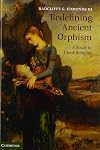
A bit difficult for one unfamiliar with the topic and unable to read Greek. However the author's thesis appears to be that our understanding of ancient Orphic texts has been unduly influenced by Christian authors who interpret them from within a framework of sin and salvation that may be foreign to the times.
Lists
You May Also Like
Associated Authors
Statistics
- Works
- 11
- Also by
- 18
- Members
- 156
- Popularity
- #134,404
- Rating
- 3.9
- Reviews
- 2
- ISBNs
- 26
- Languages
- 1