
David Shannon
Author of A Bad Case of Stripes
About the Author
David Shannon was born October 5, 1960, Washington, D.C. He is an American author and illustrator. He graduated from the Art Center College of Design and now lives in Los Angeles. In 1998 he won the Caldecott Honor for his No, David!. He also wrote A Bad Case of Stripes, How Georgie Radbourn Saved show more Baseball, and The Amazing Christmas Extravaganza. He has also illustrated Audrey Wood's The Bunyans, various books by Jane Yolen including The Ballad of the Pirate Queens and Encounter, as well as Melinda Long's How I Became a Pirate and Pirates Don't Change Diapers. Shannon currently lives in Los Angeles with his wife and daughter. (Bowker Author Biography) show less
Series
Works by David Shannon
David Shannon Pack Set of 3 Books, No David, David Gets in Trouble, David Goes to School (1972) 3 copies
David Shannon Three Paperback Book and Audio CD Set Includes Duck on a Bike, the Rain Came Down & a Bad Case of Stripes (2014) 2 copies
The Acrobat & the Angel — Illustrator — 1 copy
Katkong 1 copy
It's Christmas 1 copy
Hayflick Limit 1 copy
David vai à Escola 1 copy
Associated Works
The Magazine of Fantasy and Science Fiction October 1988, Vol. 75, No. 4 (1988) — Cover artist — 15 copies
Tagged
Common Knowledge
- Canonical name
- Shannon, David
- Birthdate
- 1959-10-05
- Gender
- male
- Education
- Art Center College of Design (BFA|1983 - Illustration)
- Occupations
- writer
illustrator - Organizations
- New York Times
New York Times Book Review - Awards and honors
- Caldecott Honor Award (1998)
- Nationality
- USA
- Birthplace
- Washington, D.C., USA
- Places of residence
- Spokane, Washington, USA
New York, New York, USA
Los Angeles, California, USA - Associated Place (for map)
- USA
Members
Reviews
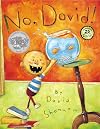
2,960 people on LibraryThing have this book about how the kid's mum can't either chill the fuck out and let her kid explore his world or, if she's that uptight and thinks it's necessary, control her fucking child. So instead David runs from catastrophe to catastrophe, and is rendered with sharp teeth like an imp of malice, and then at the end he is punished and is sad and then they call him Davey and give him a hug and kiss. It's emotional abuse, self-enabling, and I say fuck that.
In the children's book No, David! ,by David Shannon, the central themes are discipline, misbehavior, and unconditional love by parents. The story shows the natural pull between a child's curiosity and boundaries that have been set by the parents. Throughout the book David's actions are quite interesting from spilling food, drawing on the wall, and not listening to rules in general. All these actions are completely normal for children. What kids do learn from this book is no matter how bad show more you might mess up, someone will always still love you and be by your side. David’s character develops through his actions and reactions. At first he is repeatedly misbehaving and has a playful energy and curiosity. Throughout the story David learns through his repeated interactions with his mother the limits of his acceptable behavior. By the end of the story the consistency of his mother's care reinforces the concept of unconditional love and support allowing readers to see the balance between their parents loving them and them being struck for their own good compared to them just being mean.
The bold orange colors of the illustrations really grab the kids' attraction with David's facial expressions. His emotions of being disruptive make the children really attracted to David's Behavior. The visual storytelling also enhances the humor and emotional comfort he is getting from his mother.This book is relevant to children by reflecting their experiences with mischief and learning boundaries within their home and their parents. Children can also relate to David's impulses while feeling reassured by the consistency of parental love. The lessons they show in the book are about accountability, empathy and emotional challenges that they face in everyday life growing up.
I remember growing up and reading this story and having the reaction of my parents would be so mad. However, growing up and making mistakes doesn't stop when you're a child. I am almost 20 and still make mistakes and my parents have always stood by my side even when I was in the wrong; they showed me tough love. show less
The bold orange colors of the illustrations really grab the kids' attraction with David's facial expressions. His emotions of being disruptive make the children really attracted to David's Behavior. The visual storytelling also enhances the humor and emotional comfort he is getting from his mother.This book is relevant to children by reflecting their experiences with mischief and learning boundaries within their home and their parents. Children can also relate to David's impulses while feeling reassured by the consistency of parental love. The lessons they show in the book are about accountability, empathy and emotional challenges that they face in everyday life growing up.
I remember growing up and reading this story and having the reaction of my parents would be so mad. However, growing up and making mistakes doesn't stop when you're a child. I am almost 20 and still make mistakes and my parents have always stood by my side even when I was in the wrong; they showed me tough love. show less
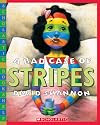
I liked this book; it was well written, involved vibrant colors and images and the author pushed the readers to think about issues in our society today. This book is a modern fantasy, because while an author is identified, the main character, Camilla Cream, could never actually wake up with stripes or all the other patterns on her skin. I loved the colorful drawings in this book because they painted the perfect image of what the author was describing. For example, when the author was show more describing how every time a student shouted a different pattern at her, her skin started to turn into patches of those patterns all over her skin. All the patterns on her skin were shown in the images as well, which made it easier to imagine as one reads. The writing, coupled with the illustrations made this book a great piece. I found parts of the plot overly exaggerated when poor Camilla was changing patterns on her skin. Such as when the paparazzi was crowding the outside of her house, preventing Camilla from leaving her home. I also saw the plot as creative because it climaxed well and had a clever ending. The climax showed how Camilla’s “sickness” got worse and worse, and just when the reader was lead to believe she can never be cured, it turned out that a little old lady knew just what Camilla needed: to be herself and eat her favorite snack, Lima beans. From a teacher’s perspective, I found it odd how little support Camilla received from her school. She was sent home because she was too much of a “distraction” to the other children. That word resonated with me because in today’s education system, inclusion is imperative to an effective learning environment. This means that all students, no matter our physical or mental differences deserve the right to equal education. And inclusion is pushed in today’s classrooms because it cleverly mirrors what students can expect in the real world after high school. Instead, I wished the teacher would have supported Camilla in her time of need and impress upon the other students how important it is to be kind to everyone. I wish the teacher used this difference as a teaching moment, instead of giving up and sending her home. However, I liked the overall message of the story. Camilla was changing patterns on her skin because she was trying to change herself every time someone told her to. When in reality, all she wanted was to eat her favorite snack, Lima beans, that she knew she would have been picked on for eating. In trying to fit in, she lost herself, until a little old lady came to her house and offered her a jar of Lima beans, and after some coaxing, she admitted to loving Lima beans, and when she did she turned back into her old self. Children should never try to change themselves to fit in, instead, they should be themselves and not worry about what others think about them because what makes someone happiest is when they get to do the things they love, regardless of what other people think about their passion. show less
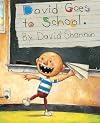
Um, no. Listen, I'm as playful and noncormformist as the next girl, but if David doesn't learn that No Means No and Keep Your Hands to Yourself he's gonna hurt someone and get himself in trouble. I have no idea why one would want to share this with their children - I know my lively boys and I would not have liked David, or laughed at him, or learned anything from this book.
Just because a child is energetic is no excuse to be heedless of other people. Maybe if David's energy is channeled to show more kind and productive ends we'd all have a chance to get along.
Besides which, I can't stand it when illustrations and text are meant to look like a child created them, but fail - it feels both precious and patronizing. show less
Just because a child is energetic is no excuse to be heedless of other people. Maybe if David's energy is channeled to show more kind and productive ends we'd all have a chance to get along.
Besides which, I can't stand it when illustrations and text are meant to look like a child created them, but fail - it feels both precious and patronizing. show less
Lists
Childhood books (2)
Awards


You May Also Like


Associated Authors
Statistics
- Works
- 64
- Also by
- 21
- Members
- 53,624
- Popularity
- #282
- Rating
- 4.1
- Reviews
- 1,986
- ISBNs
- 406
- Languages
- 9
- Favorited
- 12
