

Works by Arnold Esch
Wahre Geschichten aus dem Mittelalter: Kleine Schicksale selbst erzählt in Schreiben an den Papst (2010) 8 copies
Die Lebenswelt des europäischen Spätmittelalters: Kleine Schicksale selbst erzählt in Schreiben an den Papst (2014) 5 copies
Arte, committenza ed economia a Roma e nelle corti del Rinascimento : 1420-1530 : atti del convegno internazionale, Roma 24-27 ottobre 1990 (1995) 4 copies
Wiederverwendung von Antike im Mittelalter : die Sicht des Archlogen und die Sicht des Historikers (2005) 4 copies
Associated Works
Les tendances actuelles de l'histoire du moyen age en France et en Allemagne (actes sevres, 1997) (2002) — Contributor — 3 copies
Tagged
Common Knowledge
- Birthdate
- 1936
- Gender
- male
- Occupations
- professor
- Organizations
- University of Bern
- Awards and honors
- Karl-Vossler-Preis (1996)
- Nationality
- Germany
- Places of residence
- Bern, Switzerland
- Associated Place (for map)
- Bern, Switzerland
Members
Reviews
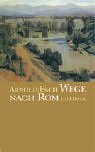
Arnold Esch is unrivaled in making historical source material talk. I am certain he would extract wonderful nuggets of information out of a phone book. His topic is much more grandiose though, the city of Rome from medieval times onwards. The main message in this collection of essays is that medieval Rome was a tiny city of fewer than 30.000 inhabitants. Much of the Roman metropolis had reverted to agriculture. Esch illustrates this with many falsely attributed paintings of artists such as show more William Turner whose rural landscapes are not to be found out in the Campagna but inside the ancient Roman city walls, a real-life scenario of the Planet of the Apes. Using a 1527 census of Rome for a guide, Esch takes us for a stroll through tiny medieval Rome. The most striking fact is the twin sorting according to trade and origin (Florentines, Germans, Jews, …). Again, the journey ends all too soon as the medieval city covers but a tiny speck of modern Rome.
The comparison of straight-line Roman engineering and medieval patchwork architecture and its visibility in today's Italian landscape is also enlightening and useful for orientation. Two essays devoted to the German Historical Institute in Rome present this venerable link between Italian history and German scholarship. As the institute's director from 1988 to 2001 and thus during its centenary, Esch is well placed to review its achievements (it even features a Peace Nobel Prize winner among its former directors). show less
The comparison of straight-line Roman engineering and medieval patchwork architecture and its visibility in today's Italian landscape is also enlightening and useful for orientation. Two essays devoted to the German Historical Institute in Rome present this venerable link between Italian history and German scholarship. As the institute's director from 1988 to 2001 and thus during its centenary, Esch is well placed to review its achievements (it even features a Peace Nobel Prize winner among its former directors). show less
You May Also Like
Associated Authors
Statistics
- Works
- 18
- Also by
- 1
- Members
- 69
- Popularity
- #250,751
- Rating
- 3.0
- Reviews
- 1
- ISBNs
- 31
- Languages
- 2