
Patrick Drazen
Author of Anime Explosion! The What? Why? & Wow! of Japanese Animation
About the Author
Patrick Drazen, born in Chicago, was taught to read before going to kindergarten. Writing took longer to master, his first book, Anime Explosion!, was published in 2002 when he was fifty; A Gathering of Spirits: Japan's Ghost Story Tradition followed in 2011. In between he was, among other careers, show more a chauffeur, a legal secretary, and an announcer at Public Radio station WSIU in Carbondale, Illinois. show less
Works by Patrick Drazen
Tagged
Common Knowledge
- Gender
- male
Members
Reviews
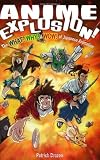
My library was discarding this book so I thought I'd grab it and take a look at what people were saying about anime back in 2002. What particularly interested me was seeing that there was a chapter on gay and pseudo-gay themes in anime. Unfortunately, this chapter was pretty uninspired and didn't offer any major insights. It seemed more interested in disproving gay interpretations of series based on a very narrow view of what "counts" as being gay, and ignored some pivotal series that were show more big in the genre at the time (Gravitation and Oniisama E, to name a couple) in favour of H-anime. I won't complain too much about something that was written 20 years ago, but it seems at worst the author here wanted to air his own dissenting opinions, or at best was just completely out of his depth.
That being said, the other chapters had some interesting things to say, especially regarding the nature of anime to be made for a Japanese audience, filled with references that Westerners might not pick up on. I also did find it amusing how the author tried to explain hentai plots as if they were some kind of high-art story.
I wouldn't say this book is particularly relevant today, although it was a good look at what kind of titles were available back in 2002 and what general thoughts and interpretations of anime were at the time. It would be interesting to see what the author has to say on these same topics given the evolution of the anime industry in the 21 years since publication.
Edit- I initially skipped the chapter on Revolutionary Girl Utena as I only had a few more episodes left to complete the series and didn't want to be spoiled. I know I said I wouldn't harp on something written 20 years ago, but aside from having blatant factual errors in this essay, it's just about the most sexist interpretation of Utena that I could imagine. I'm a bit flabbergasted someone was able to watch the show and come to that conclusion. show less
That being said, the other chapters had some interesting things to say, especially regarding the nature of anime to be made for a Japanese audience, filled with references that Westerners might not pick up on. I also did find it amusing how the author tried to explain hentai plots as if they were some kind of high-art story.
I wouldn't say this book is particularly relevant today, although it was a good look at what kind of titles were available back in 2002 and what general thoughts and interpretations of anime were at the time. It would be interesting to see what the author has to say on these same topics given the evolution of the anime industry in the 21 years since publication.
Edit- I initially skipped the chapter on Revolutionary Girl Utena as I only had a few more episodes left to complete the series and didn't want to be spoiled. I know I said I wouldn't harp on something written 20 years ago, but aside from having blatant factual errors in this essay, it's just about the most sexist interpretation of Utena that I could imagine. I'm a bit flabbergasted someone was able to watch the show and come to that conclusion. show less
The growth of small presses that focus on specific subject matters like TwoMorrows Publishing for comics and Stone Bridge Press for anime is plenty cause for blogging. Large publishers want the maximum possible audience for every one of their books, which doesn’t fit niche interests like comics and anime (which, although are gaining in popularity, still don’t share the consumer figures of something like baseball or even that most unattended sport, hockey). A small press can be profitable show more by focusing on these niche areas, by selectively marketing to the established base while making a small amount of their product available to mainstream markets through the larger chain stores and Amazon.
Drazen’s Anime Explosion! has a gosh wow! subtitle, but the actual text, while informal, doesn’t drop to the level of a uncritcal fan. Drazen states from the outset that his goal is to explore the best in anime, and try to help the reader understand where the subject matter came from in the sense of trying to elucidate the Japanese cultural waters. Gilles Poitras mined the same area with The Anime Companion in a dictionary format; Drazen ellaborates on those cultural differences, and while isn’t as comprehensive as Poitras, goes much further in detail by having chapters dedicated to different subject areas (e.g., folktale backgrounds, pornography influence, the Japanese mother).
This book is a nice companion volume to Frederick Schodt’s work on Japanese manga, Dreamland Japan. Given that manga and anime provide two segments of the Japanese entertainment ouroboros (along with video games and, now, trading card games), it proves useful in understanding the themes that tie all of these together: teamwork, the school system, passive religion, birth and rebirth, and war.
An added bonus here is Drazen’s summary of thirteen of both influential and (his) favorite films and directors, including Sailor Moon, Pokemon, Windaria, Escaflowne, and Evangelion. Like another book that I reviewed recently, all this discussion on these make you want to go out and view them, which is difficult as they aren’t the kind of thing you usually find at your local video rental store. (I’m lucky–the Hollywood video here in Tenleytown actually has a huge anime collection, and one of my co-workers is a true anime afficionado.
I picked this book up because of its connections to manga, which I comment often on in my “text and vision” class on comics, and because I’ve been contemplating writing my next novel using the animation industry as the backdrop. Unfortunately, Drazen doesn’t quite get into the behind the scenes of the industry here as much as Schodt does for manga, so I’m still on the lookout for a book that helps me understand how anime get made. show less
Drazen’s Anime Explosion! has a gosh wow! subtitle, but the actual text, while informal, doesn’t drop to the level of a uncritcal fan. Drazen states from the outset that his goal is to explore the best in anime, and try to help the reader understand where the subject matter came from in the sense of trying to elucidate the Japanese cultural waters. Gilles Poitras mined the same area with The Anime Companion in a dictionary format; Drazen ellaborates on those cultural differences, and while isn’t as comprehensive as Poitras, goes much further in detail by having chapters dedicated to different subject areas (e.g., folktale backgrounds, pornography influence, the Japanese mother).
This book is a nice companion volume to Frederick Schodt’s work on Japanese manga, Dreamland Japan. Given that manga and anime provide two segments of the Japanese entertainment ouroboros (along with video games and, now, trading card games), it proves useful in understanding the themes that tie all of these together: teamwork, the school system, passive religion, birth and rebirth, and war.
An added bonus here is Drazen’s summary of thirteen of both influential and (his) favorite films and directors, including Sailor Moon, Pokemon, Windaria, Escaflowne, and Evangelion. Like another book that I reviewed recently, all this discussion on these make you want to go out and view them, which is difficult as they aren’t the kind of thing you usually find at your local video rental store. (I’m lucky–the Hollywood video here in Tenleytown actually has a huge anime collection, and one of my co-workers is a true anime afficionado.
I picked this book up because of its connections to manga, which I comment often on in my “text and vision” class on comics, and because I’ve been contemplating writing my next novel using the animation industry as the backdrop. Unfortunately, Drazen doesn’t quite get into the behind the scenes of the industry here as much as Schodt does for manga, so I’m still on the lookout for a book that helps me understand how anime get made. show less
Lists
Statistics
- Works
- 3
- Members
- 143
- Popularity
- #144,061
- Rating
- 3.3
- Reviews
- 4
- ISBNs
- 7