
Daniel Gordis
Author of Israel: A Concise History of a Nation Reborn
About the Author
Daniel Gordis is director of the Mandel Foundation's Jerusalem Fellows Program. He was formerly dean of the Ziegler School of Rabbinic Studies at the University of Judaism in Los Angeles.
Image credit: Daniel Gordis, 2018 By Dmitry Rozhkov - Own work, CC BY-SA 4.0, https://commons.wikimedia.org/w/index.php?curid=69745829
Works by Daniel Gordis
Becoming a Jewish Parent: How to Explore Spirituality and Tradition With Your Children (1999) 61 copies
Impossible Takes Longer: 75 Years After Its Creation, Has Israel Fulfilled Its Founders' Dreams? (2023) 40 copies, 1 review
The Promise of Israel: Why Its Seemingly Greatest Weakness Is Actually Its Greatest Strength (2012) 36 copies, 1 review
Pledges of Jewish Allegiance: Conversion, Law, and Policymaking in Nineteenth- and Twentieth-Century Orthodox Responsa (2012) 23 copies
Becoming a Jewish Parent 1 copy
Associated Works
Tagged
Common Knowledge
- Birthdate
- 1959-07-05
- Gender
- male
- Nationality
- Israel
USA (birth) - Birthplace
- New York, New York, USA
- Associated Place (for map)
- New York, USA
Members
Reviews
Impossible Takes Longer: 75 Years After Its Creation, Has Israel Fulfilled Its Founders' Dreams? by Daniel Gordis
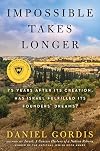
Gordis builds on some of the themes he covered in detail in his previous books on Israeli history and Israeli-American Jewish relations, but focuses on the question of how well Israel has succeeded in its first 75 years of existence. The metric he uses is Israel's Declaration of Independence from May 1948. This in turn requires a better understanding of the context in which it was written, what that document says, and often just as importantly what it does not say.
Overall the prognosis is show more positive, with Israel managing to create a flourishing homeland for the Jewish people, albeit an imperfect one that continues to face major challenges. One of the things that the historical comparisons put in perspective for me is that the current divide between left and right isn't new and didn't start with the "occupation" in 1967. From the very beginning (i.e. pre-1948), there were huge disputes along ideological lines between socialists and revisionist Zionists, secular and religious, etc., often resulting in violence including several high profile assassinations and nearly resulting in civil war between Ben Gurion and Begin.
While he doesn't shy away from controversial subjects, he does exhibit a tendency to glorify Israel's successes, and downplay some of its deficiencies, putting a more positive spin on the current [at time of writing] state of affairs than many others have done. He generally does a good job of remaining objective, allowing his personal opinions to come through a few times as he lashes out at the Obama administration (John Kerry in particular, who he views as having been antagonistic and unfair to Israel) and the Israeli rabbinate (which he views as corrupt and overly powerful). He also repeats many of his gripes regarding American Jewry and secular Israelis, which was unnecessary as he already wrote a whole book about it.
What the book doesn't attempt to answer is what happens next. Some of the issues that were too big to tackle in 1948 have only snowballed since then, and remain as a ticking time bomb if not defused before they inevitably explode. We saw inklings of that last year with the controversy over "judicial reform", which is but one symptom of the lack of a comprehensive constitution. Although Gordis blows off the significance of the 2018 Nation-State Law, the status of the Israeli Arabs as second class citizens needs to be resolved. As does the situation with the Palestinians, as tragically evidenced by the October 7 attack and resulting war. Israel has certainly come a long way in the past 75 years, but clearly a lot of work is left to do, and it's not clear that either the current leadership or society is up to the task. show less
Overall the prognosis is show more positive, with Israel managing to create a flourishing homeland for the Jewish people, albeit an imperfect one that continues to face major challenges. One of the things that the historical comparisons put in perspective for me is that the current divide between left and right isn't new and didn't start with the "occupation" in 1967. From the very beginning (i.e. pre-1948), there were huge disputes along ideological lines between socialists and revisionist Zionists, secular and religious, etc., often resulting in violence including several high profile assassinations and nearly resulting in civil war between Ben Gurion and Begin.
While he doesn't shy away from controversial subjects, he does exhibit a tendency to glorify Israel's successes, and downplay some of its deficiencies, putting a more positive spin on the current [at time of writing] state of affairs than many others have done. He generally does a good job of remaining objective, allowing his personal opinions to come through a few times as he lashes out at the Obama administration (John Kerry in particular, who he views as having been antagonistic and unfair to Israel) and the Israeli rabbinate (which he views as corrupt and overly powerful). He also repeats many of his gripes regarding American Jewry and secular Israelis, which was unnecessary as he already wrote a whole book about it.
What the book doesn't attempt to answer is what happens next. Some of the issues that were too big to tackle in 1948 have only snowballed since then, and remain as a ticking time bomb if not defused before they inevitably explode. We saw inklings of that last year with the controversy over "judicial reform", which is but one symptom of the lack of a comprehensive constitution. Although Gordis blows off the significance of the 2018 Nation-State Law, the status of the Israeli Arabs as second class citizens needs to be resolved. As does the situation with the Palestinians, as tragically evidenced by the October 7 attack and resulting war. Israel has certainly come a long way in the past 75 years, but clearly a lot of work is left to do, and it's not clear that either the current leadership or society is up to the task. show less
We Stand Divided: The Rift Between American Jews and Israel – Understanding Two Communities, Their History, and the Path Forward by Daniel Gordis
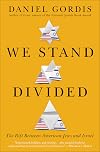
Gordis explores the relationship between American and Israeli Jews through the metaphor of a marriage on the brink of divorce, arguing that both sides need each other. The evidence is primarily historical, based on a reading of pro and anti-Zionist statements from the 1880s through the 1930s.
Some parts of the thesis are fairly incontrovertible. Zionism was a major and fraught question in the Jewish community before the foundation of Israel in 1948. And while American Jews have chosen to show more primarily assimilate, with the notable exception of Haredi communities, Israel is a proudly, even defiantly Jewish ethnostate, where Hebrew is spoken and Jewish supremacy is enshrined in special law.
I believe the origins of the divide, and I don't expect any one person to have the answer to ending it in a short book. Israel may be a vibrant Jewish community, but unless I learn Hebrew it's a foreign land and a foreign people. Israelis may be thoroughly sick of being hectored by American Jews, but the refusal of the Chief Rabbinate of Israel to treat Conservative and Reform Judaism as worthwhile contributions to the faith rankles. The ongoing war crimes and genocide of the Palestinian occupation rankles, and the idea that because I am Jewish I am supposed to stay silent in defense of Israeli security is deeply personally offensive.
Where it is reasonable to expect a short book to have insight is on some more recent events. Gordis talks a lot about long-dead pre-independence Zionists and the triumph of the Six Day War, but he has almost nothing to say about the politics of the Israeli War for Independence, and the choices in state-building made thereafter. Events since 1982 and the occupation of Lebanon seem to have passed in a gray blur, for all that the book mentions them. Americans are unwilling to live with their own counter-insurgencies. Is it any surprise that we decline to live another country's?
Gordis' criticism that contemporary American Judaism is practically moribund is spot on, at least in my personal assessment of too many years of Hebrew school leading to a Bar Mitzvah. And while Israel may be more vigorously alive, it is increasingly isolated diplomatically. Both sides can point to history for examples of disaster. The First and Second Temple were sacked and destroyed. The European country with the most assimilated Jews lead their mass murder.
This book is interesting as a history, offer true, if trite insights into contemporary politics, and has no solutions. The marriage metaphor is often invoked, but it's also wrong on a basic level, because a marriage is a choice of consenting adults. A better metaphor is one of brothers. American and Israeli Jews, as a group, are descendants of a European Jewish tradition which was destroyed in the Holocaust. Orphaned, the two brothers grew up, and they grew in different directions. So what binds them, except for blood? show less
Some parts of the thesis are fairly incontrovertible. Zionism was a major and fraught question in the Jewish community before the foundation of Israel in 1948. And while American Jews have chosen to show more primarily assimilate, with the notable exception of Haredi communities, Israel is a proudly, even defiantly Jewish ethnostate, where Hebrew is spoken and Jewish supremacy is enshrined in special law.
I believe the origins of the divide, and I don't expect any one person to have the answer to ending it in a short book. Israel may be a vibrant Jewish community, but unless I learn Hebrew it's a foreign land and a foreign people. Israelis may be thoroughly sick of being hectored by American Jews, but the refusal of the Chief Rabbinate of Israel to treat Conservative and Reform Judaism as worthwhile contributions to the faith rankles. The ongoing war crimes and genocide of the Palestinian occupation rankles, and the idea that because I am Jewish I am supposed to stay silent in defense of Israeli security is deeply personally offensive.
Where it is reasonable to expect a short book to have insight is on some more recent events. Gordis talks a lot about long-dead pre-independence Zionists and the triumph of the Six Day War, but he has almost nothing to say about the politics of the Israeli War for Independence, and the choices in state-building made thereafter. Events since 1982 and the occupation of Lebanon seem to have passed in a gray blur, for all that the book mentions them. Americans are unwilling to live with their own counter-insurgencies. Is it any surprise that we decline to live another country's?
Gordis' criticism that contemporary American Judaism is practically moribund is spot on, at least in my personal assessment of too many years of Hebrew school leading to a Bar Mitzvah. And while Israel may be more vigorously alive, it is increasingly isolated diplomatically. Both sides can point to history for examples of disaster. The First and Second Temple were sacked and destroyed. The European country with the most assimilated Jews lead their mass murder.
This book is interesting as a history, offer true, if trite insights into contemporary politics, and has no solutions. The marriage metaphor is often invoked, but it's also wrong on a basic level, because a marriage is a choice of consenting adults. A better metaphor is one of brothers. American and Israeli Jews, as a group, are descendants of a European Jewish tradition which was destroyed in the Holocaust. Orphaned, the two brothers grew up, and they grew in different directions. So what binds them, except for blood? show less
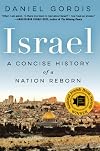
Summarizing the history of Israel in a single volume is a daunting task. Even seemingly simple decisions such as deciding when to start the story are not so simple, as there is a 3,000+ year backstory to contend with. Similarly, the history is still being written every day in the headlines, so any book is doomed to be out of date before the ink even dries.
The more serious conundrum is the lack of consensus about events, both as they happened, and in retrospect. Trying to stay unbiased is show more next to impossible, because the very act of including or omitting particular facts or opinions is itself an editorial statement.
With all that disclaimer out of the way, Gordis does an exemplary job of threading the needle, not shying away from the friction points, and highlighting events and ideas that had a lasting influence on Israel's future, and providing insight into why certain things happened the way they did. If anything, his dogged attempts to provide an impartial account make for somewhat dry recountings of dramatic and traumatic events. Still, better than the alternative, and he provides an excellent introduction to the leadup of the modern state of Israel and an outline of what's happened since then.
The author's personal views only appear at the very end of the book, where he advocates for a rejection of secularism and an embrace of his brand of modern religious Zionism. I personally think that he should have left that part out of this particular volume, as he's made his position quite clear in many other works, and up to that point he had done such a great job of being objective. But it's his book, and his passion and knowledge of the subject matter shine through.
The audiobook narration is also a bit dry, and although he mostly does an ok job pronouncing Hebrew words, his delivery sounds tortured, like a 6th grader in a spelling bee, agonizing over each syllable and obliterating the flow of the sentence every time. The whole thing would have been better had Gordis read it himself. show less
The more serious conundrum is the lack of consensus about events, both as they happened, and in retrospect. Trying to stay unbiased is show more next to impossible, because the very act of including or omitting particular facts or opinions is itself an editorial statement.
With all that disclaimer out of the way, Gordis does an exemplary job of threading the needle, not shying away from the friction points, and highlighting events and ideas that had a lasting influence on Israel's future, and providing insight into why certain things happened the way they did. If anything, his dogged attempts to provide an impartial account make for somewhat dry recountings of dramatic and traumatic events. Still, better than the alternative, and he provides an excellent introduction to the leadup of the modern state of Israel and an outline of what's happened since then.
The author's personal views only appear at the very end of the book, where he advocates for a rejection of secularism and an embrace of his brand of modern religious Zionism. I personally think that he should have left that part out of this particular volume, as he's made his position quite clear in many other works, and up to that point he had done such a great job of being objective. But it's his book, and his passion and knowledge of the subject matter shine through.
The audiobook narration is also a bit dry, and although he mostly does an ok job pronouncing Hebrew words, his delivery sounds tortured, like a 6th grader in a spelling bee, agonizing over each syllable and obliterating the flow of the sentence every time. The whole thing would have been better had Gordis read it himself. show less
***.5
Gordis starts with the observation that there was near unanimous support for Israel by American Jews during the 1967 and 1973 wars, which has eroded in many circles in recent decades, and sets out to explain the rift. His main thesis is that historically the founding of the Jewish communities in both places were done under different circumstances and for different reasons. He also underscores the different perspectives of Judaism as religion vs. a nationality.
While he makes some good show more points and provides interesting historical context, it's hard to see how statements and writings from 1880-1960 have anything to do with the change in attitudes over the past 50 years. In particular, he completely ignores the radical shift to the right in Israel since the Oslo accords. He even goes as far as brushing off the controversy over the inflammatory and anti-democratic 2018 Jewish nation-state basic law as silly and petty. In doing so, he ignores the inherent dilemma facing Israel - it can either be a modern democracy with equality for all citizens, or create a two-tiered system with an oppressed lower class. The latter is what Israel has chosen, and is odious to many American Jews. Blaming the disconnect on factors such the lack of Hebrew literacy among American Jews is a disingenuous dodge. show less
Gordis starts with the observation that there was near unanimous support for Israel by American Jews during the 1967 and 1973 wars, which has eroded in many circles in recent decades, and sets out to explain the rift. His main thesis is that historically the founding of the Jewish communities in both places were done under different circumstances and for different reasons. He also underscores the different perspectives of Judaism as religion vs. a nationality.
While he makes some good show more points and provides interesting historical context, it's hard to see how statements and writings from 1880-1960 have anything to do with the change in attitudes over the past 50 years. In particular, he completely ignores the radical shift to the right in Israel since the Oslo accords. He even goes as far as brushing off the controversy over the inflammatory and anti-democratic 2018 Jewish nation-state basic law as silly and petty. In doing so, he ignores the inherent dilemma facing Israel - it can either be a modern democracy with equality for all citizens, or create a two-tiered system with an oppressed lower class. The latter is what Israel has chosen, and is odious to many American Jews. Blaming the disconnect on factors such the lack of Hebrew literacy among American Jews is a disingenuous dodge. show less
Lists
Awards

Becoming a Jewish Parent: How to Explore Spirituality and Tradition With Your Children (Finalist – Education – 1999)
Saving Israel: How the Jewish People Can Win a War That May Never End (Winner – Contemporary Jewish Life and Practice – 2009)
You May Also Like


Associated Authors
Statistics
- Works
- 19
- Also by
- 1
- Members
- 1,169
- Popularity
- #22,001
- Rating
- 4.0
- Reviews
- 18
- ISBNs
- 50
- Languages
- 1