

Marc D. Feldman
Author of Patient or Pretender: Inside the Strange World of Factitious Disorders
About the Author
Works by Marc D. Feldman
Associated Works
Tagged
Common Knowledge
- Gender
- male
Members
Reviews
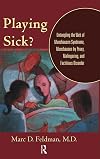
Interesting and about as sympathetic as I can imagine a book on Munchausen Syndrome could be. The book is structured generally as story/case study and then a section talking about things shown by the experience and possible advice to sufferers/victims/healthcare professionals. He makes it constantly clear that Munchausen's and factitious disorder are problems people suffer from and they need support to get through them and that they're not just hurting themselves or constantly lying for no show more reason. He talks about how they're generally related to needing to establish some sort of control over sufferers's lives or find some sort of emotional support that sufferers have trouble finding in healthy ways. The last chapter is the most interesting, giving relatively long accounts from former sufferers who with therapy and support have mostly moved on. The book would have been enhanced through more words from sufferers, but it's understandable that very few admit to it and even fewer would want to be in a book, even anonymously. He does try to put in what he has throughout the book and there are a few other stories scattered throughout. Inevitably, the stories mostly focus on the victims of the lying but they're still interesting and most are relatively non-judgemental.
Some of the stories are about sufferers who could never possibly give permission and it does feel a bit voyeuristic reading about them, although the stories are completely anonymised and I understand it would be impossible to talk about the syndrome without them. I feel he gives too much credit to the American healthcare system in general - although this is understandable given he's a doctor - meaning some possible explanations for things are missed and there's a couple of times where he weirdly focuses on the horrors of somewhat higher expenses rather than patients. He also doesn't talk about wider problems like the stigma of mental illnesses and lack of financial and emotional support in general. I understand that it would make the book longer and greatly expand the scope but it basically just gets a paragraph at the end, which undermines the analysis a bit. His chapter on ethics is constrained by working within American systems, but again understandable.
Ultimately, although it's a bit limited by the scope he chose and the perspective he has, I can't really imagine how it could be improved without changing the book significantly. Worth reading if you're at all interested in these disorders. show less
Some of the stories are about sufferers who could never possibly give permission and it does feel a bit voyeuristic reading about them, although the stories are completely anonymised and I understand it would be impossible to talk about the syndrome without them. I feel he gives too much credit to the American healthcare system in general - although this is understandable given he's a doctor - meaning some possible explanations for things are missed and there's a couple of times where he weirdly focuses on the horrors of somewhat higher expenses rather than patients. He also doesn't talk about wider problems like the stigma of mental illnesses and lack of financial and emotional support in general. I understand that it would make the book longer and greatly expand the scope but it basically just gets a paragraph at the end, which undermines the analysis a bit. His chapter on ethics is constrained by working within American systems, but again understandable.
Ultimately, although it's a bit limited by the scope he chose and the perspective he has, I can't really imagine how it could be improved without changing the book significantly. Worth reading if you're at all interested in these disorders. show less
You May Also Like
Associated Authors
Statistics
- Works
- 5
- Also by
- 1
- Members
- 104
- Popularity
- #184,480
- Rating
- 3.5
- Reviews
- 1
- ISBNs
- 16
- Languages
- 1