
Fletcher Flora (1914–1968)
Author of The Golden Goose
About the Author
Image credit: Fletcher Flora
Works by Fletcher Flora
Associated Works
Crimes and Misfortunes: The Anthony Boucher Memorial Anthology of Mysteries — Contributor — 5 copies
Linnud. Valimik põnevusjutte — Contributor — 1 copy
Tagged
Common Knowledge
- Birthdate
- 1914
- Date of death
- 1968
- Gender
- male
- Nationality
- USA
- Birthplace
- Kansas, USA
- Associated Place (for map)
- Kansas, USA
Members
Reviews
“Flora was a writer of substance and style unlike anyone else.” — Ed Gorman
“Flora had remarkable range, successfully producing everything from hardboiled tales to police procedurals to straightforward whodunits to light whimsy to mainstream fiction.” — Bill Pronzini
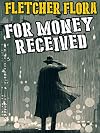
It has always been generally accepted that Lieutenant Joseph Marcus, who starred in several nifty traditional police mystery short stories/novelettes, was Fletcher Flora’s only stab at creating a recurring show more protagonist in his stories. Moreover, it has always been lamented that he had not done the same for Percy Hand, the less than handsome, middling P.I. who first appeared in Flora’s novelette, Loose Ends, published in the August 1958 issue of Manhunt. The release of For Money Received by Wildside Press — a story originally published in Alfred Hitchcock’s Mystery Magazine nearly four years after Loose Ends, in October of 1964 — has me wondering if perhaps, among the over 150 short stories and novelettes Flora wrote for digests such as Manhunt, Ellery Queen, Alfred Hitchcock, Michael Shayne and many others, more Percy Hand stories might eventually be discovered.
Percy Hand has a crummy office overlooking an alley, and it’s raining when he hears a woman’s footfalls on her way to hopefully hire him. She knows Percy is cash-poor, and though she’s heard he’s not a rocket scientist, she’s also been told by someone he did a job for that he’s honest. Her husband’s having an affair, but that’s not the issue; the problem is that the woman is blackmailing him. His wife, who only overheard part of a phone conversation he had with the other woman, isn’t sure exactly what it is that she has, that her husband wants back. Enter Percy…
Percy’s tail job at a meeting between the blackmailer and the woman’s husband doesn’t go as planned, and next thing you know, one of them has turned up dead. I won’t say more, since I figured out fairly early on what was going on, but it was still terrific fun getting there. Flora was a smooth and stylish writer, his wording and description very visual. Henrietta Savage, an About-Town columnist for a city newspaper, adds a real spark to this novelette. Percy’s gal-pal is hiding some hot stuff beneath her bag-lady attire, even if she does have the disposition of a grumpy polecat. She provides Percy with some background information that helps him finally put the pieces together.
I think a lot of readers will be a step or two ahead of Percy in Money Received, but there’s nice atmosphere, engaging description, and the well-drawn Percy Hand, which makes this long short story, or novelette, well worth a read. Hopefully, more Percy Hand stories will turn up soon, because this was a fun read. show less
“Flora had remarkable range, successfully producing everything from hardboiled tales to police procedurals to straightforward whodunits to light whimsy to mainstream fiction.” — Bill Pronzini
It has always been generally accepted that Lieutenant Joseph Marcus, who starred in several nifty traditional police mystery short stories/novelettes, was Fletcher Flora’s only stab at creating a recurring show more protagonist in his stories. Moreover, it has always been lamented that he had not done the same for Percy Hand, the less than handsome, middling P.I. who first appeared in Flora’s novelette, Loose Ends, published in the August 1958 issue of Manhunt. The release of For Money Received by Wildside Press — a story originally published in Alfred Hitchcock’s Mystery Magazine nearly four years after Loose Ends, in October of 1964 — has me wondering if perhaps, among the over 150 short stories and novelettes Flora wrote for digests such as Manhunt, Ellery Queen, Alfred Hitchcock, Michael Shayne and many others, more Percy Hand stories might eventually be discovered.
Percy Hand has a crummy office overlooking an alley, and it’s raining when he hears a woman’s footfalls on her way to hopefully hire him. She knows Percy is cash-poor, and though she’s heard he’s not a rocket scientist, she’s also been told by someone he did a job for that he’s honest. Her husband’s having an affair, but that’s not the issue; the problem is that the woman is blackmailing him. His wife, who only overheard part of a phone conversation he had with the other woman, isn’t sure exactly what it is that she has, that her husband wants back. Enter Percy…
Percy’s tail job at a meeting between the blackmailer and the woman’s husband doesn’t go as planned, and next thing you know, one of them has turned up dead. I won’t say more, since I figured out fairly early on what was going on, but it was still terrific fun getting there. Flora was a smooth and stylish writer, his wording and description very visual. Henrietta Savage, an About-Town columnist for a city newspaper, adds a real spark to this novelette. Percy’s gal-pal is hiding some hot stuff beneath her bag-lady attire, even if she does have the disposition of a grumpy polecat. She provides Percy with some background information that helps him finally put the pieces together.
I think a lot of readers will be a step or two ahead of Percy in Money Received, but there’s nice atmosphere, engaging description, and the well-drawn Percy Hand, which makes this long short story, or novelette, well worth a read. Hopefully, more Percy Hand stories will turn up soon, because this was a fun read. show less
“Her arms were flung out ahead of her, the fingers of the small hands curved like claws, as if, in the instant of dying, she had desperately sought a hold from being carried away by whatever dark angels had come for her.”
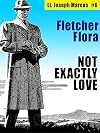
First appearing in the December 1965 issue of Alfred Hitchcock's Mystery Magazine, this fabulous short traditional mystery story from the pen of Fletcher Flora, features Lieutenant Joseph Marcus and his less than admiring paramour, Sergeant Bobo Fuller. Not Exactly Love show more is near perfect in all respects. The setting is a huge, multi-level library where the body of Abby Randal has been discovered at one of the upper stacks by the very attractive librarian Lena Hays. Henry Busch and Lonnie Beckett were present as well, but no one seems to have seen or heard anything. Complicating matters is the fact that one of them had dated Abby for a while, and he’s now engaged to Lena. And there’s an assistant professor who was tutoring her at university who may or may not have been linked to Abby romantically.
Just a terrific little fair play mystery, with the clues hidden in plain sight. The niftiest clue, is the one Abby left, but unless you’re familiar with libraries, it might get past you. What won’t get past you, is what a great writer Fletcher Flora was. His style is smooth and elegant, his stories always worth a read. This short story featuring Lieutenant Joseph Marcus is quite marvelous, and highly recommended for mystery lovers on the lookout for a great bedtime read. Fantastic! show less
First appearing in the December 1965 issue of Alfred Hitchcock's Mystery Magazine, this fabulous short traditional mystery story from the pen of Fletcher Flora, features Lieutenant Joseph Marcus and his less than admiring paramour, Sergeant Bobo Fuller. Not Exactly Love show more is near perfect in all respects. The setting is a huge, multi-level library where the body of Abby Randal has been discovered at one of the upper stacks by the very attractive librarian Lena Hays. Henry Busch and Lonnie Beckett were present as well, but no one seems to have seen or heard anything. Complicating matters is the fact that one of them had dated Abby for a while, and he’s now engaged to Lena. And there’s an assistant professor who was tutoring her at university who may or may not have been linked to Abby romantically.
Just a terrific little fair play mystery, with the clues hidden in plain sight. The niftiest clue, is the one Abby left, but unless you’re familiar with libraries, it might get past you. What won’t get past you, is what a great writer Fletcher Flora was. His style is smooth and elegant, his stories always worth a read. This short story featuring Lieutenant Joseph Marcus is quite marvelous, and highly recommended for mystery lovers on the lookout for a great bedtime read. Fantastic! show less

I normally tend to shy away from hardboiled stories set in the world of boxing, feeling it’s often used as a trope. It’s an easy place for a writer to drop a protagonist into a ready-made world of tough violence rather than be creative and have the violence come to the protagonist in another venue. When I came across this story eons ago in the first Fletcher Flora Megapack however, I read it because it was Flora and I’d read enough of this great writer to trust him. I was rewarded with show more a nifty little story I enjoyed. Having reread it a few nights ago I enjoyed it even more.
Rather than make this story — it first appeared in the February issue of Manhunt in 1954 — about the brutal world of boxing, Flora made it about love. Oh, don’t get me wrong, the corruption of that world is at the heart of this tale, with two opposing factions at odds over throwing a fight or not throwing a fight, with a big lug who’ll never be champ caught in the middle, but in the end it’s really a love story.
Jackie’s wife Peg is a tiny thing, a sweet angel that Jackie lives for. All she wants is a little motor court she has her eye on. But even with Jackie’s ring share from an upcoming fight with a green kid being groomed for a shot at the title, there’s no way they can afford it. Peg’s sweet nature and lack of complaining just makes it worse for Jackie, who loves her and doesn’t want to let her down.
Enter someone who wants him to take a dive, and has the dough to make that motor court possible. But then a guy with even more weight enters the picture, and he wants to teach someone a lesson about horning in on his territory. This sets up Peg going missing, and Jackie not sure which party is using her to get their way. It makes for a great ending, in a tight little story from the pen of Fletcher Flora, one of the real greats. Highly recommended. show less
Rather than make this story — it first appeared in the February issue of Manhunt in 1954 — about the brutal world of boxing, Flora made it about love. Oh, don’t get me wrong, the corruption of that world is at the heart of this tale, with two opposing factions at odds over throwing a fight or not throwing a fight, with a big lug who’ll never be champ caught in the middle, but in the end it’s really a love story.
Jackie’s wife Peg is a tiny thing, a sweet angel that Jackie lives for. All she wants is a little motor court she has her eye on. But even with Jackie’s ring share from an upcoming fight with a green kid being groomed for a shot at the title, there’s no way they can afford it. Peg’s sweet nature and lack of complaining just makes it worse for Jackie, who loves her and doesn’t want to let her down.
Enter someone who wants him to take a dive, and has the dough to make that motor court possible. But then a guy with even more weight enters the picture, and he wants to teach someone a lesson about horning in on his territory. This sets up Peg going missing, and Jackie not sure which party is using her to get their way. It makes for a great ending, in a tight little story from the pen of Fletcher Flora, one of the real greats. Highly recommended. show less
“She sat quite still, her only movement the folding of hands in her lap. In her great, grave eyes there was a slight darkening, as if a light had been turned down.” — Homicide and Gentlemen
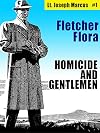
This stylish short mystery by Fletcher Flora introduced Lieutenant Joseph Marcus and Sergeant Bobo Fuller. We learn that Bobo is not the real first name of Fuller, but it’s what people have called him for so long, no one can remember his actual name. Flora sets the tone of their relationship in show more this one, which continued in subsequent short mystery stories featuring the aloof but very smart Lieutenant Marcus. It is that aloofness which Fuller perceives as smugness and taking on airs, and it’s one of the reasons Bobo, who is always two steps behind Marcus in figuring out the culprit in these fun shorts, dislikes his superior so much.
Ironically, as they make their way across a golf course by a lake, where a man has been murdered at some point between the hours of midnight and dawn, we learn that Lieutenant Marcus, who grew up poor and is still, on a Lieutenant’s salary, relatively poor, hates golf and all the snobbishness surrounding the rich man’s game. What was the young man doing on the golf course long before it was open — perhaps even before daylight? Why is his jacket a few feet away, lying neatly on the grass? More importantly, who put the bullet in him?
As Marcus begins backtracking the young man, he learns that he shared an apartment with another young man. Within the apartment they share, is a photograph of a lovely young woman that has an almost hypnotic effect on Marcus:
“It was a lovely face. A wistful face. Shaped like a small, lean heart. Big eyes with sadness in them. Passion in them? Passion, at least, in the soft lips set in the merest of smiles. In spite of the suggested passion, however, there was — Marcus groped for the word — a kind of mysticism. He was falling, in an instant, half in love.”
The inscription on the aforementioned photograph, three target pistols, and a strange aura which seems at once very logical to Marcus, but also quite insane, leads him to the truth in this short but atmospheric case for Lieutenant Joseph Marcus. First published in the April 1961 issue of Alfred Hitchcock’s Mystery Magazine, Homicide and Gentlemen has wonderful descriptions by Flora, and an unusual solution which make this Lt. Marcus outing memorable, despite its short length. Perfect for bedtime or a coffee break. Quality stuff. show less
This stylish short mystery by Fletcher Flora introduced Lieutenant Joseph Marcus and Sergeant Bobo Fuller. We learn that Bobo is not the real first name of Fuller, but it’s what people have called him for so long, no one can remember his actual name. Flora sets the tone of their relationship in show more this one, which continued in subsequent short mystery stories featuring the aloof but very smart Lieutenant Marcus. It is that aloofness which Fuller perceives as smugness and taking on airs, and it’s one of the reasons Bobo, who is always two steps behind Marcus in figuring out the culprit in these fun shorts, dislikes his superior so much.
Ironically, as they make their way across a golf course by a lake, where a man has been murdered at some point between the hours of midnight and dawn, we learn that Lieutenant Marcus, who grew up poor and is still, on a Lieutenant’s salary, relatively poor, hates golf and all the snobbishness surrounding the rich man’s game. What was the young man doing on the golf course long before it was open — perhaps even before daylight? Why is his jacket a few feet away, lying neatly on the grass? More importantly, who put the bullet in him?
As Marcus begins backtracking the young man, he learns that he shared an apartment with another young man. Within the apartment they share, is a photograph of a lovely young woman that has an almost hypnotic effect on Marcus:
“It was a lovely face. A wistful face. Shaped like a small, lean heart. Big eyes with sadness in them. Passion in them? Passion, at least, in the soft lips set in the merest of smiles. In spite of the suggested passion, however, there was — Marcus groped for the word — a kind of mysticism. He was falling, in an instant, half in love.”
The inscription on the aforementioned photograph, three target pistols, and a strange aura which seems at once very logical to Marcus, but also quite insane, leads him to the truth in this short but atmospheric case for Lieutenant Joseph Marcus. First published in the April 1961 issue of Alfred Hitchcock’s Mystery Magazine, Homicide and Gentlemen has wonderful descriptions by Flora, and an unusual solution which make this Lt. Marcus outing memorable, despite its short length. Perfect for bedtime or a coffee break. Quality stuff. show less
Lists
You May Also Like


Associated Authors
Statistics
- Works
- 50
- Also by
- 37
- Members
- 377
- Popularity
- #64,010
- Rating
- 3.7
- Reviews
- 26
- ISBNs
- 75
- Languages
- 5
- Favorited
- 1