
Benjamin Ginsberg
Author of We the People: An Introduction to American Politics [full]
About the Author
Benjamin Ginsberg is David Bernstein Professor of Political Science and Chair of the Center for Advanced Governmental Studies at Johns Hopkins University.
Image credit: Johns Hopkins University
Works by Benjamin Ginsberg
Politics by Other Means: Politicians, Prosecutors, and the Press from Watergate to Whitewater (1990) 60 copies
How the Jews Defeated Hitler: Exploding the Myth of Jewish Passivity in the Face of Nazism (2013) 25 copies
Associated Works
Tagged
Common Knowledge
- Gender
- male
Members
Reviews
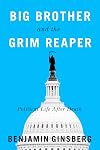
Comprehensive. Dense. Short. Slightly Lacking Bibliography. This is an utterly fascinating look at the history and current issues involving political (and thus legal) life after death, in all kinds of different ways. Some ways you have probably heard of (Wills, Advanced Directives, etc). Other ways may be new to you, including the idea of posthumous reproduction. Everything is covered in a sort of "primer" manner - we get a broad overview, a few specific examples, a decent discussion of the show more overall subfield... and then we're moving... and we're moving. Which is to be somewhat expected given the overall brevity of the book and just how many different posthumous topics Ginsberg manages to discuss at all.
Indeed, the only weakness here is simply that at 13% bibliography, I simply expect at least a *touch* more - even, perhaps, as low as 15% (on an already expanded window that was once 20-30%).
Beyond this particular quibble, read this book - you're going to learn a lot and have a lot to think about. I know I did and do.
Very much recommended. show less
Indeed, the only weakness here is simply that at 13% bibliography, I simply expect at least a *touch* more - even, perhaps, as low as 15% (on an already expanded window that was once 20-30%).
Beyond this particular quibble, read this book - you're going to learn a lot and have a lot to think about. I know I did and do.
Very much recommended. show less
The Fall of the Faculty: The Rise of the All-Administrative University and Why It Matters by Benjamin Ginsberg
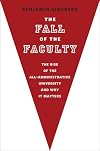
A book that should be required reading for university and college faculty and students. This book does give a good insight into the rise of the administrative class in running American universities and colleges, which has indeed resulted in the "fall of the faculty" in terms of control of how ever-more scarce funds are allocated.
The book does have its faults -- the tone is at times sarcastic and even bitter, but the facts presented (and carefully documented) does seem to warrant that level show more of sarcasm.
I would really like to see more reviews of this book posted on LibraryThing. show less
The book does have its faults -- the tone is at times sarcastic and even bitter, but the facts presented (and carefully documented) does seem to warrant that level show more of sarcasm.
I would really like to see more reviews of this book posted on LibraryThing. show less
The war between the administration and the faculty at colleges and universities across the United States is not unfamiliar, yet many now argue that the administration will soon dominate faculty interests indefinitely. The Fall of the Faculty outlines the rise of the administration and how its growing presence is problematic for faculty members in terms of curriculum plans and research opportunities. Administrators are constantly transforming collegiate academia to include “life skills” show more curriculum, which faculty find less rigorous and depleting. Although seemingly biased in his argument, Benjamin Ginsberg discusses how society can alter the system of higher education so that faculty can regain their voice in curriculum policy. show less
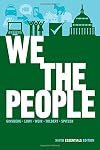
Standard College level textbook - an introduction into American Politics. I bought it mainly as a reference book which it does an adequate job.
It's compact size is perfect for desktop reference and review. In addition to having copies of the Declaration of Independence and Constitution, the textbook also has review questions for the reader to challenge themselves.
It extensively covers:
** Citizenship and Government - how government affects our lives, our identities, our ideals
** Our show more Founding and the Constitution - How Political conflicts shaped the first founding, how the failure of the articles attributed to the second founding, what the Constitution created, and how difficult ratification was
** Federalism - How it shaped American politics and how the definition changed radically over time
** Civil Liberties and Civil Rights - Students will be surprised to learn that those who opposed the Constitution paved the way for the Bill of Rights. This section also provides coverage of the first amendment, how the second amendment protects gun owners, how criminals are afforded due process by the constitution, the right to privacy, Civil Rights protections and struggles, and online privacy is also covered.
** The Role of the Media in Society as well as social media
** Political Parties, Participation and Elections - how political parties rose from the electoral process, the two-party system, political participation in traditional and online forms, as well as explaining why political party loyalty is important
** Interest Groups - This section also covers pluralist and elitist views, the increase of special interest groups, as well as the strategies used
** Congress - how the congress represents the people, how it is shaped by party, explanation of how a bill becomes law, the factors that leads congress to their decisions, and the other roles that congress has
** The Presidency - where the President gets his/her powers, institutional resources
** Bureaucracy - how it improves efficiency, how the Executive Branch is organized, and who controls the bureaucracy
** Federal Courts - how the legal system settles disputes, the different courts and what cases they hear, the Supreme Court and its powers
** Domestic Policy - Public Policy = Government Coercion, how the techniques of making policy are control, social policy and welfare, poverty, and social spending is also explored.
** Foreign Policy - this section ends the book covering: security based on military strength, how American foreign policy is shaped by both Government and non-Government actors, the tools of American Foreign policy, and using technology to topple governments citing the Case of Egypt.
For pleasure reading - it is a boring read. However, for review and reference - it does the job it was written to do. show less
It's compact size is perfect for desktop reference and review. In addition to having copies of the Declaration of Independence and Constitution, the textbook also has review questions for the reader to challenge themselves.
It extensively covers:
** Citizenship and Government - how government affects our lives, our identities, our ideals
** Our show more Founding and the Constitution - How Political conflicts shaped the first founding, how the failure of the articles attributed to the second founding, what the Constitution created, and how difficult ratification was
** Federalism - How it shaped American politics and how the definition changed radically over time
** Civil Liberties and Civil Rights - Students will be surprised to learn that those who opposed the Constitution paved the way for the Bill of Rights. This section also provides coverage of the first amendment, how the second amendment protects gun owners, how criminals are afforded due process by the constitution, the right to privacy, Civil Rights protections and struggles, and online privacy is also covered.
** The Role of the Media in Society as well as social media
** Political Parties, Participation and Elections - how political parties rose from the electoral process, the two-party system, political participation in traditional and online forms, as well as explaining why political party loyalty is important
** Interest Groups - This section also covers pluralist and elitist views, the increase of special interest groups, as well as the strategies used
** Congress - how the congress represents the people, how it is shaped by party, explanation of how a bill becomes law, the factors that leads congress to their decisions, and the other roles that congress has
** The Presidency - where the President gets his/her powers, institutional resources
** Bureaucracy - how it improves efficiency, how the Executive Branch is organized, and who controls the bureaucracy
** Federal Courts - how the legal system settles disputes, the different courts and what cases they hear, the Supreme Court and its powers
** Domestic Policy - Public Policy = Government Coercion, how the techniques of making policy are control, social policy and welfare, poverty, and social spending is also explored.
** Foreign Policy - this section ends the book covering: security based on military strength, how American foreign policy is shaped by both Government and non-Government actors, the tools of American Foreign policy, and using technology to topple governments citing the Case of Egypt.
For pleasure reading - it is a boring read. However, for review and reference - it does the job it was written to do. show less
You May Also Like


Associated Authors
Statistics
- Works
- 31
- Also by
- 1
- Members
- 1,046
- Popularity
- #24,627
- Rating
- 3.5
- Reviews
- 11
- ISBNs
- 214
- Languages
- 1