
Robert T. Foley
Author of The Somme: An Eyewitness History
About the Author
Disambiguation Notice:
Full name: Robert Thomas Foley
Works by Robert T. Foley
German Strategy and the Path to Verdun: Erich von Falkenhayn and the Development of Attrition, 1870–1916 (2005) 22 copies, 1 review
Associated Works
Desperta Ferro Contemporánea. Verdún 1916. — Contributor — 2 copies
1914, el estallido de la Gran Guerra — Contributor — 1 copy
Tagged
Common Knowledge
- Canonical name
- Foley, Robert T.
- Birthdate
- 1969-12-02
- Gender
- male
- Occupations
- military historian
- Disambiguation notice
- Full name: Robert Thomas Foley
Members
Reviews
German Strategy and the Path to Verdun: Erich von Falkenhayn and the Development of Attrition, 1870-1916 (Cambridge Military Histories) by Robert T. Foley
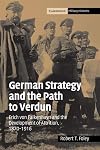
The title says it all, as the author examines how German military thinkers prior to the Great War tried to intellectually cope with the realization that the strategy of decisive victory that created the Second Reich was unlikely to be viable in the future, and how Erich von Falkenhayn attempted to create an attrition-based strategy that would allow for a negotiated settlement. The essentially problem remained that Germany was poorly placed to win a total war when the weight of resources was show more against them, despite Falkenhayn's efforts to break the morale of the Entente powers. Instead, it was Falkenhayn's own morale that was broken, meaning that the command duo of Hindenburg and Ludendorff were empowered to try and achieve victory in the old style, with disastrous results for Berlin.
These general trends are not exactly news, but what informs this book is access to archival material once thought permanently lost, so one now has a better sense of the process by which policy was generated.
Also, one has a better sense of the situation in which Falkenhayn operated, in which he tried to drag a German officer corps towards new truths, only to be undercut by both his distinct lack of respect for his foreign opposition and his poor skills of persuasion.
If I mark down this book for anything it's that the author really can't connect the pre-war strategic debate to the choices that Falkenhayn made, but that is probably the unfortunate result of Falkenhayn's over-secretive nature; he would be the last man to admit the influence of another on his thinking. show less
These general trends are not exactly news, but what informs this book is access to archival material once thought permanently lost, so one now has a better sense of the process by which policy was generated.
Also, one has a better sense of the situation in which Falkenhayn operated, in which he tried to drag a German officer corps towards new truths, only to be undercut by both his distinct lack of respect for his foreign opposition and his poor skills of persuasion.
If I mark down this book for anything it's that the author really can't connect the pre-war strategic debate to the choices that Falkenhayn made, but that is probably the unfortunate result of Falkenhayn's over-secretive nature; he would be the last man to admit the influence of another on his thinking. show less

Anyone with an interest in the first world war has to read this book. An anthology of eyewitness accounts of some of the most atrocious battle conditions ever seen. And the story is told from all angles, not just from the trenches. Nearly 100 years on, some of the narrative can be dull, but the overwhelming feeling is that we must remember them.

Lists
Folio Society (1)
Awards

You May Also Like
Associated Authors
Statistics
- Works
- 2
- Also by
- 3
- Members
- 108
- Popularity
- #179,296
- Rating
- 3.8
- Reviews
- 3
- ISBNs
- 3