
Kim Zupan
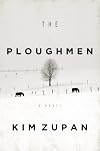
Author of The Ploughmen
About the Author
Image credit: Kim Zupan
Works by Kim Zupan
Associated Works
Tagged
Common Knowledge
- Gender
- male
- Education
- University of Montana (MFA)
- Occupations
- teacher (Carpentry)
- Birthplace
- Montana, USA
- Places of residence
- Missoula
Members
Reviews
A stark story written beautifully.
As other reviewers have pointed out, the author does use “million-dollar words,” but I think the elevation of the language is as much a part of the plot as the actual story - here are two men on the harshest landscape they will ever experience, mentally and physically, fighting elements set against them both in different ways, and to tell the story while also using this dissociative language helps the reader feel that disconnect in both characters that show more drives each his separate way. show less
As other reviewers have pointed out, the author does use “million-dollar words,” but I think the elevation of the language is as much a part of the plot as the actual story - here are two men on the harshest landscape they will ever experience, mentally and physically, fighting elements set against them both in different ways, and to tell the story while also using this dissociative language helps the reader feel that disconnect in both characters that show more drives each his separate way. show less
Kim Zupan's first novel, THE PLOUGHMEN, is one of those fiction debuts that just seems to appear suddenly out of nowhere and then proceeds to quietly blow you away. It's one of those "Holy-crap-this-guy-can-write!" kinda books.
I'm not even sure how to adequately describe Zupan's book. On the surface it's about two men as unalike as two men can be: Valentine Millimaki, a young deputy sheriff and John Gload, an aging cold-blooded killer. And yet there are similarities. Both lost parents at a show more young age, both came from poor farming backgrounds (hence the title). Beyond these things, however, they have lived vastly different lives. Val is a thinker of deep thoughts, a man of conscience. Gload is an opportunistic, passionless career murderer who lives quietly in a neglected apple orchard on a dead-end road outside Great Falls. Val is the night jailer, tasked with watching Gload as he awaits trial. He is also (with his dog, Tom) the sheriff's department's expert tracker of missing persons, another unhappy duty, as few are ever found alive. The odd hours and morbid consequences of these duties combine to ruin his marriage. Val's boss, the sheriff, sees it happening and, in trying to offer counsel, gives a pretty concise description of the difficulties of marriage, particularly for a police officer -
"The department is a testing ground for marital Darwinism, Val. This is what we do, one might say what we love to do, but it is frequently opposed to, or at least makes difficult the husbanding of marriage ... Maybe it's just luck. Or chance, whatever you choose to call it. I've seen it a hundred times. Who you marry just turns out to be some other person after a while. Grows up into somebody else. Not better or worse. Just different."
Besides this overworked wise sheriff, Zupan creates other less likeable secondary characters: deputies Dobek and Wexler. The latter, a cocky, preening ambitious little prick, will bring to mind that sleazy little assistant jailer from THE GREEN MILE.
And there are the women too: Val's mother, his wife, and even Gload's "wife," all victims, finally, of various kinds of failure, societal roles, isolation and loneliness.
There is a recurring motif of apples here. Val's knowledge of and fondness for apples, and the ruined orchard that surrounds Gload's house, an orchard containing bones and secrets. One thinks of Eden and the tree of knowledge of good and evil, the loss of paradise. The end of innocence.
Gload is a piece of work: huge, brutal,conscienceless, he has killed multiple times over a period of nearly sixty years. And he is thorough in covering his tracks and in rendering his victims unidentifiable through methodical mutilation. There is a passage here where Gload asks Val the meaning of a word used to describe him during his trial: turpitude. Val looks it up for him and tells him, "depravity, baseness." Perhaps. And yet there is something in the man Gload that fascinates and compels. Val feels it, and so did I. And therein lies the magic of this book. Zupan is a master of language, of characterization and description.
Other books which came to mind as I read this one were John Smolens' suspenseful COLD, about another lawman (also a Finn, Del Maki) pursuing an escaped prisoner across the unforgiving winter landscape of Michigan's Upper Peninsula; and Amanda Coplin's beautifully crafted western novel, THE ORCHARDIST.
THE PLOUGHMEN is simply one teriffic novel. Definitely one of those "holy crap" discoveries that booklovers are always on the lookout for. I will pester all my reader friends about this book. My highest recommendation. show less
I'm not even sure how to adequately describe Zupan's book. On the surface it's about two men as unalike as two men can be: Valentine Millimaki, a young deputy sheriff and John Gload, an aging cold-blooded killer. And yet there are similarities. Both lost parents at a show more young age, both came from poor farming backgrounds (hence the title). Beyond these things, however, they have lived vastly different lives. Val is a thinker of deep thoughts, a man of conscience. Gload is an opportunistic, passionless career murderer who lives quietly in a neglected apple orchard on a dead-end road outside Great Falls. Val is the night jailer, tasked with watching Gload as he awaits trial. He is also (with his dog, Tom) the sheriff's department's expert tracker of missing persons, another unhappy duty, as few are ever found alive. The odd hours and morbid consequences of these duties combine to ruin his marriage. Val's boss, the sheriff, sees it happening and, in trying to offer counsel, gives a pretty concise description of the difficulties of marriage, particularly for a police officer -
"The department is a testing ground for marital Darwinism, Val. This is what we do, one might say what we love to do, but it is frequently opposed to, or at least makes difficult the husbanding of marriage ... Maybe it's just luck. Or chance, whatever you choose to call it. I've seen it a hundred times. Who you marry just turns out to be some other person after a while. Grows up into somebody else. Not better or worse. Just different."
Besides this overworked wise sheriff, Zupan creates other less likeable secondary characters: deputies Dobek and Wexler. The latter, a cocky, preening ambitious little prick, will bring to mind that sleazy little assistant jailer from THE GREEN MILE.
And there are the women too: Val's mother, his wife, and even Gload's "wife," all victims, finally, of various kinds of failure, societal roles, isolation and loneliness.
There is a recurring motif of apples here. Val's knowledge of and fondness for apples, and the ruined orchard that surrounds Gload's house, an orchard containing bones and secrets. One thinks of Eden and the tree of knowledge of good and evil, the loss of paradise. The end of innocence.
Gload is a piece of work: huge, brutal,conscienceless, he has killed multiple times over a period of nearly sixty years. And he is thorough in covering his tracks and in rendering his victims unidentifiable through methodical mutilation. There is a passage here where Gload asks Val the meaning of a word used to describe him during his trial: turpitude. Val looks it up for him and tells him, "depravity, baseness." Perhaps. And yet there is something in the man Gload that fascinates and compels. Val feels it, and so did I. And therein lies the magic of this book. Zupan is a master of language, of characterization and description.
Other books which came to mind as I read this one were John Smolens' suspenseful COLD, about another lawman (also a Finn, Del Maki) pursuing an escaped prisoner across the unforgiving winter landscape of Michigan's Upper Peninsula; and Amanda Coplin's beautifully crafted western novel, THE ORCHARDIST.
THE PLOUGHMEN is simply one teriffic novel. Definitely one of those "holy crap" discoveries that booklovers are always on the lookout for. I will pester all my reader friends about this book. My highest recommendation. show less
 This review was written for LibraryThing Early Reviewers.
As luck would have it I read this book on a trip to western Montana, including Missoula. The novel is set around Missoula, and the landscape becomes almost a character in its own right. This novel is amazing, tracking the interaction between a sheriff and killer. The murderer especially crackles off the page, the most haunting character I've read since Anton Chigurh in McCarthy's _No Country for Old Men_.
The sheriff's introspection as the relationship between the two men develops is show more especially well done. I couldn't stop reading, finishing after midnight, regretting it all the while as the pages remaining dwindled. I didn't want this book to end. show less
The sheriff's introspection as the relationship between the two men develops is show more especially well done. I couldn't stop reading, finishing after midnight, regretting it all the while as the pages remaining dwindled. I didn't want this book to end. show less
This review was written for LibraryThing Early Reviewers.I made a mistake. When I first received this book, I thought it was a Western based on the premise originally put forth by Elmore Leonard's "3:10 to Yuma" - a peculiar, dynamic relationship between a prisoner and the deputy assigned to guard him. I gave myself four days to read, think about and review this book, not realizing that I had badly misjudged the book from the start. The 256 pages of the novel need to be savored carefully over time, and any inclination to project ideas of black- show more and white-hatted cowboys into the story needs to be put aside.
The Ploughmen is a work of literary-fiction set in Montana that requires due diligence and undistracted contemplation. Yes, it does feature "a peculiar, dynamic relationship between a prisoner and the deputy assigned to guard him;" but the pages are filled with descriptive prose, a slow rhythmic pace punctuated infrequently by stark, brutal acts, and characters of concretized mindsets. Much of the book is devoted to portraying the landscape: clouds (cirrus clouds, cumulus clouds, gravid clouds, immane clouds...) and birds. The landscape in its graphic harshness wields its presence in the narrative like a weapon unto itself. The careful tempering of the story into measured passages forces the reader to slow down and take in the seemingly-portentous lines and their possible implications. It is against this landscape that the characters find themselves trapped as players upon a stage from which there is no exit. Val Millimaki is the deputy who cannot adapt to change. He holes himself up in his cabin with his memories as his wife escapes and his marriage crumbles. Gload, on the other hand, is the older "plough man" who realizes that nothing really changes once you have the perspective born of life experience. Both men steadfastly hold on to their respective core philosophies of idealism and nihilism at great personal cost, and by adhering to their personal convictions, ultimately both reap what they have sown.
Some of the language is archaic which may speak of a certain intellectual pretentiousness on the part of the author; but the the overall sense of craftsmanship, of planing and shaping the story to reveal the grain and beauty of both the the land and the men, is undeniable. show less
The Ploughmen is a work of literary-fiction set in Montana that requires due diligence and undistracted contemplation. Yes, it does feature "a peculiar, dynamic relationship between a prisoner and the deputy assigned to guard him;" but the pages are filled with descriptive prose, a slow rhythmic pace punctuated infrequently by stark, brutal acts, and characters of concretized mindsets. Much of the book is devoted to portraying the landscape: clouds (cirrus clouds, cumulus clouds, gravid clouds, immane clouds...) and birds. The landscape in its graphic harshness wields its presence in the narrative like a weapon unto itself. The careful tempering of the story into measured passages forces the reader to slow down and take in the seemingly-portentous lines and their possible implications. It is against this landscape that the characters find themselves trapped as players upon a stage from which there is no exit. Val Millimaki is the deputy who cannot adapt to change. He holes himself up in his cabin with his memories as his wife escapes and his marriage crumbles. Gload, on the other hand, is the older "plough man" who realizes that nothing really changes once you have the perspective born of life experience. Both men steadfastly hold on to their respective core philosophies of idealism and nihilism at great personal cost, and by adhering to their personal convictions, ultimately both reap what they have sown.
Some of the language is archaic which may speak of a certain intellectual pretentiousness on the part of the author; but the the overall sense of craftsmanship, of planing and shaping the story to reveal the grain and beauty of both the the land and the men, is undeniable. show less
This review was written for LibraryThing Early Reviewers.Lists
Awards


You May Also Like


Associated Authors
Statistics
- Works
- 3
- Also by
- 1
- Members
- 282
- Popularity
- #82,538
- Rating
- 3.8
- Reviews
- 30
- ISBNs
- 19
- Languages
- 2
