
Coleen Salley (1929–2008)
Author of Epossumondas
About the Author
Children's author Coleen Salley graduated from Louisiana State University. She taught at the University of New Orleans for 30 years and retired as Distinguished Professor of Children's Literature. She wrote four books during her lifetime and founded the Coleen Salley-Bill Morris Literacy show more Foundation. She died on September 16, 2008 at the age of 79. (Bowker Author Biography) show less
Series
Works by Coleen Salley
Tagged
Common Knowledge
- Other names
- Salley, Coleen Cole
- Birthdate
- 1929-08-07
- Date of death
- 2008-09-16
- Gender
- female
- Occupations
- professor
storyteller - Nationality
- USA
- Places of residence
- New Orleans, Louisiana, USA
- Associated Place (for map)
- Louisiana, USA
Members
Reviews

Epossumondas is determinedly literal in this humorous picture-book from New Orleans storyteller Coleen Salley, the first of four such stories - subsequent titles include: Why Epossumondas Has No Hair on His Tail, Epossumondas Saves the Day and Epossumondas Plays Possum - to chronicle his (mis)adventures. Continually bringing home presents from his auntie's house, the didelphine hero (or should that be trickster?) of this tale follows his mama's instructions to the letter, but as said show more instructions are always delivered after the fact, and applied the next time around, they never quite work out, resulting in myriad disasters, from crumbled cake to melted butter...
When I see the name "Epaminondas," I think of the Theban general who brought down the Spartans (what can I say? I'm a student of classical antiquity), so I was surprised to discover, from Salley's afterword, that there is a folk-hero with this same name, from the southern tradition. I was even more surprised to discover, from my own research online, that this "noodlehead" figure - a folkloric character-type that gets caught in humorous misunderstandings (think the Jewish Fools of Chelm or the English Men of Gotham) - has featured in a series of children's stories, beginning with Sarah Cone Bryant's 1907 Epaminondas and His Auntie, that have been criticized as being egregiously racist. Somehow, although being very familiar with the controversy surrounding The Story of Little Black Sambo, I had been unaware of this similarly problematic tale.
What isn't clear to me, either from Salley's note, or from my reading elsewhere, is whether Bryant was the first to write a story featuring this character, and whether she took him from the African-American folk tradition (as Joel Chandler Harris did, with his tales of Uncle Remus). In any case, given the troubling history of this character (apparently Fannie Lou Hamer herself once criticized the inclusion of the Epaminondas figure in books for young African-American students), I can see why Salley chose to change him from a boy to an opossum. The story itself, in this form, is amusing, and will entertain young readers who enjoy tales of literalistic misdirection, ala Amelia Bedelia or Mole And Shrew. show less
When I see the name "Epaminondas," I think of the Theban general who brought down the Spartans (what can I say? I'm a student of classical antiquity), so I was surprised to discover, from Salley's afterword, that there is a folk-hero with this same name, from the southern tradition. I was even more surprised to discover, from my own research online, that this "noodlehead" figure - a folkloric character-type that gets caught in humorous misunderstandings (think the Jewish Fools of Chelm or the English Men of Gotham) - has featured in a series of children's stories, beginning with Sarah Cone Bryant's 1907 Epaminondas and His Auntie, that have been criticized as being egregiously racist. Somehow, although being very familiar with the controversy surrounding The Story of Little Black Sambo, I had been unaware of this similarly problematic tale.
What isn't clear to me, either from Salley's note, or from my reading elsewhere, is whether Bryant was the first to write a story featuring this character, and whether she took him from the African-American folk tradition (as Joel Chandler Harris did, with his tales of Uncle Remus). In any case, given the troubling history of this character (apparently Fannie Lou Hamer herself once criticized the inclusion of the Epaminondas figure in books for young African-American students), I can see why Salley chose to change him from a boy to an opossum. The story itself, in this form, is amusing, and will entertain young readers who enjoy tales of literalistic misdirection, ala Amelia Bedelia or Mole And Shrew. show less
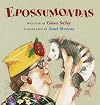
Knowing that Ms. Salley was a fabulous storyteller, I read this book expecting entertainment. She truly lived up to my expectations. Epossumondas is her own twist on a southern noodlehead tale of Epaminondas, a character who takes words literally. Epossumondas ruins quite a few things with his lack of understanding, but he still remains his mother's "sweet little patootie". My favorite line throughout the story was "you don't have the sense you were born with". This was a delightful read!
This delightful tale is just as fun to act out and recite from memory as it is to read it and giggle with the illustrations. Famed New Orleanian storyteller Colleen Salley puts a spin on the southern folktale and makes it her own. The characters speak in local lingo and are humorous in a believable way. Young Epossumondas will remind all readers of a goofy brother, friend, or cousin who just couldn't quite follow directions no matter how hard he tried. A true New Orleans/Louisiana classic.
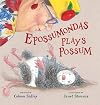
(easy, Louisiana) Epossumondas is a not a naughty opposum, but a forgetful one. So when his mama warns him about getting lost in the swamp and being picked up by a loup-garou, he forgets all about the warning at the sight of the first butterfly that comes along. He follow the butterfuly into the swamp and before you know it, he is lost. A myriad of creatures try to devour little possum, but he follows his true possum nature and plays dead. He wonders if each critter is the loup-garou but show more discovers that they are not. Each critter discards him as dinner precisely because he is playing dead. But when a big old swamp buzzard picks him up and possum is tickled by his claws, he can't help but not play dead! The buzzard releases him for just that reason, "I don't eat no live meat!", and possum is freed. He finds his way home and realizes that after fending off all those swamp critters just being himself, he doesn't need to be afraid of any loup-garou. This book is a fun way of exploring the Louisiana legend of the loup-garou as well as Louisiana swamplife. At the end of the book in the author's note loup-garou legend is further defined as well as the possum's survival habit of "playing dead". show less
Awards


You May Also Like


Associated Authors
Statistics
- Works
- 5
- Members
- 736
- Popularity
- #34,514
- Rating
- 3.7
- Reviews
- 47
- ISBNs
- 48