
Esther Friend (1907–1991)
Author of Little Red Riding Hood (A Rand McNally Junior Elf Book)
About the Author
Works by Esther Friend
Associated Works
Safe All Day with the Happies: Simple Stories of Safety at Home and Outdoors (1940) — Illustrator — 4 copies
The Great Big Noise — Illustrator — 1 copy
It Is Fun to Be Five — Illustrator — 1 copy
Tagged
Common Knowledge
- Other names
- Lichtenstein, Esther
- Birthdate
- 1907
- Date of death
- 1991-12-13
- Gender
- female
- Occupations
- artist
illustrator
childrens book illustrator - Nationality
- USA
- Birthplace
- Hinsdale, Illinois, USA
- Associated Place (for map)
- Illinois, USA
Members
Reviews
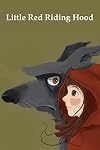
European fairytale “Little Red Riding Hood,” which is originally by Charles Perrault, has been, like all fairytales, retold, rewritten, modified, and adapted numerous times. Although the story has changed slightly based on who tells it, the main message or moral always remains the same: don’t talk to strangers! Kate Friend, the author of this “Little Red Riding Hood” adaptation, uses literary elements, such as illustrations, word choice, and descriptive language to convey this show more message or moral that has been around for over 200 years.
The illustrations in this story, created by Mateya Arkova, help convey the story’s message in a couple of ways. First, the illustrations are brightly colored and cover the entire page. This immediately catches the reader’s eye and engages him or her in the story. I believe this is an important element because a reader must be fully engaged and interested in a story to truly come away with its message or moral. Secondly, the illustrations are very detailed, which helps the reader connect to the emotions Little Red Riding Hood experiences throughout the story. For example, when the Wolf jumps out of bed to attack Little Red Riding Hood, the illustrations provide a clear and detailed look of surprise and fear in Little Red Riding Hood’s body language and in her facial expressions. I feel that having illustrations with such emotional detail gives the reader the ability to genuinely understand why one should never talk to strangers and the dangers of talking to strangers because it's clear to see the consequences, which is the true moral and message of this story.
Along with the effective illustrations, the author uses simple, easy to understand language throughout the story. Using simple language creates a very straightforward story, thus providing the reader with the opportunity to easily follow along and clearly comprehend the possible consequences of talking to strangers, which ultimately leads the reader to fully grasp the story’s message. Although the language is simple and straightforward, it is still very descriptive. For instance, the author depicts the Wolf taking the Grandmother’s identity with the text, “Then he put on her flowery nightdress and her lacy nightcap and dusted himself with flour to hide his brown fur.” This descriptive language paints a vivid image in the reader’s mind and connects him or her more deeply to the story, which helps the reader grasp the story’s moral or message. I think this element is vital to conveying a story’s message or moral because I believe the use of descriptive language fosters a reader’s engagement and interest in a story, which is necessary in helping the reader comprehend the message.
For hundreds of years, Charles Perrault’s story has been retold and adapted into many great stories and some not so great stories, but nonetheless, the story has never lost its important message or moral: don’t talk to strangers! Through the use of literary elements, such as illustrations, word choice, and descriptive language, Kate Friend was able to convey this classic fairytale’s moral in an adaption that is truly wonderful and fun to read. show less
The illustrations in this story, created by Mateya Arkova, help convey the story’s message in a couple of ways. First, the illustrations are brightly colored and cover the entire page. This immediately catches the reader’s eye and engages him or her in the story. I believe this is an important element because a reader must be fully engaged and interested in a story to truly come away with its message or moral. Secondly, the illustrations are very detailed, which helps the reader connect to the emotions Little Red Riding Hood experiences throughout the story. For example, when the Wolf jumps out of bed to attack Little Red Riding Hood, the illustrations provide a clear and detailed look of surprise and fear in Little Red Riding Hood’s body language and in her facial expressions. I feel that having illustrations with such emotional detail gives the reader the ability to genuinely understand why one should never talk to strangers and the dangers of talking to strangers because it's clear to see the consequences, which is the true moral and message of this story.
Along with the effective illustrations, the author uses simple, easy to understand language throughout the story. Using simple language creates a very straightforward story, thus providing the reader with the opportunity to easily follow along and clearly comprehend the possible consequences of talking to strangers, which ultimately leads the reader to fully grasp the story’s message. Although the language is simple and straightforward, it is still very descriptive. For instance, the author depicts the Wolf taking the Grandmother’s identity with the text, “Then he put on her flowery nightdress and her lacy nightcap and dusted himself with flour to hide his brown fur.” This descriptive language paints a vivid image in the reader’s mind and connects him or her more deeply to the story, which helps the reader grasp the story’s moral or message. I think this element is vital to conveying a story’s message or moral because I believe the use of descriptive language fosters a reader’s engagement and interest in a story, which is necessary in helping the reader comprehend the message.
For hundreds of years, Charles Perrault’s story has been retold and adapted into many great stories and some not so great stories, but nonetheless, the story has never lost its important message or moral: don’t talk to strangers! Through the use of literary elements, such as illustrations, word choice, and descriptive language, Kate Friend was able to convey this classic fairytale’s moral in an adaption that is truly wonderful and fun to read. show less
You May Also Like
Associated Authors
Statistics
- Works
- 4
- Also by
- 25
- Members
- 165
- Popularity
- #128,475
- Rating
- 3.4
- Reviews
- 1
- ISBNs
- 2