
Johnny Frisbie
Author of Puka-Puka
About the Author
Works by Johnny Frisbie
Associated Works
Tagged
Common Knowledge
- Other names
- Frisbie, Florence Ngatokura
Hebenstreit, Johnny Frisbie - Birthdate
- 1932
- Gender
- female
- Relationships
- Frisbie, Robert Dean (daughter)
- Nationality
- Cook Islands
- Map Location
- New Zealand
Members
Reviews
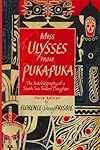
A very interesting read, this is a contemporary account of life in the Cook Islands and some other parts of Polynesia in the 1940s, which is unusual for being written not just by a native Cook Islander, but by one who was a young teenager at the time. Johnny Frisbie was born to a Cook Islander mother (who died while still quite young from TB) and a white American father, and was raised in Polynesia but also somewhat between two worlds. There is plenty of detail and incident here—the family show more survives a hurricane alone on an isolated atoll, for instance—but I was also fascinated by Frisbie's apparent blind spots. It's perhaps not surprising that a child wouldn't yet understand all the ways that her beloved father was clearly a tremendous asshole, but my jaw dropped at some of the shit he pulled. Equally, it's clear that Frisbie's father raised her to believe a lot of patronising (at best) BS about Polynesian cultures. I'd be fascinated to know how she and her siblings viewed all of this with hindsight. show less
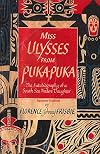
Written when the author was 13 years-old, Miss Ulysses (the title comes from her wanderings in the South Seas in a manner akin to what she imagined was the fate of Ulysses from her reading of Homer's The Odyssey) is a powerful autobiography. Florence (Johnny) Frisbie, of course, is the daughter of the legendary American South Seas' author, Robert Dean Frisbie (RDF), and his Polynesian wife, Nga. And RDF provided considerable help in translating and polishing this work when it was published. show more Nevertheless, Johnny's voice is an authentic one, and provides a unique perspective of a time when the South Seas islands were becoming forever changed--the period right before and during World War II. She also continues to provide us with perhaps one of the last living links to that time in which American authors in the South Seas thrived--James Norman Hall, Charles B. Nordhoff, Jack London, and Frederick O'Brien.
Initially, I was most interested in this autobiography for another reason. Having read some of RDF's works about his life in Polynesia, I was intrigued with how his young daughter would describe some of the same events. What perspective would she take? Would she illuminate anything special?
The answer to those questions was an unexpected one. For Johnny most illuninated a side of RDF that I had not seen in his own writings or writings about him by others. Johnny depicts a man desperate to carry out his late wife's last commandment: to keep the family together. This, despite conflicts with Polynesian relatives who wanted to adopt the children, his poverty, and his ongoing weakened health--RDF suffered from tuberculosis.
When RDF describes himself in his writing, he never really lets on about his financial and health fears as much as Johnny does in Miss Ulysses. But he does occasionally question himself about putting his family in physical danger--something hidden from the children until the gravest danger of all manifests itself, the enormous hurricane that nearly kills them all on Savarrow Island. Meanwhile, RDF's close friend, confident, and supporter, James Norman Hall, when he wrote about RDF, every now and then tended to describe him not only as an eccentric but a bit of a ne'er-do-well forever chasing after a dream he was not really matched to meet--becoming a great novelist. There was a touch of the comic attached to RDF. For Johnny, it was much more a touch of the tragic that dwelt within her father.
Johnny Frisbie has lived a long and adventuresome life. Perhaps it is to make up for so many of the tragedies that afflicted her and her family early on. There was the death of her mother, Nga, at a young age and, then, less than ten years later, the death of her father, RDF, when she was 16 years-old. Immediately thereafter, the family was separated, although subsequently mostly reunited. For this edition, there is an epilogue that does not appear in the first edition. In it, the 85 year-old Johnny summarizes the fate of the family and gives insight into her own perseverance, as she looks back over time to the death of her father 70 years ago, now. show less
Initially, I was most interested in this autobiography for another reason. Having read some of RDF's works about his life in Polynesia, I was intrigued with how his young daughter would describe some of the same events. What perspective would she take? Would she illuminate anything special?
The answer to those questions was an unexpected one. For Johnny most illuninated a side of RDF that I had not seen in his own writings or writings about him by others. Johnny depicts a man desperate to carry out his late wife's last commandment: to keep the family together. This, despite conflicts with Polynesian relatives who wanted to adopt the children, his poverty, and his ongoing weakened health--RDF suffered from tuberculosis.
When RDF describes himself in his writing, he never really lets on about his financial and health fears as much as Johnny does in Miss Ulysses. But he does occasionally question himself about putting his family in physical danger--something hidden from the children until the gravest danger of all manifests itself, the enormous hurricane that nearly kills them all on Savarrow Island. Meanwhile, RDF's close friend, confident, and supporter, James Norman Hall, when he wrote about RDF, every now and then tended to describe him not only as an eccentric but a bit of a ne'er-do-well forever chasing after a dream he was not really matched to meet--becoming a great novelist. There was a touch of the comic attached to RDF. For Johnny, it was much more a touch of the tragic that dwelt within her father.
Johnny Frisbie has lived a long and adventuresome life. Perhaps it is to make up for so many of the tragedies that afflicted her and her family early on. There was the death of her mother, Nga, at a young age and, then, less than ten years later, the death of her father, RDF, when she was 16 years-old. Immediately thereafter, the family was separated, although subsequently mostly reunited. For this edition, there is an epilogue that does not appear in the first edition. In it, the 85 year-old Johnny summarizes the fate of the family and gives insight into her own perseverance, as she looks back over time to the death of her father 70 years ago, now. show less
delightfully told account of growing up in a different era in the South Pacific islands.
wunderbar. Das Kapitel über das Schreibenlernen ist berührend.
Lists
You May Also Like
Associated Authors
Statistics
- Works
- 2
- Also by
- 1
- Members
- 57
- Popularity
- #287,972
- Rating
- 3.9
- Reviews
- 4
- ISBNs
- 3
- Languages
- 1
- Favorited
- 1