
Robert Dean Frisbie (1896–1948)
Author of The Book of Puka Puka
About the Author
Works by Robert Dean Frisbie
Mr. Moonlight's Island 4 copies
The Ghost of Alexander Perks, A.B. 2 copies
Williamu Cowboy (1928) 1 copy
The Sex Taboo in Puka-Puka 1 copy
The Sea Afire 1 copy
Uninhabited Island (1935) 1 copy
A Copra Island (1932) 1 copy
Rum Row: Western (1932) 1 copy
Puka-Puka Neighbors (1929) 1 copy
Dar Din Skatt Ar 1 copy
Associated Works
Gentlemen, Scholars and Scoundrels: A Treasury of the Best of Harper's Magazine from 1850 to the Present (1972) — Contributor — 62 copies
Tagged
Common Knowledge
- Birthdate
- 1896-04-17
- Date of death
- 1948-11-19
- Gender
- male
- Occupations
- travel writer
- Relationships
- Frisbie, Johnny (daughter)
- Nationality
- USA
- Birthplace
- Cleveland, Ohio, USA
- Places of residence
- Papeete, Tahiti
- Place of death
- Avatiu, Cook Islands
- Associated Place (for map)
- USA
Members
Reviews
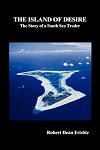
There is much wrong with this book. But there is much, much more that makes it special. Consisting of two parts, it first tells the tale of Robert Dean Frisbie's courtship and life with his Polynesian wife on the island of Puka Puka. The seemingly melodramatic title of the book is a pun on the name of his wife, Desire. The second half of the book describes how he and his four children took to one of the most remote spots in the world, Suvarrow Island in the Cook Islands, and there managed to show more survive a severe hurricane that obliterated 90 percent of the atoll.
What is good and unique about this work is how Frisbie, who has come to be regarded as a legend among chroniclers of the South Seas, integrated himself so closely into the world and society of the people of Puka Puka. He never "went native," and strongly advised against anyone ever doing so, but he lived and made a family in as close a proximity to the ways of Puka Pukans as is possible to imagine for any foreigner. And when he shifts his locale to Suvarrow, his descriptions of his family ties and their struggle to survive the worst that nature can through against them makes for both moving and gripping reading.
Against these attributes, the failures of the book seem relatively insignificant. Yes, Ropita, the best that the Puka Pukans could do to approximate the pronunciation of his first name, Robert, is prone to employ purple prose. And he sometimes gets lost in his own prose. It is easy to see why he never became a successful novelist. His worst fault in The Island of Desire is the lengthy passages devoted to Captain Prospect, who Frisbie undoubtedly thought would serve as a colorful old coot of sorts but who quickly becomes tiresome and one-dimensional. All these drawbacks, however, are washed away in the detailed and exciting chapter on the Frisbies' encounter and survival of the hurricane. Many times, only seconds separated them from life and death. This part of the story is harrowing and exciting. It exceeds in its descriptiveness, in fact, Charles Nordhoff and James Norman Hall's fictional portrayal of a cyclone dismembering a South Seas island in their 1936 novel, The Hurricane. Hall was a friend and supporter of Frisbie's. Such an irony that Frisbie lived to experience what Nordhoff and Hall could only imagine some years earlier.
Robert Frisbie was not an immature man, although his seemingly careless ways and risky decisions may make it seem that way to contemporary readers. But the truth was that Frisbie was a nineteenth-century man living in the middle of the twentieth-century. He longed to make life more than mere existence. He wanted to capture meaning in it. The Island of Desire served that goal. For although its readership has always remained small; it has remained consistent. Frisbie will still be read with the same appreciation 100 or 200 years from now, while more contemporaries, much more popular at the time, fade into oblivion. I suppose that, then, is about as meaningful as it gets. show less
What is good and unique about this work is how Frisbie, who has come to be regarded as a legend among chroniclers of the South Seas, integrated himself so closely into the world and society of the people of Puka Puka. He never "went native," and strongly advised against anyone ever doing so, but he lived and made a family in as close a proximity to the ways of Puka Pukans as is possible to imagine for any foreigner. And when he shifts his locale to Suvarrow, his descriptions of his family ties and their struggle to survive the worst that nature can through against them makes for both moving and gripping reading.
Against these attributes, the failures of the book seem relatively insignificant. Yes, Ropita, the best that the Puka Pukans could do to approximate the pronunciation of his first name, Robert, is prone to employ purple prose. And he sometimes gets lost in his own prose. It is easy to see why he never became a successful novelist. His worst fault in The Island of Desire is the lengthy passages devoted to Captain Prospect, who Frisbie undoubtedly thought would serve as a colorful old coot of sorts but who quickly becomes tiresome and one-dimensional. All these drawbacks, however, are washed away in the detailed and exciting chapter on the Frisbies' encounter and survival of the hurricane. Many times, only seconds separated them from life and death. This part of the story is harrowing and exciting. It exceeds in its descriptiveness, in fact, Charles Nordhoff and James Norman Hall's fictional portrayal of a cyclone dismembering a South Seas island in their 1936 novel, The Hurricane. Hall was a friend and supporter of Frisbie's. Such an irony that Frisbie lived to experience what Nordhoff and Hall could only imagine some years earlier.
Robert Frisbie was not an immature man, although his seemingly careless ways and risky decisions may make it seem that way to contemporary readers. But the truth was that Frisbie was a nineteenth-century man living in the middle of the twentieth-century. He longed to make life more than mere existence. He wanted to capture meaning in it. The Island of Desire served that goal. For although its readership has always remained small; it has remained consistent. Frisbie will still be read with the same appreciation 100 or 200 years from now, while more contemporaries, much more popular at the time, fade into oblivion. I suppose that, then, is about as meaningful as it gets. show less

Puka-Puka is a Polynesian atoll off the coast of New Zealand. Robert Dean Frisbie, originally born in Cleveland, Ohio moved to Puka-Puka for his health and to get away from civilization. He became a trader, married a native, had several children and even died in the Cook Islands. His was one of the earliest accounts of Pacific island life. It's full of adventure, humor and culture. A great read!
You May Also Like
Associated Authors
Statistics
- Works
- 38
- Also by
- 3
- Members
- 107
- Popularity
- #180,614
- Rating
- 4.3
- Reviews
- 2
- ISBNs
- 5
- Favorited
- 2