
Michael W. Holmes
Author of The Apostolic Fathers: Greek Texts and English Translations
About the Author
Michael W. Holmes (Ph.D., Princeton Theological Seminary) is professor of biblical studies and early Christianity at Bethel College.
Disambiguation Notice:
This author has edited the works of the Apostolic Fathers in an English language edition and a Greek/English edition. These are separate works.
Series
Works by Michael W. Holmes
The Text of the New Testament in Contemporary Research: Essays on the Status Quaestionis (Studies & Documents) (1995) — Editor — 129 copies, 1 review
The Two Ways: The Early Christian Vision of Discipleship from the Didache and the Shepherd of Hermas (Plough Spiritual Guides: Backpack Classics) (2018) 50 copies, 11 reviews
The Apostolic Fathers: Greek Texts 10 copies
Associated Works
The Reliability of the New Testament: Bart Ehrman and Daniel Wallace in Dialogue (2011) — Contributor — 81 copies
New Testament Manuscripts: Their Texts And Their World (Texts and Editions for New Testament Study, V. 2) (2006) — Contributor — 13 copies
Tagged
Common Knowledge
- Canonical name
- Holmes, Michael W.
- Legal name
- Holmes, Michael William
- Other names
- 邁克.霍姆茲
- Birthdate
- 1950-12-14
- Gender
- male
- Education
- University of California, Santa Barbara (BA|1973)
Trinity Evangelical Divinity School (MA|1976)
Princeton Theological Seminary (PhD|1984) - Organizations
- Bethel College, St. Paul, Minnesota, USA
Society of Biblical Literature
Institute of Biblical Research - Nationality
- USA
- Birthplace
- Delano, California, USA
- Disambiguation notice
- This author has edited the works of the Apostolic Fathers in an English language edition and a Greek/English edition. These are separate works.
- Associated Place (for map)
- California, USA
Members
Reviews
The Two Ways: The Early Christian Vision of Discipleship from the Didache and the Shepherd of Hermas (Plough Spiritual Guides: Backpack Classics) by Michael W. Holmes
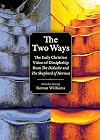
The title of this volume is "The Two Ways." But it might be better to call it "The One and a Half Books."
The contents consist of two writings, The Didache and (excerpts from) The Shepherd of Hermas. The back cover blurb claims that "these writings have remained buried in academia" -- but this isn't really true. A translation of the Didache was included in the Penguin edition of Early Christian Writings: The Apostolic Fathers, which was certainly intended for a popular audience (although not show more designed to be a devotional work). Hermas was available in English in William Hone's (much too popular) The Lost Books of the Bible. More recently, versions of both books have been found in Bart D. Ehrman's Lost Scriptures. There may well be other popular editions; I stopped digging in my library when I found two translations of each book. It's harder to find a copy of the Didache or Hermas than to locate a regular Bible, but a good deal easier than finding most early Christian instructional or devotional works, such as Tertullian or Chrysostom.
So this book can't justify itself based on rarity. And while it has an interesting introduction by Rowan Williams, that doesn't really offer much in the way of new thoughts. So, if the book is to justify itself, it can only be on the quality of the translation.
Here, I have to put in a disclaimer: I used to know Michael Holmes slightly; we discussed textual criticism, a field of great interest to both of us. But I don't think that affects my opinion. This is a good translation -- much more readable than the Penguin Didache or the Hone Hermas. On the whole, I'd also rate it above the Ehrman translations, which aren't as badly pseudo-King-James-y as the Hone and Penguin tests but still have the slightly stilted sound of an over-literal rendering. (That's apart from the fact that, in Ehrman, these orthodox Christian documents are surrounded by some really disgustingly heretical stuff. You don't have to be a Christian to find Gnosticism hard to swallow....) If you want to read the Didache or the Shepherd, this volume is a good choice.
But I am still hesitant to recommend this, for three reasons. One is the complete, total, and utter lack of footnotes. These aren't modern works taken from the author's manuscript; there are places where the text is uncertain, and places where the meaning is uncertain, and the translation gives no clue of that. Without footnotes, you aren't reading the Didache; you are reading what Michael Holmes thinks the Didache meant.
Second, like most ancient books, these works do have a chapter/verse system. And it's not indicated here. You don't need the chapters for devotional reading. But you surely need it if you're ever going to talk over the book with anyone who uses a different translation -- or who (horrors!) actually reads the text in the original language!
Third, keep in mind that, although the text of the Didache is complete, that of Hermas isn't. This is understandable; Hermas is very long and frankly quite rambling. But if you are to fully understand and assess Hermas, you need to see the long, rambling, dull stuff. The Reader's Digest version of some books may be better than the original (I could name a few names...) -- but it is not the original. If you're going to offer something as an ancient devotional work, you need to offer the whole thing, warts and all! If you want to suggest parts to skip over, fine. But that's not the same thing.
So: I would genuinely like to see more Michael Holmes translations of ancient Christian works. How about including these with 1 Clement (another book which almost became part of the New Testament, and which is unquestionably orthodox), and maybe the Letter of Barnabas (which, needless to say, isn't by Barnabas)? This would be a genuine service. But, please, give us the chapter numbers, the footnotes -- and the whole text. show less
The contents consist of two writings, The Didache and (excerpts from) The Shepherd of Hermas. The back cover blurb claims that "these writings have remained buried in academia" -- but this isn't really true. A translation of the Didache was included in the Penguin edition of Early Christian Writings: The Apostolic Fathers, which was certainly intended for a popular audience (although not show more designed to be a devotional work). Hermas was available in English in William Hone's (much too popular) The Lost Books of the Bible. More recently, versions of both books have been found in Bart D. Ehrman's Lost Scriptures. There may well be other popular editions; I stopped digging in my library when I found two translations of each book. It's harder to find a copy of the Didache or Hermas than to locate a regular Bible, but a good deal easier than finding most early Christian instructional or devotional works, such as Tertullian or Chrysostom.
So this book can't justify itself based on rarity. And while it has an interesting introduction by Rowan Williams, that doesn't really offer much in the way of new thoughts. So, if the book is to justify itself, it can only be on the quality of the translation.
Here, I have to put in a disclaimer: I used to know Michael Holmes slightly; we discussed textual criticism, a field of great interest to both of us. But I don't think that affects my opinion. This is a good translation -- much more readable than the Penguin Didache or the Hone Hermas. On the whole, I'd also rate it above the Ehrman translations, which aren't as badly pseudo-King-James-y as the Hone and Penguin tests but still have the slightly stilted sound of an over-literal rendering. (That's apart from the fact that, in Ehrman, these orthodox Christian documents are surrounded by some really disgustingly heretical stuff. You don't have to be a Christian to find Gnosticism hard to swallow....) If you want to read the Didache or the Shepherd, this volume is a good choice.
But I am still hesitant to recommend this, for three reasons. One is the complete, total, and utter lack of footnotes. These aren't modern works taken from the author's manuscript; there are places where the text is uncertain, and places where the meaning is uncertain, and the translation gives no clue of that. Without footnotes, you aren't reading the Didache; you are reading what Michael Holmes thinks the Didache meant.
Second, like most ancient books, these works do have a chapter/verse system. And it's not indicated here. You don't need the chapters for devotional reading. But you surely need it if you're ever going to talk over the book with anyone who uses a different translation -- or who (horrors!) actually reads the text in the original language!
Third, keep in mind that, although the text of the Didache is complete, that of Hermas isn't. This is understandable; Hermas is very long and frankly quite rambling. But if you are to fully understand and assess Hermas, you need to see the long, rambling, dull stuff. The Reader's Digest version of some books may be better than the original (I could name a few names...) -- but it is not the original. If you're going to offer something as an ancient devotional work, you need to offer the whole thing, warts and all! If you want to suggest parts to skip over, fine. But that's not the same thing.
So: I would genuinely like to see more Michael Holmes translations of ancient Christian works. How about including these with 1 Clement (another book which almost became part of the New Testament, and which is unquestionably orthodox), and maybe the Letter of Barnabas (which, needless to say, isn't by Barnabas)? This would be a genuine service. But, please, give us the chapter numbers, the footnotes -- and the whole text. show less
 This review was written for LibraryThing Early Reviewers.
The Text of the New Testament in Contemporary Research: Essays on the Status Quaestionis (Studies and Documents) (Vol 46) by Bart D. Ehrman
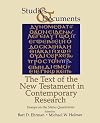
Textual criticism is like a phoenix: Something very old that periodically must be burnt up and reborn.
There are many reasons for the changes in the discipline. One of the most important is the discovery of new materials -- new manuscripts of the Bible, or of quotations from it. But the pace of discoveries has slowed. So why do things keep changing?
Some of the reasons are technological: Computers make comparisons of texts much easier. Others are methodological: People keep coming up with new show more ways to make comparisons between versions, or to classify and group manuscripts. Add it all up, and there is a constant need to update the discipline. This need is even greater due to the lack of a single comprehensive textbook of the discipline.
This volume represents a valiant attempt to examine the changes in the discipline as things stood in the early 1990s. It covers all the basic areas -- manuscripts (papyri, uncials, etc.), versions (Latin, Syriac, Coptic, plus the lesser-known versions), church fathers, methods of criticism. There is something here for every critic.
And yet, somehow, it all feels just a little incomplete. There flatly isn't enough coverage of statistical methods or computers for a document compiled in the 1990s. Signs of mathematical sense are utterly lacking. And there are no theoretical breakthroughs. It's all stuck in the rut of "reasoned eclecticism" -- the current standard method of criticism, which is good enough but which isn't going anywhere.
This isn't really the fault of the book. Some of the articles are a lot better than others -- it seemed to me that some of the writers on the versions really didn't have a plan for what they were trying to say. But most of this is because we are in what Eldon J. Epp has repeatedly called an "interlude" in textual criticism. It's time for a breakthrough. The breakthrough isn't here. But if you want to see a long list of places where breakthroughs might be sought, this is a good book to consult. show less
There are many reasons for the changes in the discipline. One of the most important is the discovery of new materials -- new manuscripts of the Bible, or of quotations from it. But the pace of discoveries has slowed. So why do things keep changing?
Some of the reasons are technological: Computers make comparisons of texts much easier. Others are methodological: People keep coming up with new show more ways to make comparisons between versions, or to classify and group manuscripts. Add it all up, and there is a constant need to update the discipline. This need is even greater due to the lack of a single comprehensive textbook of the discipline.
This volume represents a valiant attempt to examine the changes in the discipline as things stood in the early 1990s. It covers all the basic areas -- manuscripts (papyri, uncials, etc.), versions (Latin, Syriac, Coptic, plus the lesser-known versions), church fathers, methods of criticism. There is something here for every critic.
And yet, somehow, it all feels just a little incomplete. There flatly isn't enough coverage of statistical methods or computers for a document compiled in the 1990s. Signs of mathematical sense are utterly lacking. And there are no theoretical breakthroughs. It's all stuck in the rut of "reasoned eclecticism" -- the current standard method of criticism, which is good enough but which isn't going anywhere.
This isn't really the fault of the book. Some of the articles are a lot better than others -- it seemed to me that some of the writers on the versions really didn't have a plan for what they were trying to say. But most of this is because we are in what Eldon J. Epp has repeatedly called an "interlude" in textual criticism. It's time for a breakthrough. The breakthrough isn't here. But if you want to see a long list of places where breakthroughs might be sought, this is a good book to consult. show less
The Two Ways: The Early Christian Vision of Discipleship from the Didache and the Shepherd of Hermas (Plough Spiritual Guides: Backpack Classics) by Michael W. Holmes
This book is composed of three parts – the Introduction, Selections from the Didache, and Selections from the Shepherd of Hermas. The Introduction is a fascinating take on early Christians and why they were so revolutionary. Rowan Williams’ introduction is perhaps the main reason to purchase this book. With deft insight, he explains why and how the early Christians were able to believe the radical (for them) ideas preached by a Jewish Carpenter. In particular, it is his idea that God’s show more love is radical because it does not require something in common with the beloved to exist. God’s love is because God IS love. This idea is how we, as Christians, are able to love anyone.
As for the Didache and The Shepard of Hermes, I did not like them. I say that, however, with firm acknowledgement that this is a subject opinion. Indeed, it would be impossible to be objective. Both were written almost two thousand years ago, indeed for an audience vastly different then the modern reader. To critic is unfair. The Didache seems harsh and the Shepherd vague and philosophical.
There are many Early Christian Writings, most of which are rich in meaning and insight. These two might be such for you. This book would be an excellent introduction to both of these works. As for me, I did not gain from the writings, but did from the introduction and so am thankful I read this book. show less
As for the Didache and The Shepard of Hermes, I did not like them. I say that, however, with firm acknowledgement that this is a subject opinion. Indeed, it would be impossible to be objective. Both were written almost two thousand years ago, indeed for an audience vastly different then the modern reader. To critic is unfair. The Didache seems harsh and the Shepherd vague and philosophical.
There are many Early Christian Writings, most of which are rich in meaning and insight. These two might be such for you. This book would be an excellent introduction to both of these works. As for me, I did not gain from the writings, but did from the introduction and so am thankful I read this book. show less
This review was written for LibraryThing Early Reviewers.The Two Ways: The Early Christian Vision of Discipleship from the Didache and the Shepherd of Hermas (Plough Spiritual Guides: Backpack Classics) by Michael W. Holmes
Unfortunately, I found Rowan Williams introduction more interesting than the rest of the book.
Although there were some portions of the Didache and Shepherd that were found engaging and inspiring, I found this translation to be drab. As a Christian, I also need to say that, from my perspective, these two translated works seem to demonstrate how early the Christians have drifted from the center of faith in Christ.
Perhaps it's just me... but I was disappointed with this book.
Although there were some portions of the Didache and Shepherd that were found engaging and inspiring, I found this translation to be drab. As a Christian, I also need to say that, from my perspective, these two translated works seem to demonstrate how early the Christians have drifted from the center of faith in Christ.
Perhaps it's just me... but I was disappointed with this book.
This review was written for LibraryThing Early Reviewers.Lists
You May Also Like


Associated Authors
Statistics
- Works
- 12
- Also by
- 6
- Members
- 2,036
- Popularity
- #12,627
- Rating
- 4.2
- Reviews
- 18
- ISBNs
- 20
- Languages
- 4
