

August Gailit
Author of Toomas Nipernaadi : romaan novellides
About the Author
Image credit: August Gailit
Author: Parikas (studio)
Source: http://www.kirmus.ee/erni/autor/gail_fo.html
Works by August Gailit
Üle rahutu vee 12 copies
Nipernaadi 1 copy
Viimne romantik 1 copy
Ristisõitjad 1 copy
Brinnande hjärtan 1 copy
Ostrov lovců tuleňů : román 1 copy
Associated Works
Tagged
Common Knowledge
- Gender
- male
Members
Reviews
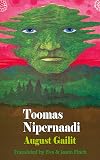
I selected this from the Dedalus catalogue because I like stories of wanderers and liked the cover image too. It's set in rural Estonia with an emphasis on the changing seasons as Toomas roves from village to village, inserting himself into local dramas and trying to solve practical problems, but always with an amorous eye for the womenfolk. He spins unlikely stories, sometimes seeming to see through the behaviour of others while at other times being as nonplussed as any. Just when you think show more he's a chancer he also expresses his most sincere feelings. The book was written in 1928 but the translation has a very contemporary feel. It mixes American and English slang and can occasionally seem jarring when describing old ways but generally works for the timeless folk elements. The environment is described in original and lyrical language. It's a book for those who enjoy folk-based storytelling. show less

“Toomas Nipernaadi” (1928) is a classic of Estonian literature and is the best known work of author August Gailit (1891-1960). The title character is quite an iconic fictional figure and has been immortalized in everything from travel agency names to alcoholic drinks. A 1983 film based on the book is also quite popular. His very name is now a synonym for wanderlust in the Estonian language.
Nipernaadi is a vagabond minstrel character who wanders around the countryside paying court to show more various rural women with mixed success. He picks up various odd jobs along the way and his only fixed possession is a kannel (Estonian zither). The novel consists of seven independent stories and portrays one cycle of Nipernaadi’s travels from spring to early winter. It is only in the final story that you learn that this is an annual event and where he is really from (no spoiler here). You don’t necessarily warm to the character right away as he comes across as dishonest. He invents outrageous tall tales about who he is for the various people he meets in each story. He'll play a long-lost relative, a sailor waiting for his ship mates, or whatever comes to mind and suits the situation. Eventually you realize that he isn’t really planning to scam anybody, it is just the way he goes about provoking people and bringing out their good or bad sides. Generally the bad people get their just desserts and the good people have a turn of good luck or see their way clear to their life’s purpose thanks to Nipernaadi’s efforts whether direct or indirect. So he is somewhat of a trickster character and you might even think him to be supernatural in some ways. The name Nipernaadi isn’t a common Estonian name at all and might be derived from the word “nipp” (trick). Gailit’s descriptive passages and Nipernaadi’s speeches are full of loving depictions of nature and praises of womenkind and these are quite intoxicating if you let yourself be carried away by them.
I read “Toomas Nipernaadi” in the original Estonian. It has been translated into about a dozen languages, but not into English. You can see the variety of translations at the Estonian Literature Centre here http://www.estlit.ee/elis/?cmd=book&id=19324 There is a sample excerpt English translation from the middle story “Valged ööd” (White Nights) at http://www.estlit.ee/elis/?cmd=writer&id=86132&txt=79470 show less
Nipernaadi is a vagabond minstrel character who wanders around the countryside paying court to show more various rural women with mixed success. He picks up various odd jobs along the way and his only fixed possession is a kannel (Estonian zither). The novel consists of seven independent stories and portrays one cycle of Nipernaadi’s travels from spring to early winter. It is only in the final story that you learn that this is an annual event and where he is really from (no spoiler here). You don’t necessarily warm to the character right away as he comes across as dishonest. He invents outrageous tall tales about who he is for the various people he meets in each story. He'll play a long-lost relative, a sailor waiting for his ship mates, or whatever comes to mind and suits the situation. Eventually you realize that he isn’t really planning to scam anybody, it is just the way he goes about provoking people and bringing out their good or bad sides. Generally the bad people get their just desserts and the good people have a turn of good luck or see their way clear to their life’s purpose thanks to Nipernaadi’s efforts whether direct or indirect. So he is somewhat of a trickster character and you might even think him to be supernatural in some ways. The name Nipernaadi isn’t a common Estonian name at all and might be derived from the word “nipp” (trick). Gailit’s descriptive passages and Nipernaadi’s speeches are full of loving depictions of nature and praises of womenkind and these are quite intoxicating if you let yourself be carried away by them.
I read “Toomas Nipernaadi” in the original Estonian. It has been translated into about a dozen languages, but not into English. You can see the variety of translations at the Estonian Literature Centre here http://www.estlit.ee/elis/?cmd=book&id=19324 There is a sample excerpt English translation from the middle story “Valged ööd” (White Nights) at http://www.estlit.ee/elis/?cmd=writer&id=86132&txt=79470 show less

Kas mäletad mu arm? III osa. Selle teosega jõuab lõpule vanameistri suurejooneliselt kavandatud triloogia. Jutustus pöördub jälle tagasi esimeses osas kasutatud novellivormile, kus üks lüli lisandub teisele nagu pärlid lõplikult valminud kees. August Gailitil on nende lugude kaudu palju öelda inimhinge põhilisest olemusest ja selle avaldumisvormidest elu vahelduvais tuultes. Teos on tugevalt isikupärane ja täis säravaid aforisme, nagu see Gailitile alati omane.
EKK, 1959
EKK, 1959
Mar 2, 2021Estonian

Un magnifique voyage sur les routes de l'ancienne Estonie au gré des aventures d'un héros attachant et facétieux, éternel vagabond accompagné de son kannel, mais proche par bien des aspects de Thyl Ulenspiegel.
You May Also Like
Associated Authors
Statistics
- Works
- 21
- Also by
- 1
- Members
- 168
- Popularity
- #126,678
- Rating
- 3.9
- Reviews
- 4
- ISBNs
- 26
- Languages
- 1
- Favorited
- 1