

Lettice Galbraith (1859–1932)
Author of The Shadow on the Blind and Other Stories
Works by Lettice Galbraith
Associated Works
The Mammoth Book of Victorian and Edwardian Ghost Stories (1995) — Contributor — 174 copies, 4 reviews
Sunless Solstice: Strange Christmas Tales for the Longest Nights (2021) — Contributor — 93 copies, 3 reviews
Women's Weird 2: More Strange Stories by Women, 1891-1937 (Handheld Classics) (2020) — Contributor — 40 copies
Supernatural Sherlocks: Stories from The Golden Age of the Occult Detective (2017) — Contributor — 34 copies, 1 review
Summoned to the Séance: Spirit Tales from Beyond the Veil: 56 (British Library Tales of the Weird) (2024) — Contributor — 26 copies
The Lady Chillers: Classic Ghost and Horror Stories by Women Authors (2014) — Contributor — 4 copies
Tagged
Common Knowledge
- Legal name
- Gibson, Lizzie Susan
- Birthdate
- 1859-01-27
- Date of death
- 1932-07-08
- Gender
- female
- Occupations
- author
- Nationality
- UK
- Birthplace
- Hull, Yorkshire, England, UK
- Places of residence
- Reigate, Surrey, England, UK
Hornsea, East Yorkshire, England, UK
London, England, UK - Place of death
- Downe, Kent, England, UK
- Burial location
- St Mary's Church, Downe, Bromley, England, UK
- Associated Place (for map)
- England, UK
Members
Reviews
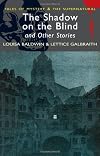
This book includes stories by two Victorian women, Louisa Baldwin and Lettice Galbraith. Louisa Baldwin was well-known in her day, a member of a prominent family who was the mother of Prime Minister Stanley Baldwin. In contrast, Lettuce Galbraith is only known through her publications–she put out several story collections, but nothing else is known of her.
I preferred Galbraith’s stories to Baldwin’s. Some of Baldwin’s stories had a lot of random meandering, there wasn’t a good show more suspenseful build-up, and a few stories had a solid development but then ended with a thud. The title story was one of these–there’s a leisurely build-up to the haunted house antics, but then it ends with a whimper. “The Weird of the Walfords” was probably the most complete story and is about a man who tries to avoid his family curse but end up bringing it about. “The Uncanny Bairn” features a boy who sees the future and the problems his gift causes. “Many Waters Cannot Quench Love” and “How He Left the Hotel” are both decent stories but a bit short and not too memorable. “The Real and the Counterfeit” has a standard premise–a man who doesn’t believe in ghosts decides to scare his more ambivalent friends–but it seemed to spend too much time on their antics. “My Next Door Neighbour” spends a lot of time describing hospital life and plods along. “The Empty Picture Frame” has another standard premise–a ghost comes to visit. I don't think this one did too much with the plot. “Sir Nigel Otterburne’s Case” has a nicely creepy development but then it just ended abruptly. “The Ticking of the Clock” is a very different story about a boy who learns about mortality through his beloved grandfather and is overall pretty sad.
Galbraith’s stories, except for one, were all solid suspenseful pieces. They all seemed to take place in different worlds, which was interesting, and the last two were good takes on the standard haunted house story. I had problems with “The Trainer’s Ghost”, mainly because I was unfamiliar with the jargon of 19th c. horse racing. This one also introduced many characters talking obliquely about things and switched viewpoints several times. I had to read it twice to fully understand what was going on. “The Case of Lady Lukestan” was the best story in the whole collection, a brooding, disturbing tale where a legal case about the legitimacy of a marriage hangs on the existence of a ghost. “The Ghost in the Chair” follows a man with a failing business who makes a deal with the Devil. “In the Seance Room” looks at the world of spiritualism and occultism, which was very popular in the Victorian era. “The Missing Model” takes place in the art world. “A Ghost’s Revenge” and “The Blue Room” are standard ghost stories; the former is about the usual cursed manor house but is nicely suspenseful, and the latter is about a haunted room. This one is memorable because it has an interesting character, a skeptical and intellectually curious woman who, along with a similar-minded man (with no romantic connection), investigates the room. Also, the very end has a twist that explains a lot and actually puts the events in a very disturbing light. show less
I preferred Galbraith’s stories to Baldwin’s. Some of Baldwin’s stories had a lot of random meandering, there wasn’t a good show more suspenseful build-up, and a few stories had a solid development but then ended with a thud. The title story was one of these–there’s a leisurely build-up to the haunted house antics, but then it ends with a whimper. “The Weird of the Walfords” was probably the most complete story and is about a man who tries to avoid his family curse but end up bringing it about. “The Uncanny Bairn” features a boy who sees the future and the problems his gift causes. “Many Waters Cannot Quench Love” and “How He Left the Hotel” are both decent stories but a bit short and not too memorable. “The Real and the Counterfeit” has a standard premise–a man who doesn’t believe in ghosts decides to scare his more ambivalent friends–but it seemed to spend too much time on their antics. “My Next Door Neighbour” spends a lot of time describing hospital life and plods along. “The Empty Picture Frame” has another standard premise–a ghost comes to visit. I don't think this one did too much with the plot. “Sir Nigel Otterburne’s Case” has a nicely creepy development but then it just ended abruptly. “The Ticking of the Clock” is a very different story about a boy who learns about mortality through his beloved grandfather and is overall pretty sad.
Galbraith’s stories, except for one, were all solid suspenseful pieces. They all seemed to take place in different worlds, which was interesting, and the last two were good takes on the standard haunted house story. I had problems with “The Trainer’s Ghost”, mainly because I was unfamiliar with the jargon of 19th c. horse racing. This one also introduced many characters talking obliquely about things and switched viewpoints several times. I had to read it twice to fully understand what was going on. “The Case of Lady Lukestan” was the best story in the whole collection, a brooding, disturbing tale where a legal case about the legitimacy of a marriage hangs on the existence of a ghost. “The Ghost in the Chair” follows a man with a failing business who makes a deal with the Devil. “In the Seance Room” looks at the world of spiritualism and occultism, which was very popular in the Victorian era. “The Missing Model” takes place in the art world. “A Ghost’s Revenge” and “The Blue Room” are standard ghost stories; the former is about the usual cursed manor house but is nicely suspenseful, and the latter is about a haunted room. This one is memorable because it has an interesting character, a skeptical and intellectually curious woman who, along with a similar-minded man (with no romantic connection), investigates the room. Also, the very end has a twist that explains a lot and actually puts the events in a very disturbing light. show less
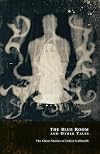
Some deliciously creepy ghost stories, accompanied by some excellent biographical background on the previously under-researched author.
You May Also Like
Associated Authors
Statistics
- Works
- 4
- Also by
- 16
- Members
- 70
- Popularity
- #248,178
- Rating
- 3.8
- Reviews
- 2
- ISBNs
- 5
- Languages
- 1