
Richard W. Gartee
Author of Electronic Health Records: Understanding and Using Computerized Medical Records
About the Author
Works by Richard W. Gartee
Electronic Health Records-Instructor's Manual-Understanding and Using Computerized Medical Records (2007) 5 copies
Lancelot's Grail: New Age Teachings on Self Awareness and Enlightenment Set in an Arthurian Story (2013) 5 copies, 1 review
Electronic Health Records: Understanding and Using Computerized Medical Records (3rd Edition) (2016) 4 copies
Lancelot's Grail 2 copies
Tagged
Common Knowledge
There is no Common Knowledge data for this author yet. You can help.
Members
Reviews

This is the story of Gizmo Carson, an engineer and war vet with highest security clearance possible.
Early on we follow Gizmo (a nickname, don't call him Sven!) through his jaded career and time with family in the 1950s. As Gizmo enters the Sixties, the race to space and Kennedy's assassination are reflected on, and we feel Gizmo's emotions through these times. The majority of the first few chapters reminded of how we experienced major world events through the eyes of Forest in "Forest show more Gump". I really enjoyed this walk down memory lane with Gizmo, and I felt it was a nice way to grow attached to him.
Gizmo's straight laced personae is challenged by the decade. LSD, the Beatles and a "trip" to a commune start to change the way he looks at things, and this is where the book takes a route I did not expect- and I can honestly say the premise is not one I've read before.
I won't ruin the remainder of the story, but will share this fun tidbit that helps the reader along the way.
"Orgone energy is the fundamental creative life energy that charges and radiates from all living beings. It also streams freely through the atmosphere and outer space.
The first Western doctor to identify it was Wilhelm Reich, a colleague of Sigmund Freud. Reich observed a bioenergy while studying microscopic protozoa. At first, he thought it was a specific form of electricity, but noticed that it did not always obey known laws of energy. He found larger, more complex organisms, even humans, emitted the same energy. Reich believed it was more likely a special energy common to all life."
This was a very original book, and while not something I would normally pick up, I had the opportunity to read it thanks to a Goodreads Kindle Giveaway. I thank the author for the chance to read and review. It was an enjoyable read. show less
Early on we follow Gizmo (a nickname, don't call him Sven!) through his jaded career and time with family in the 1950s. As Gizmo enters the Sixties, the race to space and Kennedy's assassination are reflected on, and we feel Gizmo's emotions through these times. The majority of the first few chapters reminded of how we experienced major world events through the eyes of Forest in "Forest show more Gump". I really enjoyed this walk down memory lane with Gizmo, and I felt it was a nice way to grow attached to him.
Gizmo's straight laced personae is challenged by the decade. LSD, the Beatles and a "trip" to a commune start to change the way he looks at things, and this is where the book takes a route I did not expect- and I can honestly say the premise is not one I've read before.
I won't ruin the remainder of the story, but will share this fun tidbit that helps the reader along the way.
"Orgone energy is the fundamental creative life energy that charges and radiates from all living beings. It also streams freely through the atmosphere and outer space.
The first Western doctor to identify it was Wilhelm Reich, a colleague of Sigmund Freud. Reich observed a bioenergy while studying microscopic protozoa. At first, he thought it was a specific form of electricity, but noticed that it did not always obey known laws of energy. He found larger, more complex organisms, even humans, emitted the same energy. Reich believed it was more likely a special energy common to all life."
This was a very original book, and while not something I would normally pick up, I had the opportunity to read it thanks to a Goodreads Kindle Giveaway. I thank the author for the chance to read and review. It was an enjoyable read. show less
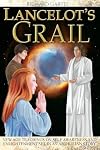
I was wary of this book, because of the subtitle "New age teachings on self-awareness and enlightenment in an Arthurian story." The "Arthurian story" part was what made me curious enough to sign up for the give away I ended up winning. I hoped to expand on the many versions of the King Arthur sagaI have read as my own spiritual quest. I was surprised that the action takes place AFTER the fall of Camelot, and not during. The Knights of the Round Table are dead or dispersed. Lancelot has show more become a hermit in a hut within walking distance of an abbey. He becomes the spiritual mentor of two teenagers, brother and sister, Alura and Frith.
My first question was: why has the author chosen Lancelot a the wise teacher? To make it easier to digest for someone new to Christian spirituality? To show that any human being, who has made major mistakes can become wise enough to teach others? The effect this choice, and the age of his pupils had on me, was that the book read as a young adult novel, although Lancelot's lessons, though not new, are far more difficult than they seem on the surface.
The book consists of short chapters with mini paragraphs and a lot of dialogue. Again a sign that it is meant for young people and those new to spirituality.
I was disappointed by the stereotypical characters. Alura's obsession with finding a husband was so exaggerated that the rest of her personality was obscured. Spiritual development is usually more complex than overcoming just one obsession. Lancelot himself is too saintly to be convincing. Sir Bedivere is too battle hungry and drunk to have ever made it as a Knight of the Round Table. The abbot was too busy organizing feasts to keep an eye on his teenage charges.
Nevertheless, I enjoyed reading the book. It will go in my collection of King Arthur books. show less
My first question was: why has the author chosen Lancelot a the wise teacher? To make it easier to digest for someone new to Christian spirituality? To show that any human being, who has made major mistakes can become wise enough to teach others? The effect this choice, and the age of his pupils had on me, was that the book read as a young adult novel, although Lancelot's lessons, though not new, are far more difficult than they seem on the surface.
The book consists of short chapters with mini paragraphs and a lot of dialogue. Again a sign that it is meant for young people and those new to spirituality.
I was disappointed by the stereotypical characters. Alura's obsession with finding a husband was so exaggerated that the rest of her personality was obscured. Spiritual development is usually more complex than overcoming just one obsession. Lancelot himself is too saintly to be convincing. Sir Bedivere is too battle hungry and drunk to have ever made it as a Knight of the Round Table. The abbot was too busy organizing feasts to keep an eye on his teenage charges.
Nevertheless, I enjoyed reading the book. It will go in my collection of King Arthur books. show less
You May Also Like


Statistics
- Works
- 20
- Members
- 209
- Popularity
- #106,075
- Rating
- 3.5
- Reviews
- 2
- ISBNs
- 23